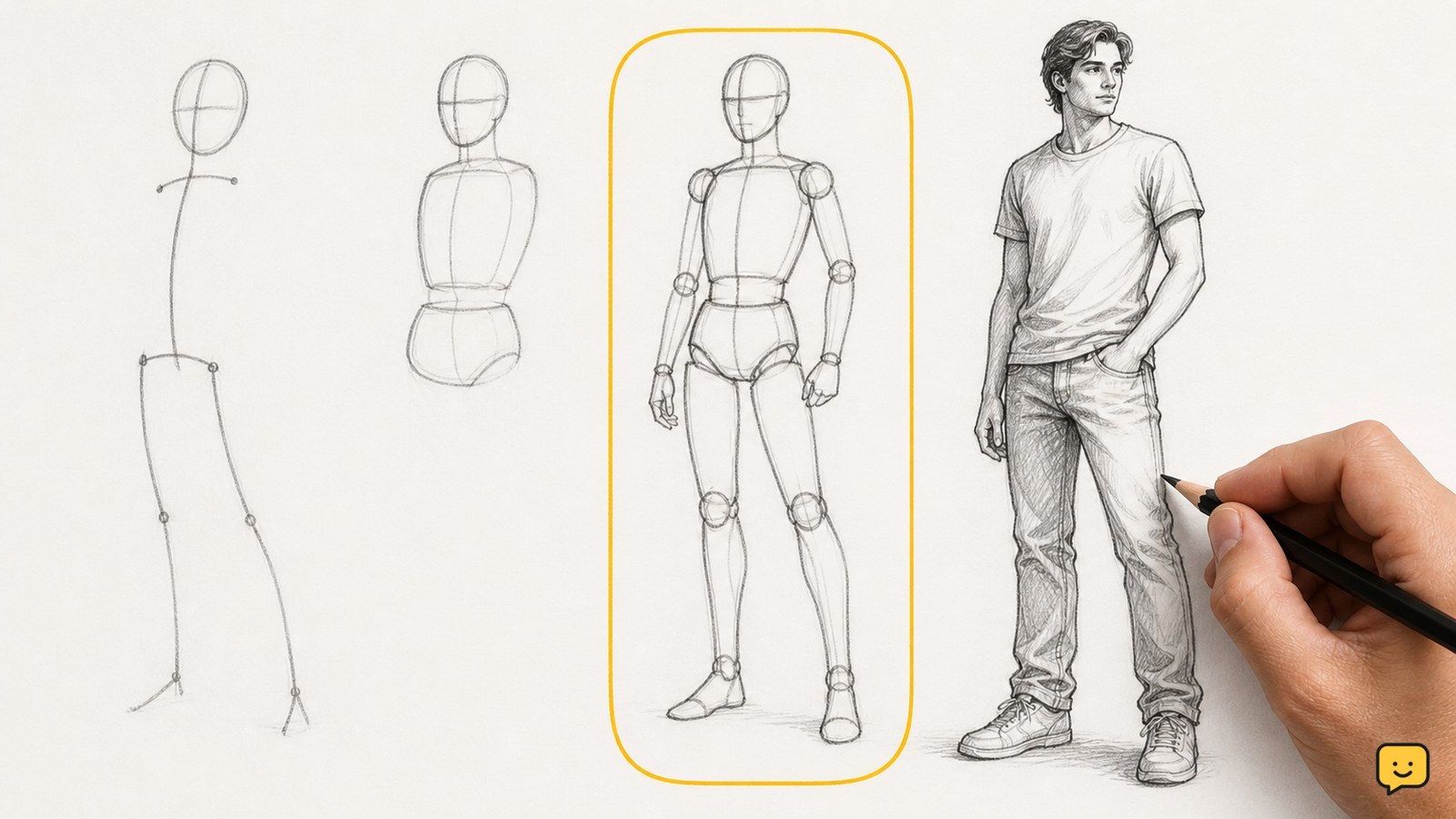
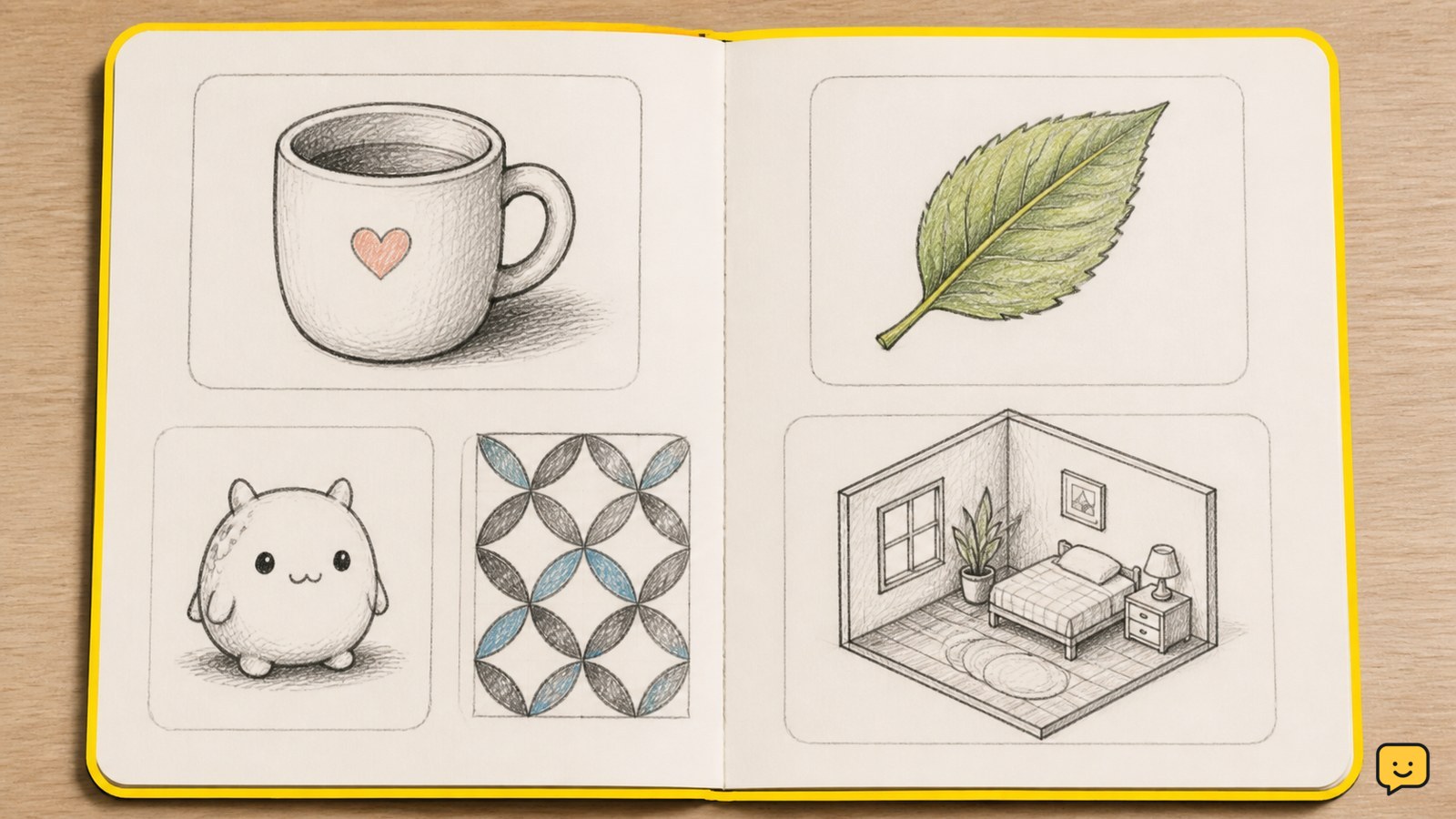
When you are bored, draw an ordinary object near you, a simple pattern, a tiny creature, or an imaginary place. Start with basic shapes, add three details, and set a short limit such as 10 minutes. If the drawing feels difficult after a few marks, simplify the subject or choose a different prompt instead of forcing it.
Choose a drawing idea by your mood
Choose a subject that matches your energy instead of searching for a perfect idea. The supplied Pinterest collection includes beginner-friendly suggestions such as roses and butterflies, which makes simple nature subjects a useful starting point rather than a requirement.
- Low energy: draw lines, circles, leaves, stars, clouds, or a repeating border.
- Restless: fill a page with patterns, abstract shapes, or connected doodles.
- Curious: draw an object nearby from three different angles.
- Imaginative: design a tiny creature, fantasy room, robot, or floating island.
- Focused: sketch a shoe, mug, plant, key, or other object with visible details.
Success looks like having one subject on the page within a minute. If you are still choosing after that, pick the first object you can see and begin with its outline.
Start any subject with three simple shapes
Build the drawing from an oval, rectangle, circle, triangle, or curved line before adding detail. This keeps a blank page from becoming a design decision you have to solve all at once.
- Draw the largest outside shape lightly or with a loose line.
- Add one or two smaller shapes that explain the subject, such as a handle on a mug or leaves on a plant.
- Check the overall size and position before adding details.
- Add three identifying features, such as buttons, folds, windows, eyes, veins, or shadows.
- Finish with one choice about texture, color, or background.
Verify the result by looking away for a few seconds and looking back. You should be able to name what you drew from its main shape and three details. If not, enlarge the main shape or remove distracting marks.
Try these quick drawing prompts
Use a specific prompt when a general idea is not enough to get started. Each prompt gives you a clear subject and a small constraint.
- Object remix: draw a cup, then redesign it for a giant, a cat, or a space traveler.
- Three-line creature: make a creature using only three continuous lines, then add eyes and a habitat.
- Pattern page: choose one shape and repeat it until the page is half full; vary only its size.
- Miniature room: draw a bedroom, shop, treehouse, or library small enough to fit in your palm.
- Nature close-up: sketch one leaf, flower, shell, or stone and add its most visible texture.
- Memory sketch: draw a familiar place without looking at a reference, then mark the detail you remembered best.
- Emotion as a shape: represent calm, excitement, boredom, or surprise using only lines and forms.
Choose one prompt, not several. A successful quick drawing has a clear constraint and reaches a finished stopping point, even if the result is rough.
Use a 10-minute drawing challenge
A short drawing limit turns boredom into a manageable task. Set a timer for 2 minutes to block in the subject, 5 minutes to add details, and 3 minutes to finish the background or make one deliberate change.
- At 2 minutes, check that the subject is recognizable and placed on the page.
- At 5 minutes, add details that explain the object rather than filling every empty area.
- At 10 minutes, stop when the timer ends and circle one part you like.
If the drawing is unfinished, do not treat that as failure. Write one next action beside it, such as “add darker shadows” or “redraw the handle,” then decide whether you want another round. Stop the challenge if the timer increases frustration instead of giving you a clear next action.
Fix a drawing that feels difficult or boring
Change the constraint when the subject is too hard or no longer interesting. The safest recovery is to simplify, rotate, crop, or transform the drawing instead of repeatedly correcting the same area.
| What you notice | Try this next |
|---|---|
| The subject does not look recognizable. | Erase only the extra details and rebuild the largest shape. |
| The page feels too empty. | Add a simple ground line, shadow, border, or three background shapes. |
| You keep making the same mistake. | Turn the page into a pattern, character, or abstract study. |
| The drawing feels overworked. | Stop adding marks and choose one area to darken or color. |
| You are bored with the prompt. | Redraw the subject from a higher, lower, smaller, or imagined viewpoint. |
Verify the new direction after five marks. Continue only if the page now has a clear subject, pattern, or visual rule. Otherwise, stop and choose a completely different prompt.
Frequently asked questions
What can I draw when I have no ideas?
Draw the closest object you can see, such as a mug, shoe, plant, key, or lamp. Start with its biggest shape and add three details. If choosing an object still feels difficult, fill a page with circles, leaves, stars, or a repeating border until a subject comes to mind.
What should a beginner draw when bored?
Beginners can start with simple objects, leaves, clouds, houses, flowers, animals made from circles, or basic patterns. Choose a subject with a clear outline and avoid judging the result while building the first shapes. Add detail only after the main form is recognizable.
What can I draw in 10 minutes?
In 10 minutes, draw one small object, a three-line creature, a miniature room, a leaf close-up, or a repeating pattern. Spend the first few minutes on the main shape, the middle on identifying details, and the final minutes on a shadow, color, or simple background.
How do I make drawing less boring?
Add one clear rule, such as using only three lines, drawing without lifting the pencil, changing the subject into a creature, or repeating one shape across the page. A constraint gives you a decision to make. Change the rule if it creates frustration rather than interest.
For more help with this topic, use the Crafts Sewing guides.