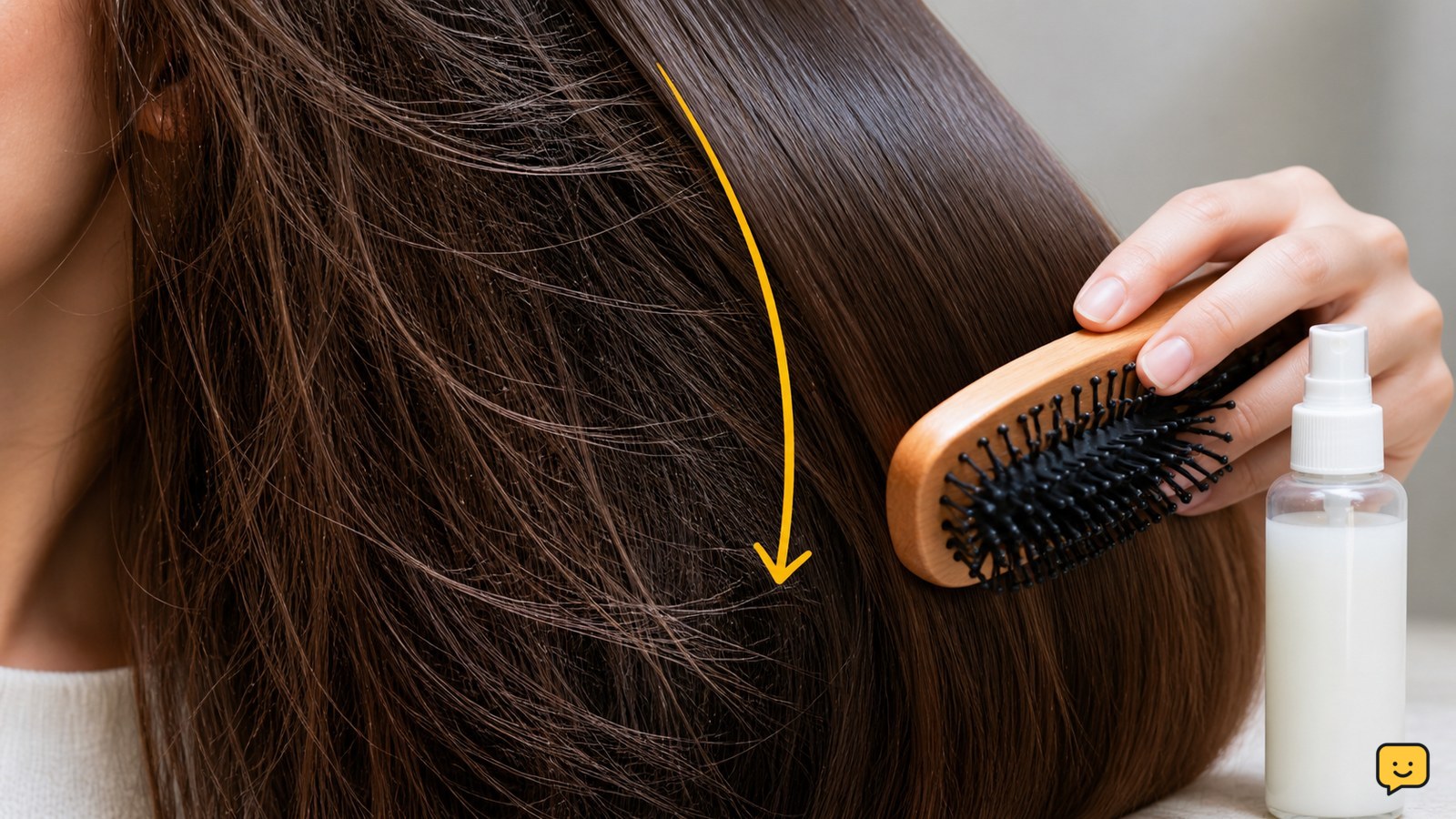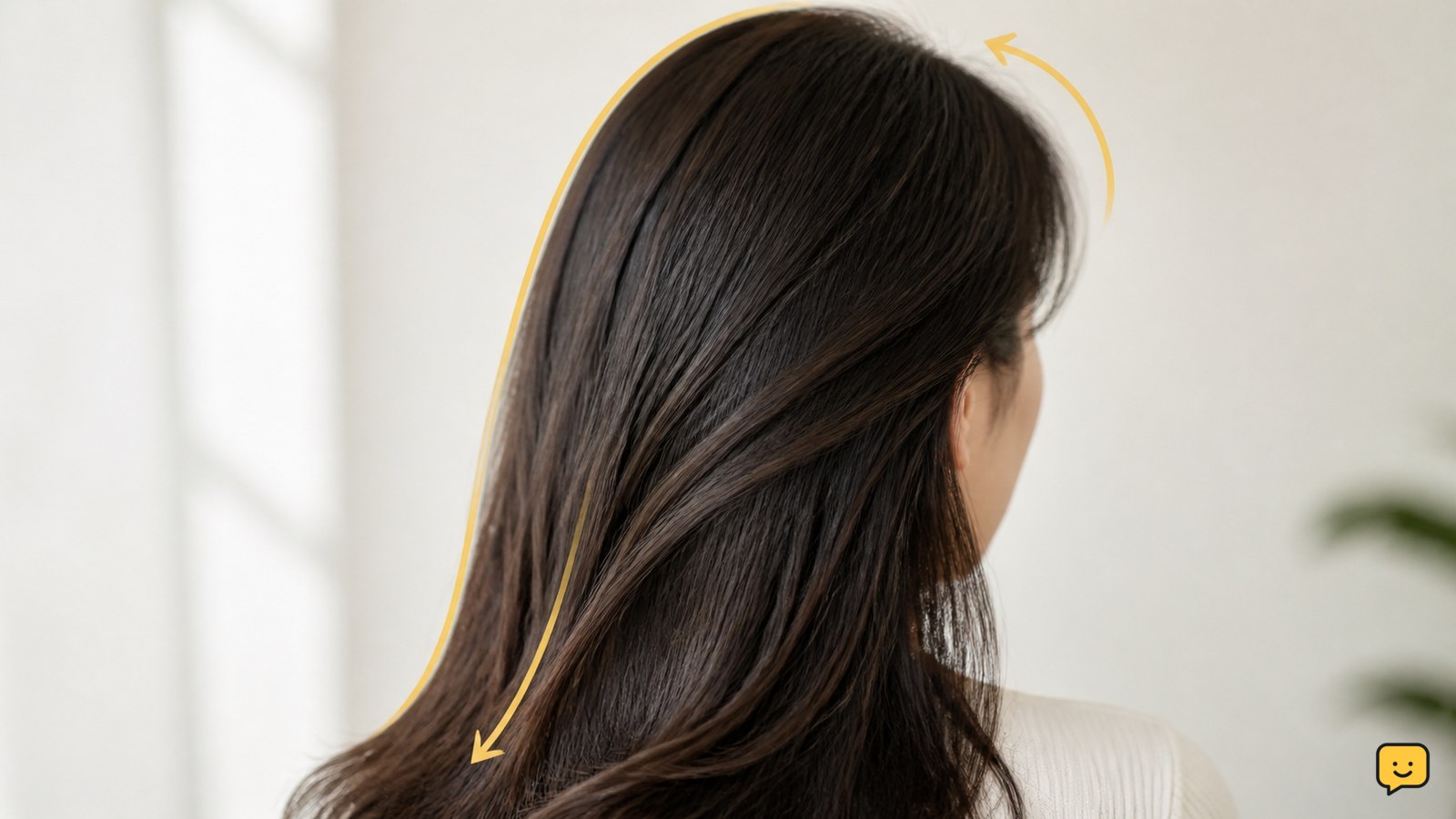
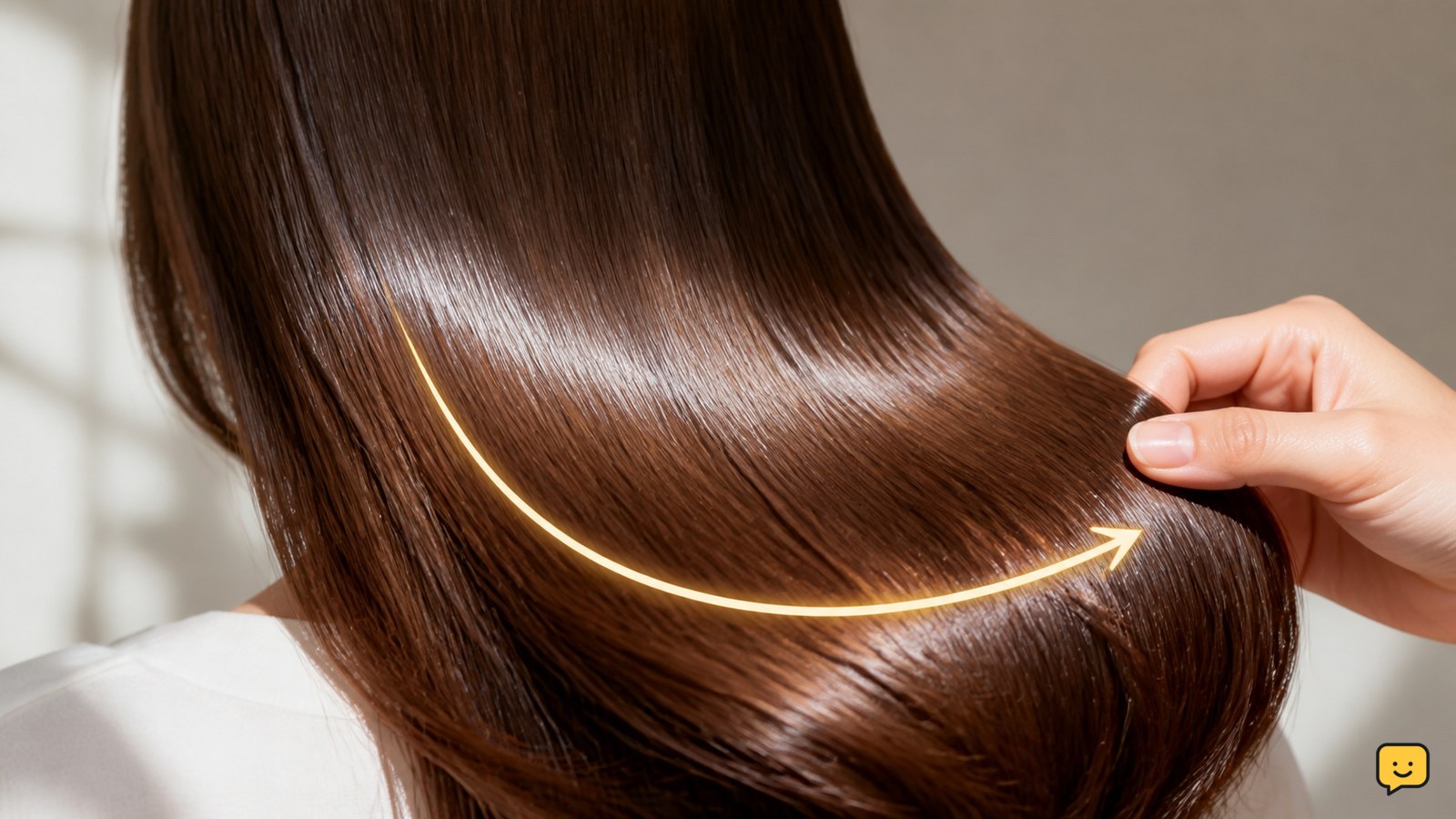
To get shinier hair, wash away buildup without scrubbing harshly, condition every wash, use a weekly mask if your lengths feel dry, and reduce high-heat styling. After drying, smooth a small amount of lightweight serum or oil over the mid-lengths and ends. Trim visibly split ends, and stop any product that causes itching, burning, flakes, or a greasy coating.
Wash away buildup without roughening the hair
Shiny hair starts with clean, smooth strands, so wash the scalp and rinse the lengths thoroughly rather than repeatedly scrubbing the hair itself. Concentrate shampoo at the roots, massage gently with your fingertips, and let the lather run through the lengths as you rinse.
If the roots look oily but the ends feel dry, keep the cleansing action at the scalp and avoid applying extra shampoo to the ends. If your hair feels coated after styling products, use a cleansing product only as directed on its label rather than repeating strong washes in one session.
Check the result: after rinsing, the roots should feel clean but not tight, and the lengths should not feel waxy. If the hair still feels coated, remove one styling product from the routine before increasing cleansing.
Condition every wash and add a weekly mask when needed
Conditioner helps shiny hair by making the lengths feel smoother after washing. Apply it from the mid-lengths to the ends, leave it on for the label’s recommended time, and rinse thoroughly. Keep heavier conditioner away from the roots if they become flat or oily quickly.
Use a nourishing hair mask about once a week when the ends feel dry, rough, or tangled. Dove specifically recommends conditioning after every wash and adding a weekly mask as a shine-supporting routine. Start with a small amount; too much can leave fine hair limp.
Verify the choice: the hair should detangle more easily and feel soft after drying, not greasy or sticky. If it feels heavy, shorten the mask frequency, apply it only to the ends, or switch to a lighter conditioner.
Dry and style with less heat and friction
Lower heat and gentler handling help preserve a smoother surface, which can make hair appear shinier. Press water out with a towel or soft T-shirt instead of rubbing the strands, then allow the hair to partially air-dry before using a dryer.
Maria Nila’s shine guidance recommends reducing heat styling. When you do use a dryer or hot tool, follow the appliance and heat-protectant instructions, use the lowest effective setting, keep the tool moving, and avoid repeated passes over the same section.
Stop and reassess: hair that feels brittle, unusually dry, or smells scorched has been overheated. Let it cool, avoid more heat, and return to conditioning and air-drying until the texture improves.
Smooth the finish with a small amount of serum or oil
A lightweight serum or hair oil can create immediate surface shine, especially on dry-looking mid-lengths and ends. Kérastase lists a hair serum as an option for extra gloss, while Maria Nila includes natural oils among shine-focused care choices.
Begin with one small drop or the amount stated on the product label. Warm it between your palms, then smooth it over the ends and lightly over the mid-lengths. Avoid the scalp unless the product is specifically designed for scalp use.
Use the visual check: the strands should reflect light without separating into greasy-looking pieces. If the hair looks flat or oily, wash out the excess and use less product on a smaller area next time.
Trim split ends instead of coating them
Trimming visibly split or frayed ends is the lasting way to remove that damaged section; a serum can make the ends look smoother temporarily but cannot repair a split strand. Maria Nila includes trimming split ends as part of its shine advice.
Look at the ends in bright, indirect light. If they branch, feel rough compared with the rest of the hair, or tangle repeatedly at the same point, book a small trim or trim only if you already know how to do so safely. Do not use household scissors.
If the ends look smooth but the whole head remains dull, focus on buildup, excess product, heat, or dryness rather than trimming more length.
Match the fix to the dullness pattern
The quickest adjustment depends on where the dullness appears and how the hair feels.
| What you notice | Likely routine issue | Next action |
|---|---|---|
| Greasy roots and flat hair | Too much conditioner, oil, or styling product near the scalp | Keep rich products on the lengths and reduce the finishing amount. |
| Dry, rough ends | Heat, friction, split ends, or insufficient conditioning | Condition the ends, air-dry more often, and arrange a trim if they are split. |
| Hair feels waxy or coated | Layered styling products or incomplete rinsing | Rinse thoroughly, simplify the routine, and follow the cleansing product label. |
| Shine disappears after styling | High heat or repeated hot-tool passes | Lower the setting, use fewer passes, and let the hair cool before adding serum. |
Change one variable at a time and compare the hair after it is fully dry. That makes it easier to identify which product or habit is affecting the finish.
Frequently asked questions
Can cold water make hair shinier?
A cool rinse may feel pleasant and can help remove leftover conditioner, but it is not the main step for shine. Thorough rinsing, regular conditioning, less heat, and a small amount of suitable finishing product have a greater practical effect. Stop rinsing if cold water causes discomfort or headaches.
How often should I use a hair mask for shine?
Use a hair mask about once a week when your lengths are dry, rough, or difficult to detangle. Fine or easily weighed-down hair may need it less often, while coarse or heavily processed hair may benefit from consistent weekly conditioning. Follow the product label and reduce use if the hair becomes limp or greasy.
Is oil good for shiny hair?
Oil can add temporary surface shine, especially to dry ends, but too much makes hair look greasy or stringy. Start with a very small amount on the mid-lengths and ends, never assume it belongs on the scalp, and wash it out if it causes irritation or a heavy coating.
Why is my hair shiny at the roots but dull at the ends?
Shiny roots with dull ends usually means the scalp is producing oil while the older lengths are dry, rough, heat-affected, or split. Keep shampoo focused on the scalp, condition the lengths, limit heat, use a light serum on the ends, and trim visibly split sections.
For more help with this topic, use the Grooming Personal Care guides.