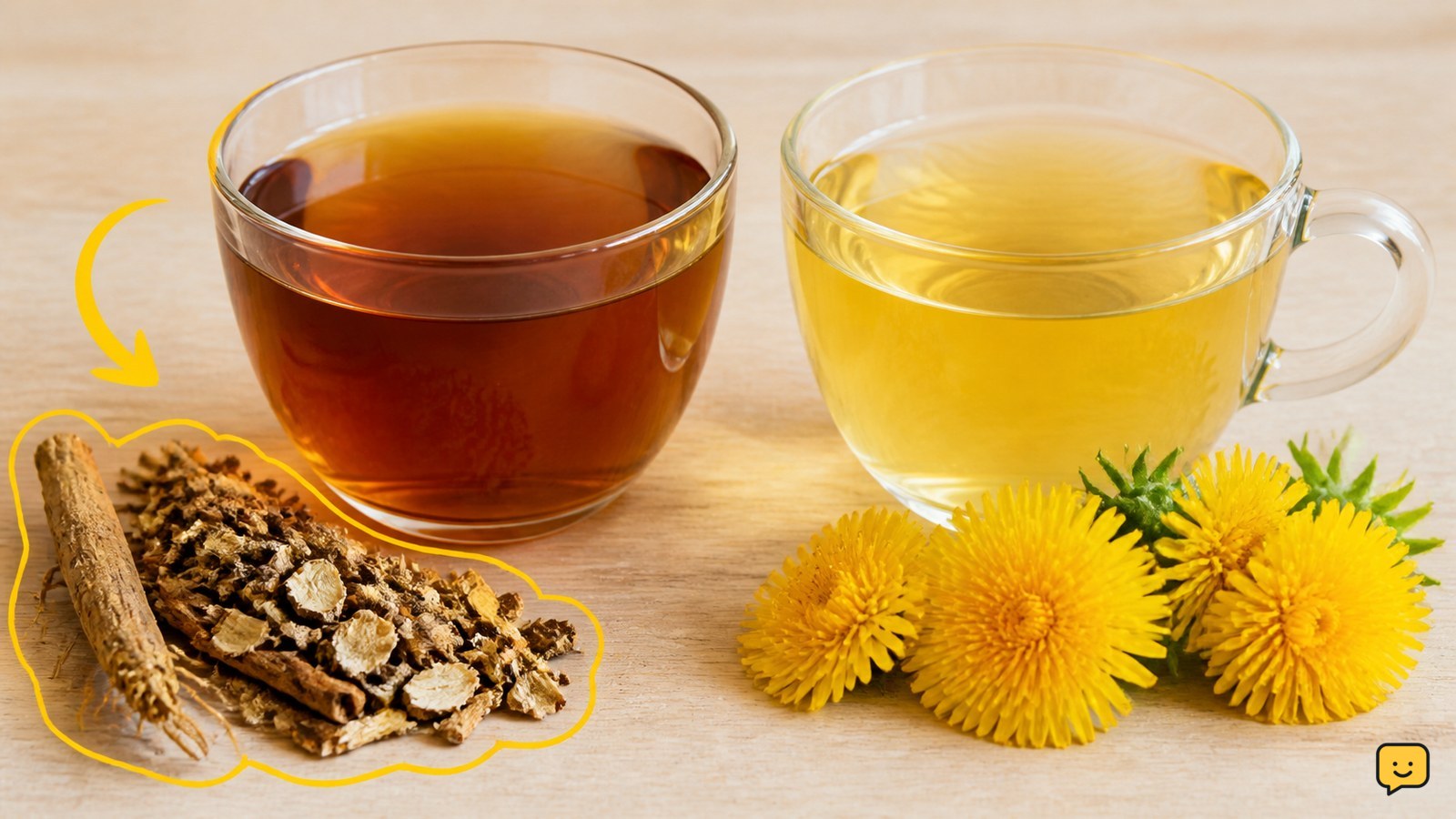
To make dandelion root tea, place dried dandelion root in a teapot or infuser, pour over hot water, steep for about 15 minutes, and strain. For flower tea, add clean dandelion flowers to one cup of hot water and steep for 5 to 10 minutes before straining. Use only correctly identified, food-grade dandelions.
Choose root tea for a deep, earthy cup
Dandelion root makes a darker, more robust tea than the flowers. The Celeste guide describes root tea as earthy and similar to burdock or chicory, with some bitterness and mild natural sweetness.
Use dried root when you want a stronger-tasting, caffeine-free herbal drink. Roasted root gives the cup a deeper flavor; LearningHerbs specifically documents roasted dandelion root as a tea option.
Brew dried dandelion root in 15 minutes
Dried dandelion root tea is ready when the root has steeped in hot water for about 15 minutes and the liquid has a noticeable brown-gold color and earthy aroma.
- Put one package-recommended serving of dried dandelion root into a teapot, mug infuser, or heatproof bowl. If the package gives no serving direction, use the product label or supplier instructions rather than guessing at a concentrated amount.
- Pour freshly boiled water over the root.
- Cover the vessel and steep for 15 minutes. Covering helps keep the water hot while the root infuses.
- Strain the liquid through a fine tea strainer. Check that no hard root pieces remain before drinking.
- Taste a small sip. Add water if it is too strong, or add a little honey or lemon if you want to soften the bitterness.
The steeping time and straining method match the root-tea instructions documented by Celeste. A successful cup should smell earthy, taste rounded rather than raw, and contain no loose root fragments.
Infuse dandelion flowers for 5 to 10 minutes
Dandelion flower tea is a lighter infusion than root tea. MasterClass’s preparation uses one cup of water and a 5-to-10-minute steep, producing a milder floral-herbal drink.
- Place clean, correctly identified dandelion flowers in a heatproof bowl, mug, or teapot.
- Boil one cup of water and pour it carefully over the flowers.
- Steep for 5 minutes, then taste. Continue to 10 minutes if you want a stronger infusion.
- Strain the flowers out before serving.
The tea is ready when it has a gentle herbal aroma and a flavor you find pleasant. If it tastes harsh, dilute it with more hot water instead of extending the steep indefinitely.
Fix bitterness without losing the tea’s flavor
Dandelion tea can taste bitter because root has a naturally earthy, robust profile, while a long flower infusion can become more intense. The safest first adjustment is dilution.
- Too bitter: Add hot water a little at a time and taste after each addition.
- Too weak: For root tea, steep the next batch for the full 15 minutes. For flower tea, use the upper end of the 5-to-10-minute range.
- Too earthy: Add lemon or a small amount of honey after straining.
- Gritty: Pour the tea through a finer strainer. Do not drink it while hard root pieces or plant debris remain in the cup.
Do not try to correct a chemical, moldy, or musty flavor with sweetener. Discard that batch and check the ingredient source.
Verify the cup before serving
Finished dandelion tea should be hot, clear enough to drink, and free of visible plant pieces. Root tea normally has a deeper color and stronger earthy aroma; flower tea should be lighter and more delicate.
Let the tea cool briefly before tasting. If the color, smell, or flavor is markedly different from the ingredient’s normal profile, stop and discard it. For repeatable results, record whether you used root or flowers and the steeping time, then adjust only one variable in the next cup.
Frequently asked questions
What part of the dandelion is used for tea?
Dandelion root and flowers can both be used for tea. Root produces a darker, earthier drink, while flowers make a lighter infusion. Use packaged, food-grade ingredients when possible, or forage only when the plant is correctly identified and the collection area is free from chemical treatment and contamination.
Does dandelion root tea need to be boiled?
No. Dried root tea can be made by pouring hot water over the root and steeping it for about 15 minutes, then straining. Follow the product label if it gives a different preparation method. Roasted root can be brewed in the same general way, although its flavor will be deeper.
Why does my dandelion tea taste bitter?
Dandelion root naturally has an earthy, slightly bitter flavor, and a longer infusion can intensify it. Dilute the tea with hot water first, then try honey or lemon. If the bitterness comes with a chemical, moldy, or musty smell, discard the tea rather than masking the flavor.
Can you make dandelion tea from flowers?
Yes. Add clean dandelion flowers to one cup of hot water, steep for 5 to 10 minutes, and strain. Begin tasting at 5 minutes so you can stop when the flavor is light and pleasant. Do not use flowers from treated lawns, roadsides, or uncertain locations.
For more help with this topic, use the Drinks guides.