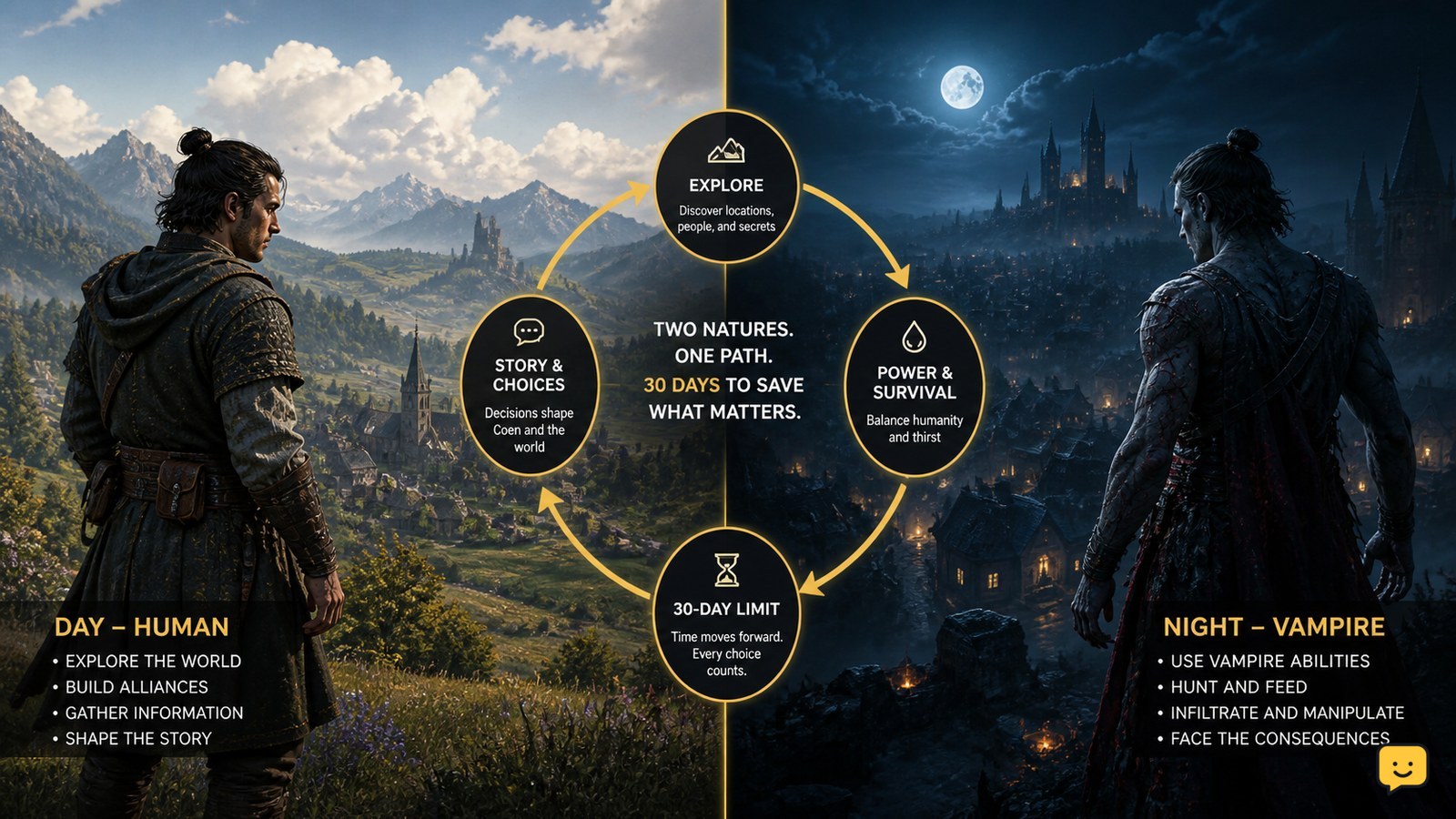
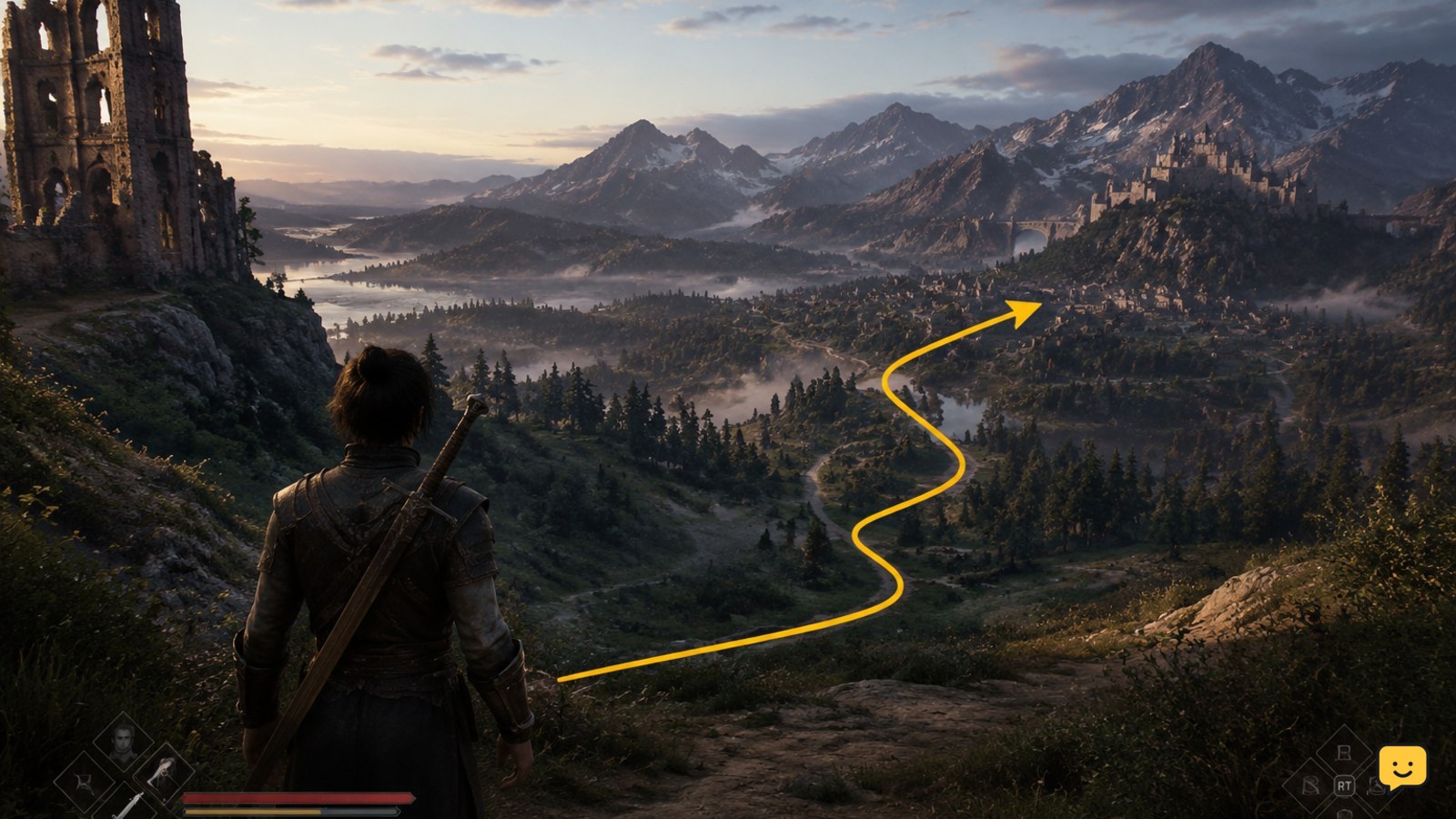
The Blood of Dawnwalker exploration is best approached as purposeful route planning rather than clearing every marker. Follow visible leads, investigate activities that connect to quests or lore, and keep the time-sensitive structure in mind before taking long detours. The exact map labels and interface may change, so verify each discovery in your current build.
Browse all the selected game guides
1. Understand how exploration is structured
The Blood of Dawnwalker presents an open world designed around meaningful activities, story consequences, and a limited-time structure. Public gameplay coverage highlights traversal, directional combat, magic, and a world intended to avoid filler content. That means the most useful exploration habit is to investigate with a reason: follow a quest lead, examine a suspicious landmark, search for a route forward, or pursue a resource that supports your current plan.
Do not assume that every visible object is a collectible or that every path must be completed immediately. A location can be valuable because it reveals information, opens a later route, supports a quest, or gives you a safer position for a future visit.
Verification: A discovery is worth recording when it produces a clear result, such as a new objective, dialogue entry, usable route, reward, map update, or persistent environmental clue.
2. Build a route around confirmed leads
Start each outing from one confirmed goal. This can be an active quest, a nearby point of interest, a character’s request, or a location mentioned in dialogue. Then add only nearby discoveries that fit the same direction. Grouping objectives reduces backtracking and makes the time pressure easier to manage.
- Read the current objective and note the destination, named landmark, or person involved.
- Choose the shortest route that still passes through locations relevant to that objective.
- Mark unfamiliar branches as optional rather than abandoning the main route.
- Return to a safe hub, quest giver, or known landmark before beginning a large unexplored detour.
Use environmental confirmation whenever possible. A road, settlement, river crossing, ruined structure, or distinctive elevation is more reliable than an isolated icon copied from an older preview or community map.
Failure path: If you lose your route, stop moving deeper, turn toward the last landmark you can identify, and recheck the objective text. If the objective does not identify a direction, resume from the last confirmed location rather than guessing from an unverified guide.
3. Search locations in a useful order
When you reach a new area, search it in layers instead of wandering randomly. Begin with the route through the area, then inspect nearby structures and interactive objects, and only afterward check side paths. This preserves your sense of direction and helps you recognize which discoveries are connected.
- Identify the entrance, exit, and one prominent landmark.
- Check the main structure or objective area for dialogue, clues, items, and usable interactions.
- Inspect nearby cover, elevated paths, crossings, and alternate entrances.
- Record blocked doors, inaccessible ledges, or unexplained symbols for a later return.
- Leave once the area has produced no new clue and the next objective is clear.
Traversal is a core part of the revealed gameplay, so examine vertical routes and movement options rather than searching only at ground level. However, do not assume that every visible ledge or shortcut is currently reachable. A blocked route may depend on story progress, an ability, a time condition, or another approach.
Verification: Confirm that the area is worth revisiting by checking whether it changed your objective, revealed a usable shortcut, exposed a new interaction, or supplied information that affects a decision.
4. Manage the time-sensitive design
The game’s timed structure changes how you should explore. A long excursion may have consequences even when combat is not involved, so exploration should support a decision rather than consume time without a clear benefit. Before leaving a known position, ask whether the next discovery can improve your immediate objective or whether it can wait.
- Separate essential objectives from optional discoveries.
- Complete nearby, low-risk investigations before starting a distant route.
- Return to the main objective when a detour produces no new information.
- Keep unresolved leads in written notes so you can revisit them deliberately.
Do not treat this as a traditional checklist where every marker must be cleared before the story advances. Public previews describe a world built around activities and lore, while community discussion has focused on how much freedom the timed design allows. Because the final balance can change, use the game’s own warnings, objective updates, and dialogue as the authority.
Stop condition: End optional exploration immediately when the game signals an approaching deadline, objective transition, major encounter, or irreversible choice.
5. Use combat and abilities as exploration tools
Directional combat and vampiric abilities are not only encounter systems; they can also affect how safely you move through the world. Approach unfamiliar areas with an escape route in mind, especially when visibility, enemy placement, or terrain makes retreat difficult.
- Scout the approach before entering a confined space.
- Identify cover, corners, alternate exits, and higher ground.
- Use the ability or movement option the current objective has already made available.
- Do not spend limited resources on an optional encounter if you still need them for the main route.
- After a fight, verify that the area is safe before searching containers, bodies, or nearby paths.
Public material confirms traversal, combat, and magic systems, but it does not establish a complete list of exploration abilities or their final unlock requirements. Avoid following guides that claim a specific power opens every blocked route unless your current version confirms that interaction.
Failure path: If an encounter prevents exploration, retreat to the last safe landmark, recover, and approach from another direction. If the route remains blocked, record it and continue with a confirmed objective instead of assuming the location is broken.
6. Verify discoveries and keep a return list
A simple discovery log makes recurring exploration more efficient. Write down the location’s landmark, what you found, what remains unavailable, and which objective or ability may be relevant later. This is especially useful in a world where activities and story choices can change what is available.
- Give each location a short name based on a visible landmark.
- Record confirmed rewards, clues, characters, and routes.
- Separate confirmed information from guesses or community reports.
- Review the return list whenever a new quest, ability, or story event changes your options.
- Delete an entry only after the game confirms that the location has no remaining purpose.
Before leaving, compare the result with your original reason for visiting. If you found a clue, route, objective update, or useful resource, the trip succeeded. If nothing changed and the route is still unclear, return later rather than repeatedly searching the same area.
Final check: Your exploration plan is working when each trip has one confirmed purpose, one known fallback route, and a short list of discoveries that can be verified in the current build.
Frequently asked questions
Is The Blood of Dawnwalker a fully open-world game?
The game is presented as an open-world action RPG with meaningful activities, traversal, lore, and story-driven exploration. Public sources do not establish every boundary, map region, or final activity type, so avoid treating preview footage or community maps as a complete description of the released world.
How should I explore with the game’s time limit?
Explore around confirmed objectives and nearby activities first. Keep distant detours optional, return when the game signals a deadline or major transition, and write down unresolved locations for later. The time-sensitive structure means clearing every visible point of interest may be less useful than choosing discoveries that support your current story goal.
What should I do if I cannot reach a location?
Confirm the route from a recognizable landmark, check the objective text, and look for another entrance or vertical approach. If the path is still blocked, record the location and continue with a confirmed objective. It may require story progress, an ability, a different time condition, or a route that preview information does not show.
Does The Blood of Dawnwalker use Evrima or Legacy mechanics?
No. Evrima and Legacy are branches of The Isle, not versions of The Blood of Dawnwalker. This guide applies only to The Blood of Dawnwalker’s revealed open-world, traversal, combat, magic, and time-sensitive design.
Browse more The Blood of Dawnwalker guides for help with this topic.