To trailer a boat, first confirm the tow vehicle, hitch, and trailer are rated for the loaded boat. Prepare the boat away from the ramp, connect the coupler, safety chains, wiring, and breakaway system, then secure the boat with its bow and stern restraints. Test the lights and brakes before driving slowly through turns and stops.
For more help with this topic, use the Accessories Ownership guides.
1. Check the tow vehicle, hitch, and trailer ratings
The tow vehicle, hitch, and boat trailer must be matched to the loaded boat before you reach the ramp. Check the vehicle and trailer labels or manuals for the permitted weight, ball size, tongue or coupler requirements, axle limits, tire limits, and any brake requirements.
Include the boat’s fuel, battery, water, safety equipment, and removable gear when judging the load. If you cannot confirm the loaded weight or any rating, stop and weigh the setup or ask the vehicle, trailer, or boat manufacturer for the correct limit.
Also inspect the trailer frame, coupler, jack, winch strap, bunks or rollers, fenders, tires, wheels, lights, and brakes. Look for cracked metal, loose fasteners, frayed straps, exposed wiring, damaged tread, or a tire that is visibly low.
2. Prepare the boat away from the launch lane
The boat should be ready before the tow vehicle enters the ramp queue. Move safety equipment and supplies into the boat, install the drain plug, remove or secure loose covers and gear, and make sure the engine or outboard is supported in the position specified by its manual.
Keep the boat secured to the trailer while traveling to the water. Boat-ed’s launch guidance specifically calls for removing trailer tie-down straps only at the appropriate point before backing down the ramp, not while the boat is still being transported to the launch area.
When you are ready to launch, disconnect the trailer’s electrical plug from the tow vehicle before the plug or wiring can enter the water. Check the ramp direction, water depth, current, traffic, and the location where the boat will be held after it leaves the trailer.
3. Connect the coupler, chains, wiring, and restraints
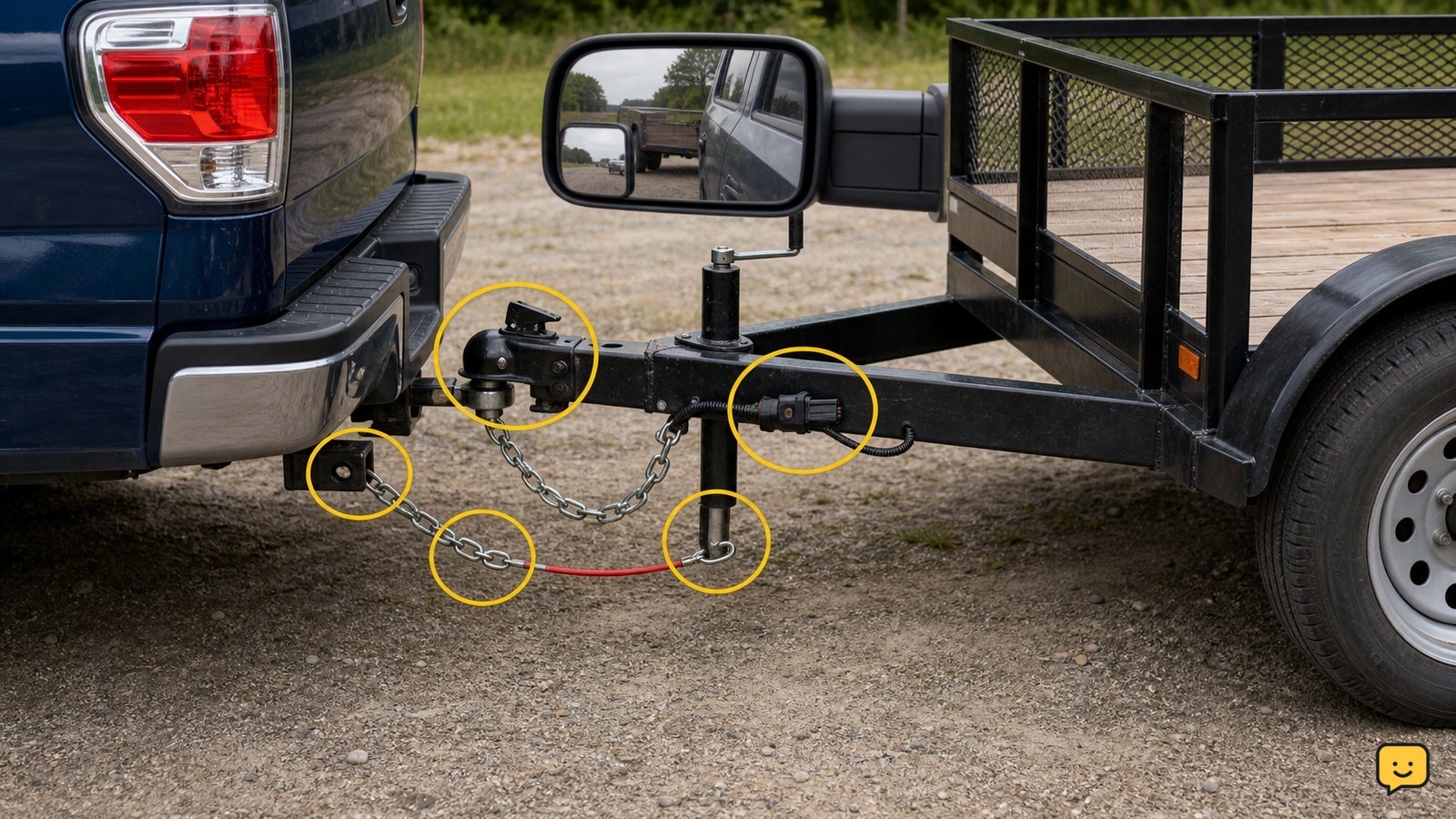
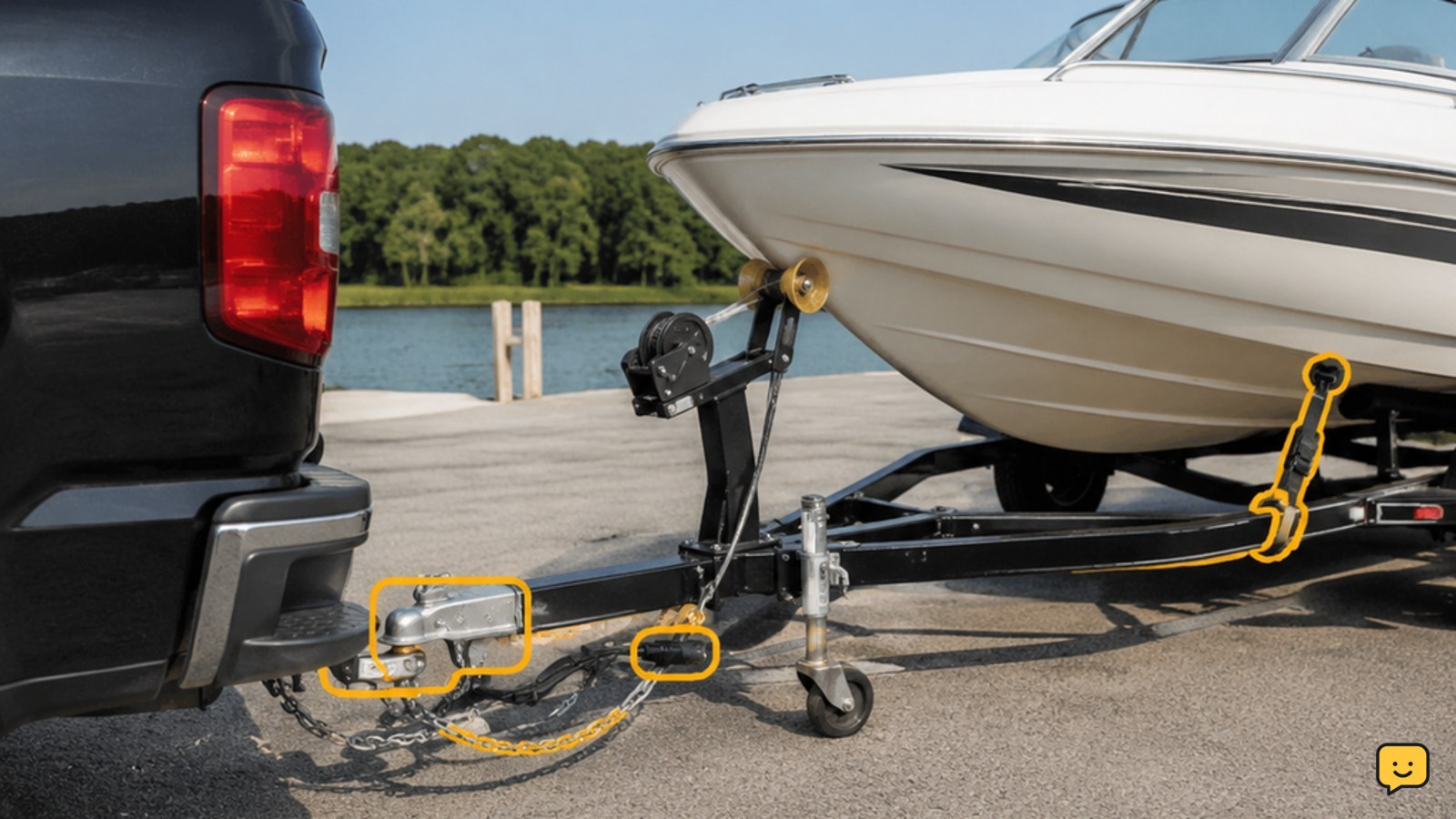
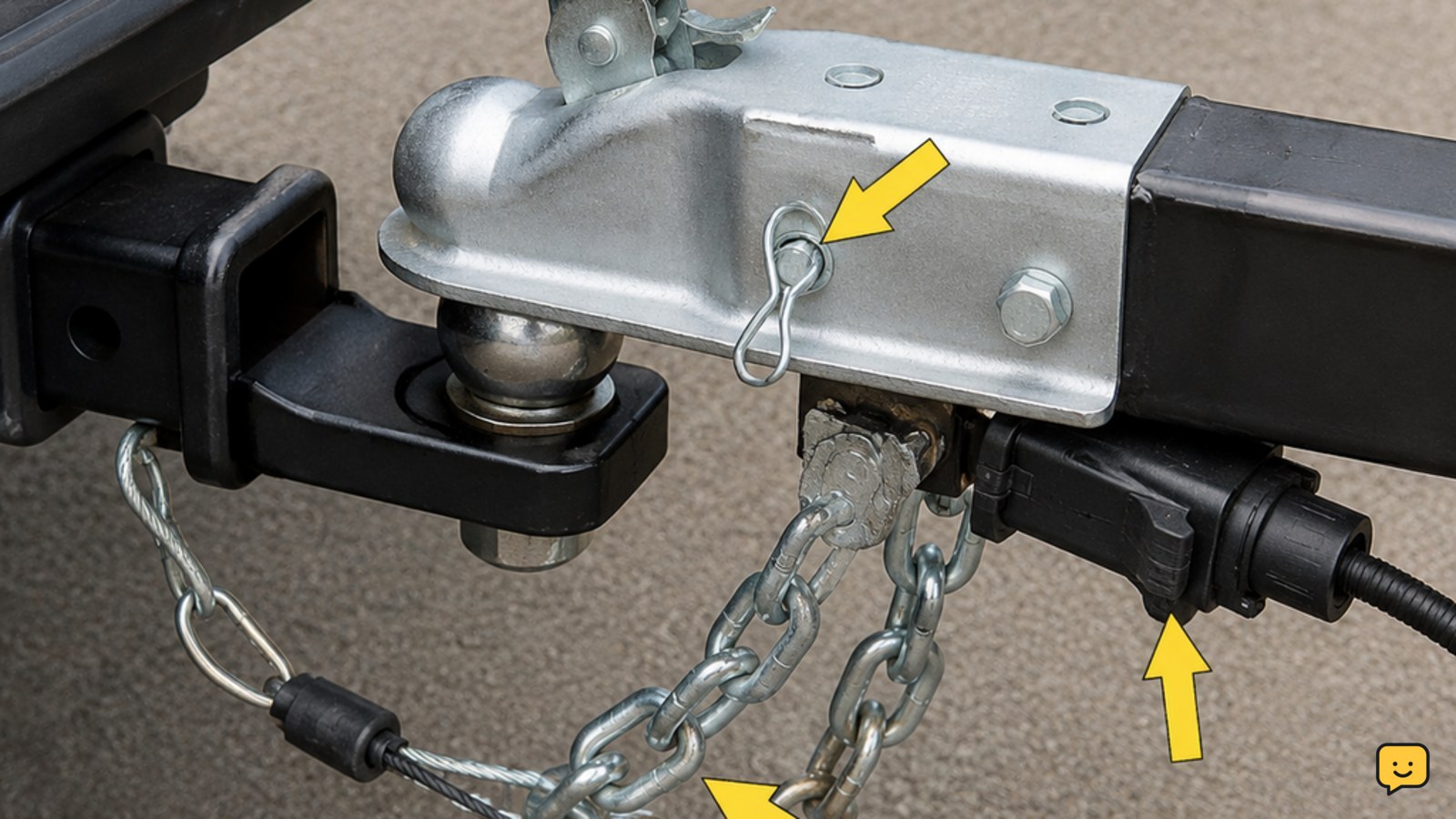
The trailer is connected only when the coupler is fully seated on the hitch ball, latched, pinned, and supported by the correct safety connections. Align the tow vehicle with the trailer, lower the coupler onto the ball, close the latch, and install the retaining pin or lock. UShip’s connection sequence also identifies the latch and safety pin as essential parts of this step.
Cross the safety chains beneath the coupler if the trailer design and local rules call for it, leaving enough slack for turns but not enough to drag. Attach the breakaway cable to a suitable point on the tow vehicle, separate from the safety chains, when the trailer has that system.
Plug in the trailer wiring and secure the connector so it cannot drag. Raise and lock the trailer jack, then remove wheel chocks only after the tow vehicle is ready to move. Walk around the entire combination and confirm the bow winch strap and stern tie-downs are tight.
For a broader checklist covering tow ratings, loading, hitch connections, lights, and brakes, use this beginner trailer safety guide before departure.
For a broader checklist covering tow ratings, loading, hitch connections, lights, and brakes, use this beginner trailer safety guide before departure.
4. Practice reversing, turning, and stopping in an open area
A boat trailer responds differently from the tow vehicle, so practice before entering traffic or a crowded marina. In a wide, level area, drive forward, make gradual turns, reverse in a straight line, and back into an empty parking space.
When reversing, place one hand at the bottom of the steering wheel. Move that hand in the direction you want the trailer to go, then make small corrections. Pause and pull forward to straighten the combination rather than allowing a sharp jackknife to develop.
Take corners wider than you would without a trailer. MasterCraft’s towing guidance highlights wide turns because the trailer wheels track inside the tow vehicle’s path. Confirm that the mirrors show both trailer sides and that you can stop without the boat or trailer contacting another object.
If the trailer repeatedly swings the wrong way, you lose sight of its position, or the tow vehicle cannot stop smoothly, stop practicing and get instruction before using the ramp.
5. Launch the boat without rushing the ramp
Launching requires a controlled sequence: stop on level ground before the ramp, set the parking brake, remove the boat’s transport tie-downs at the proper staging point, and keep the bow connected to the winch until the boat is controlled at the water.
Back down slowly and keep the tow vehicle and trailer aligned with the ramp. Use a spotter when available, agree on simple signals first, and stop immediately if the spotter disappears from view. Do not let anyone stand behind the trailer or between the vehicle and trailer.
When the trailer reaches the intended depth, set the tow vehicle securely and release or ease the winch connection only as directed by the trailer and boat manufacturer. If the boat does not float free, do not add sudden throttle or continue backing deeper. Recheck the water depth, drain plug, winch, tie-downs, and trailer alignment.
Bridge Marina recommends centering the boat on the trailer and using gentle bursts of throttle when driving a boat onto a trailer. The same controlled approach helps avoid striking the bunks, rollers, bow stop, or ramp edge during retrieval.
6. Retrieve, secure, and verify the boat before driving
For retrieval, center the trailer in the ramp lane, back it to the correct depth, and keep the tow vehicle straight. Guide the boat onto the bunks or rollers with small steering inputs and gentle power only when the boat and engine setup allow it. The bow should move firmly against the bow stop without the hull riding on a fender or missing a support.
Attach the winch strap before leaving the water, then pull the boat fully into its travel position. Refit every stern tie-down and any required transom or motor support. Raise the engine or outboard as specified by its manual, remove the drain plug only if required for storage or transport, and secure loose equipment.
Reconnect the trailer wiring after the trailer is clear of the water. Test the running lights, brake lights, turn signals, and electric or surge brakes if fitted. Walk around once more: the coupler is latched and pinned, chains are attached, the breakaway cable is connected, the jack is raised, the tires look sound, and no strap or cable can touch the road.
Drive the first short distance slowly, brake gently, and stop in a safe place to recheck the straps and load. If the boat has moved, a light fails, the trailer pulls to one side, or the brakes feel different, do not continue until the cause is corrected.
Frequently asked questions
Should I remove the boat’s tie-down straps before backing down the ramp?
Remove transport tie-downs only at the staging point immediately before launch, while keeping the bow secured until the boat is controlled. Do not remove them at home or during the drive to the ramp. If the ramp is steep, crowded, or unfamiliar, keep the boat secured and ask for help rather than improvising.
How do I know the boat is centered on the trailer?
The hull should sit evenly on the bunks or rollers, the bow should reach the bow stop, and the boat should not lean or contact a fender. If the boat is offset, stop before tightening the final restraints. Reposition the trailer or boat at a safe depth instead of correcting a serious misalignment with sudden throttle.
Can I trailer a boat without trailer brakes?
Only if the vehicle, trailer, loaded weight, and local rules permit that configuration. Trailer brakes may be required by the trailer manufacturer or jurisdiction, and the tow vehicle must still stop the combination smoothly. If braking feels weak, uneven, or delayed, stop driving and have the system inspected.
What should I do if the trailer starts swaying on the road?
Keep the steering wheel steady, avoid a sudden lane change, and reduce speed gradually without sharply applying the brakes. Move to a safe place and inspect the load, tires, restraints, and hitch connection. Do not continue if the boat shifted, a tire is damaged, or the cause of the sway is not clear.