For washable clothes, remove wet paint promptly by lifting excess, rinsing from the back with cool water, and working in liquid laundry detergent. For dried paint, gently scrape off the surface first, then treat the remaining mark according to the care label. Do not tumble-dry until the paint and cleaner residue are gone.
For more help with this topic, use the Cleaning Stain Removal guides.
Check the paint and fabric before treating the mark
Identify the garment fabric, paint type, and stain age before choosing a remover. Washable cotton and synthetic clothing can usually be treated at home, but dry-clean-only garments and delicate fibers need professional care. Read the paint container if it is available: water-based paint and oil-based paint do not respond to the same products.
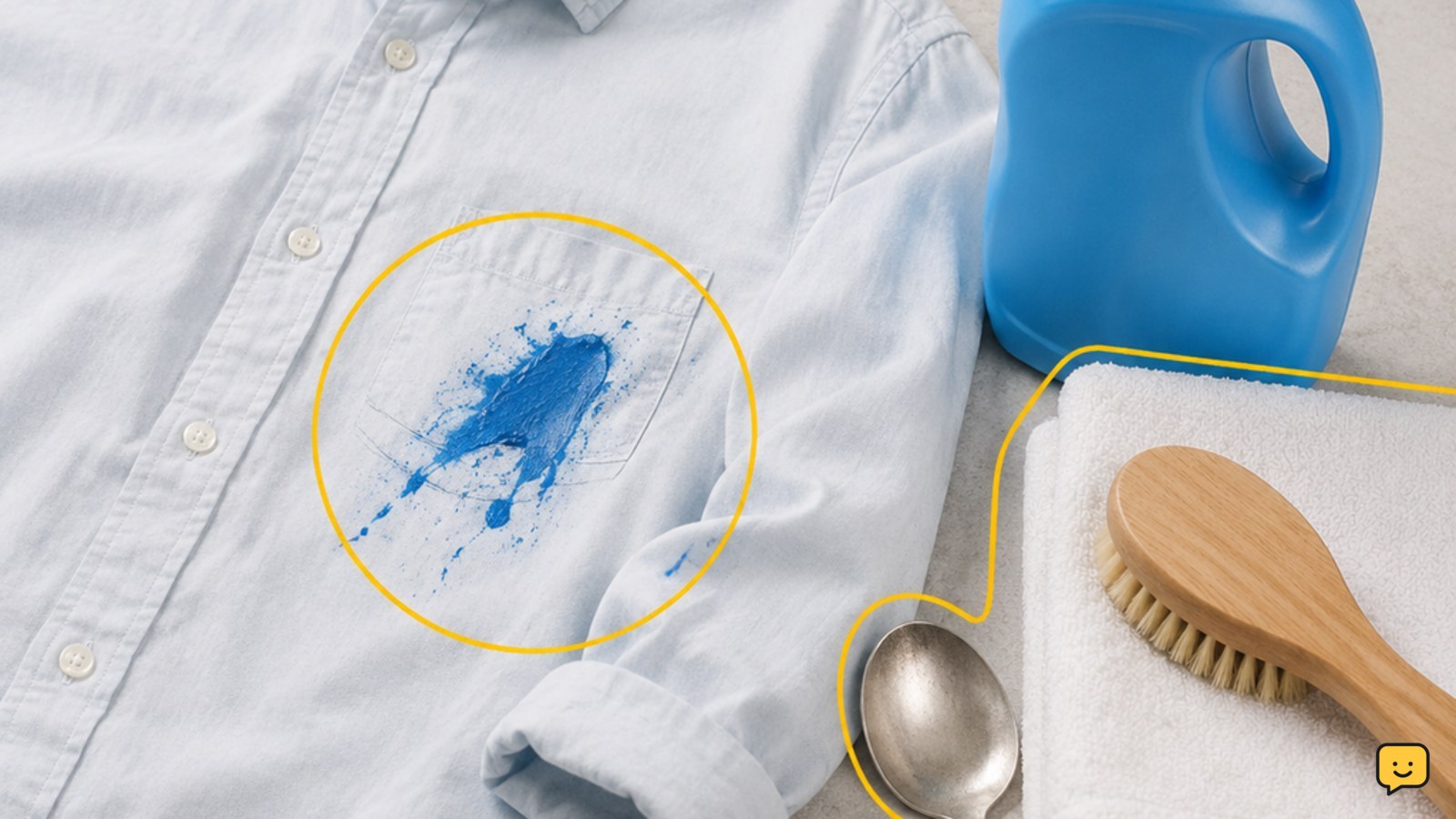
Put the stained area face down over a white towel. This gives loosened paint somewhere to go and helps you see whether color is transferring. Do not rub the front of the stain, because that can spread wet paint deeper into the weave.
Lift wet paint without spreading it
Wet paint is easiest to remove when you lift the excess before rinsing. Use the edge of a spoon or dull knife to pick up paint from the surface, wiping the tool after each pass.
- Turn the garment inside out or position the stained side over the towel.
- Flush cool running water through the back of the fabric so the paint moves out rather than further into the fibers.
- Apply a small amount of liquid laundry detergent to the remaining mark.
- Gently work the detergent from the back with your fingers or a soft brush, then rinse.
Success looks like less visible paint after each rinse and no colored transfer to a clean part of the towel. Repeat the detergent treatment once if the mark is shrinking. If the stain spreads, stop rubbing and rinse from the reverse side again.
Loosen dried paint before washing
Dried paint should be reduced mechanically before liquid treatment. Use a spoon, dull table knife, or firm but clean brush to remove only the raised surface; the Red Kap workwear guide also recommends soaking dried paint in cold water before attempting removal.
- Place the garment on a flat, protected surface.
- Gently scrape or brush away flakes without pulling the fabric.
- Soak the affected area in cool water for several minutes.
- Lift softened residue and rinse through the back of the fabric.
- Work in liquid laundry detergent, leave it briefly according to the detergent label, and rinse thoroughly.
Do not use a sharp blade or aggressive brushing. Stop when the remaining mark is flat but does not lighten after a careful detergent treatment; repeated abrasion can damage the fibers even when paint remains.
Choose a stronger treatment only after a hidden-fabric test
Some dried paint marks need more than detergent, but a stronger product can remove the garment’s dye as well as the paint. OxiClean notes that acetone and hairspray may help with dried paint while warning that they can pull color from some fabrics. Treat those products as optional, fabric-dependent choices rather than universal removers.
- Check the care label and product directions first.
- Test a tiny amount on an inside seam using a white cloth.
- Wait and inspect for color transfer, fading, stickiness, or surface damage.
- If the test passes, dab the product on the paint from the outside edge toward the center, using a fresh section of cloth as residue lifts.
- Rinse thoroughly, then apply laundry detergent to remove product residue.
Do not use acetone on acetate or other fibers prohibited by the garment or product label. Avoid hairspray as a first choice because formulations vary. Never combine either product with bleach, ammonia, vinegar, or another cleaner.
Wash and verify the garment before using heat
Wash the garment using the warmest setting allowed by its care label and the detergent instructions. Keep it separate from unaffected items if loose paint or solvent residue is still present.
Inspect the fabric while it is still wet and before putting it in a dryer. A successful treatment leaves no raised paint, tacky residue, strong cleaner odor, or spreading color halo. If a faint mark remains, repeat the safest treatment that passed the hidden-fabric test and wash again.
Do not apply heat until the stain is gone. A dryer or iron can set remaining paint and make later removal harder. Air-dry the garment while checking the mark in bright light.
What to do when the paint will not come out
If paint remains after scraping, cool-water rinsing, detergent, and one compatible treatment, the paint may have bonded to the fibers or the chosen product may not match its formulation. Do not keep escalating chemicals or scrubbing harder.
For oil-based paint, unknown paint, valuable clothing, large splashes, or stains that reach a lining, consult a professional cleaner and identify the paint if possible. Tell the cleaner which products have already touched the garment. If cleaner fumes cause irritation, move to fresh air, rinse exposed skin with water, and stop handling the garment until it can be assessed safely.
For general stain-care checkpoints, compare the same scrape, rinse, treat, and no-heat inspection used in safe chocolate stain removal.
For a comparable scrape-and-check stain process, see safe chocolate stain removal before using heat.
Frequently asked questions
Can you remove dried paint from clothes?
Yes, dried paint can sometimes be removed from washable clothing. Scrape off raised flakes with a dull tool, soak the area briefly in cool water, rinse from the back, and work in liquid laundry detergent. Test any stronger product on an inside seam first. Stop if the color transfers or the fabric changes.
Does hot water remove paint from clothing?
Cool water is the safer starting point because it helps flush wet paint from the reverse side without adding heat. Follow the garment label for the later wash. Do not use a dryer or iron while any paint shadow remains, because heat can set the residue.
Can acetone remove paint from clothes?
Acetone can help with some dried paint, but it may also remove fabric dye or damage certain fibers. OxiClean specifically warns that color loss is possible. Use it only when both the garment and product labels allow it, test an inside seam first, ventilate the area, and rinse thoroughly afterward.
What should you do if paint gets on dry-clean-only clothing?
Do not soak or apply household solvents to dry-clean-only clothing. Lift excess paint without rubbing, leave the stain otherwise untreated, and take the garment to a professional cleaner. Identify the paint and list any product that has already been used.