To polish stainless steel, remove loose dirt with warm water, a little dish detergent, and a soft sponge. Dry it completely, then apply a small amount of stainless-steel polish to a microfiber cloth and work with the grain. Buff off all residue with a clean cloth. Stop if the finish is coated, scratched through, or becoming dull.
Check the finish before choosing a polishing method
Household stainless steel can have a brushed grain, a smooth reflective finish, or a protective coating, so the safest polishing method depends on the surface condition. A normal polish is suitable for fingerprints, light smears and a dull appearance. It is not a repair for deep scratches, corrosion pits, peeling coatings or plating damage.
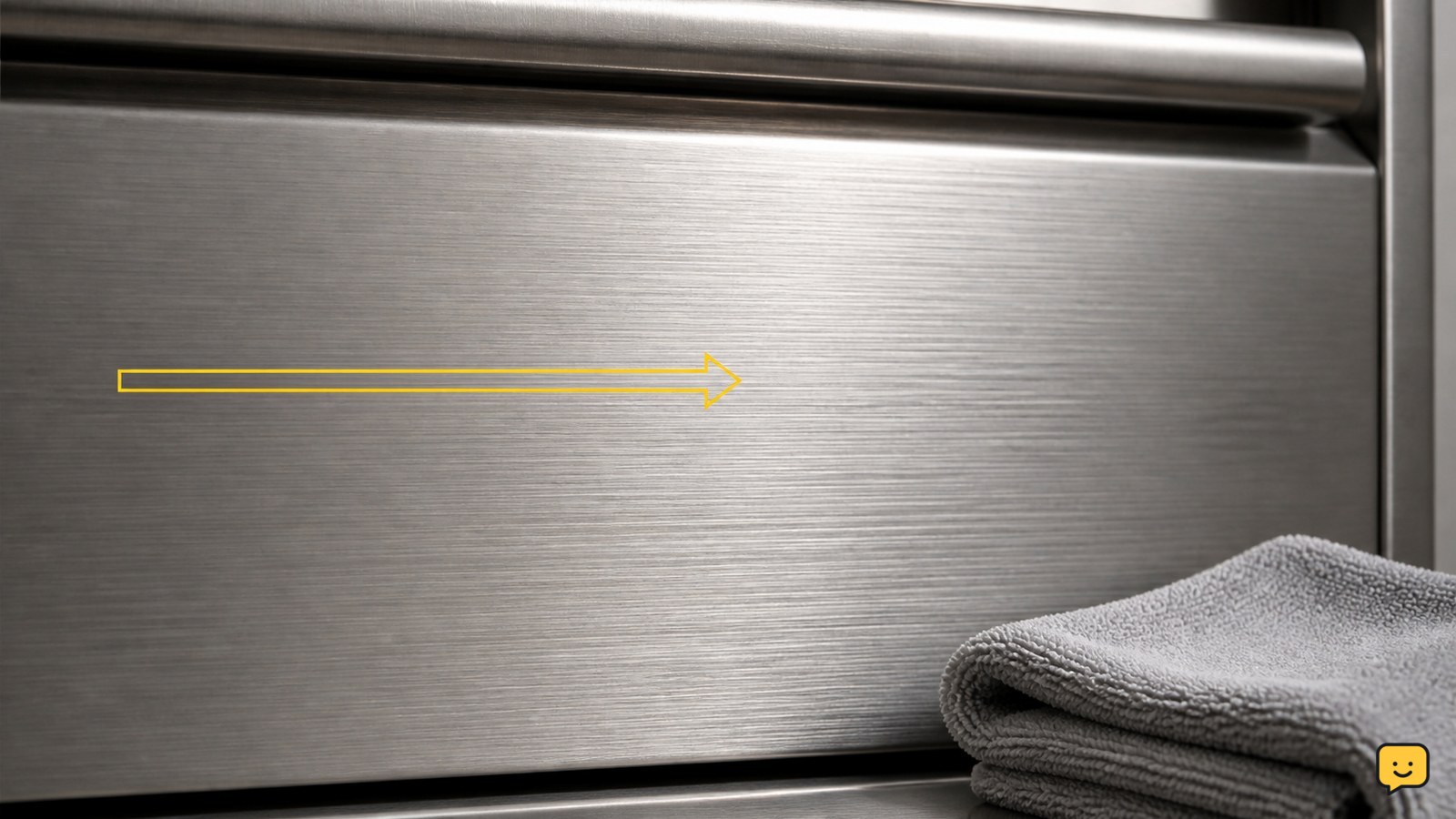
Look at the surface under a bright light. Fine lines running in one direction indicate a brushed finish; a mirror-like reflection indicates a smooth finish. If the finish looks like a printed or coloured layer, treat it as coated and follow the manufacturer’s care instructions instead of using an abrasive.
For a brushed surface, the grain is the direction of the fine lines. You will use that direction for every wipe. Rubbing across it can leave visible tracks, especially when grit is trapped in the cloth.
Clean away grit and residue first
Cleaning first prevents dust and dried food from becoming abrasive during polishing. Mix warm water with a small amount of mild dish detergent, dampen a soft sponge or cloth, and wipe the entire area with the grain.
- Remove loose crumbs, dust and splashes without pressing hard.
- Wipe again with clean water to remove detergent residue.
- Dry the surface completely with a clean microfiber cloth, following the grain.
BS Fixings recommends warm water, dish detergent and a soft sponge as the initial cleaning stage for stainless steel. The surface should feel smooth and clean before polish is applied. If you can still feel grit, repeat the rinse rather than increasing pressure.
For a sink or food-contact surface, rinse thoroughly after cleaning and keep the polish away from areas that contact food unless its label specifically permits that use.
Apply stainless-steel polish in a small test area
Use a small amount of stainless-steel polish on a microfiber cloth, not a large wet layer on the metal. Follow the product label for whether it should be applied to the cloth or directly to the surface; applying it to the cloth gives better control on appliances and narrow fixtures.
- Choose a hidden section, such as an underside edge or rear corner.
- Spread a thin, even film over a section no larger than your hand.
- Work with the grain using light, overlapping strokes.
- Wipe the area clean with a second dry microfiber cloth.
A successful test area looks even, feels dry rather than greasy, and has no cloudy film or new lines when viewed from several angles. If it looks hazy or feels sticky, remove the residue with a clean damp cloth, dry it, and do not use that product on the rest of the surface.
Polish improves appearance; it does not function as a substitute for removing mineral scale, burnt-on residue or active rust. Clean those problems using a product approved for the particular surface before attempting a final polish.
Buff with the grain until the surface is dry
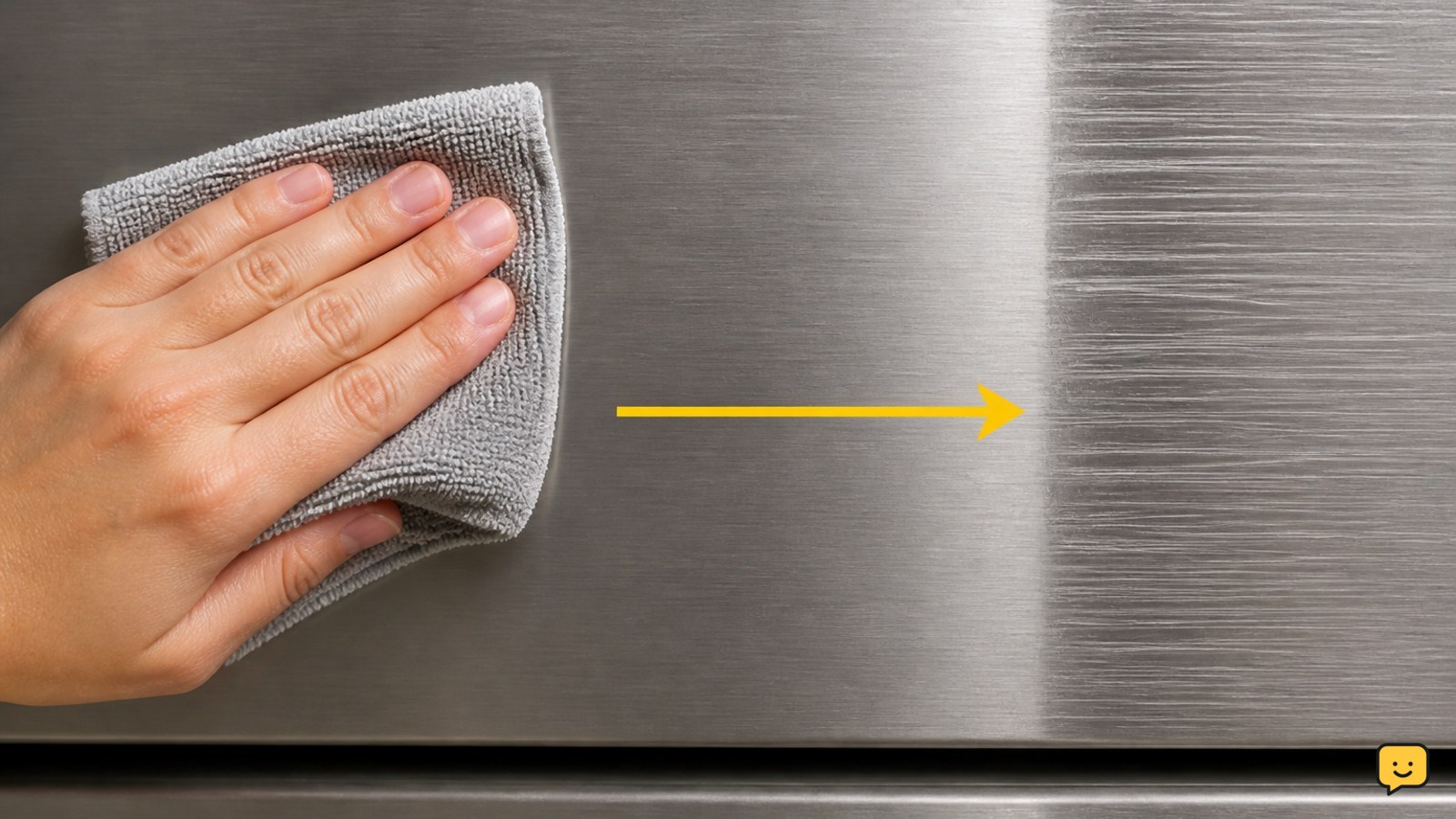
Buffing removes excess product and evens out the finish. Use a fresh, dry microfiber cloth and make long strokes in the same direction as the grain. Turn the cloth frequently so you are not spreading removed residue back across the metal.
- Start at one edge and work across the panel in overlapping passes.
- Use light pressure; extra force can create uneven shiny patches on brushed metal.
- Change to a clean section of cloth when it becomes damp or leaves streaks.
- Inspect the surface from different angles under bright light.
The finished surface should look uniform, with no oily rainbow, cloudy patches, fingerprints or visible polish lines. On brushed stainless steel, the grain should remain continuous rather than appearing crossed or swirled.
If streaks remain, use a barely damp microfiber cloth to lift the residue, dry the surface, and buff again with a clean cloth. Do not add more polish automatically; excess product is a common reason for a greasy or streaked result.
Choose a different repair path for scratches or heavy damage
Light surface marks may improve with careful cleaning and polishing, but scratches that catch a fingernail require material removal rather than more polish. Do not sand a refrigerator door, dishwasher panel, sink or fixture unless its manufacturer permits abrasive restoration and you have confirmed that the metal is bare and uncoated.
For workshop pieces made from bare stainless steel, abrasive restoration is a separate process. Empire Abrasives describes progressing through increasingly fine abrasives, with examples beginning around 150–240 grit and moving through 400, 600 and finer grades for a more reflective finish. Practical Boat Owner describes a similar progression from coarse abrasive through finer grades. These methods can permanently change the texture and are not appropriate for routine appliance care.
Stop if a scratch exposes a different colour, the surrounding finish becomes uneven, or sanding creates a wider dull area. At that point, replace the damaged trim or consult a qualified refinisher rather than trying to blend the mark with household polish.
Frequently asked questions
Can I polish stainless steel with olive oil?
Olive oil can temporarily make a surface look shinier, but it leaves an oily film that attracts dust and fingerprints. A stainless-steel polish labelled for the surface is a more controlled option. If you use any oil-based product, apply only a trace amount to a cloth, keep it away from heat and food-contact areas, and buff until no greasy residue remains.
Why does my stainless steel look streaky after polishing?
Streaks usually come from too much product, a damp surface, residue left from detergent, or wiping across the grain. Remove the film with a clean, barely damp microfiber cloth, dry the metal fully, then buff with a fresh dry cloth in the grain direction. If the surface stays cloudy, stop and remove the product according to its label.
How do I polish brushed stainless steel?
Clean and dry the surface first, identify the fine brushed lines, and apply a thin layer of suitable polish with light strokes that follow those lines. Buff in the same direction using a clean microfiber cloth. Never use circular motions or a harsh abrasive on a brushed appliance panel unless the manufacturer specifically approves it.
Can polishing remove rust from stainless steel?
Polishing alone does not remove active rust or corrosion pits. First identify a cleaner approved for stainless steel and the particular item, then rinse and dry it completely before polishing. If rust has pitted the metal, changed its colour permanently, or keeps returning, stop polishing and arrange repair or replacement.
For more help with this topic, use the Cleaning Stain Removal guides.