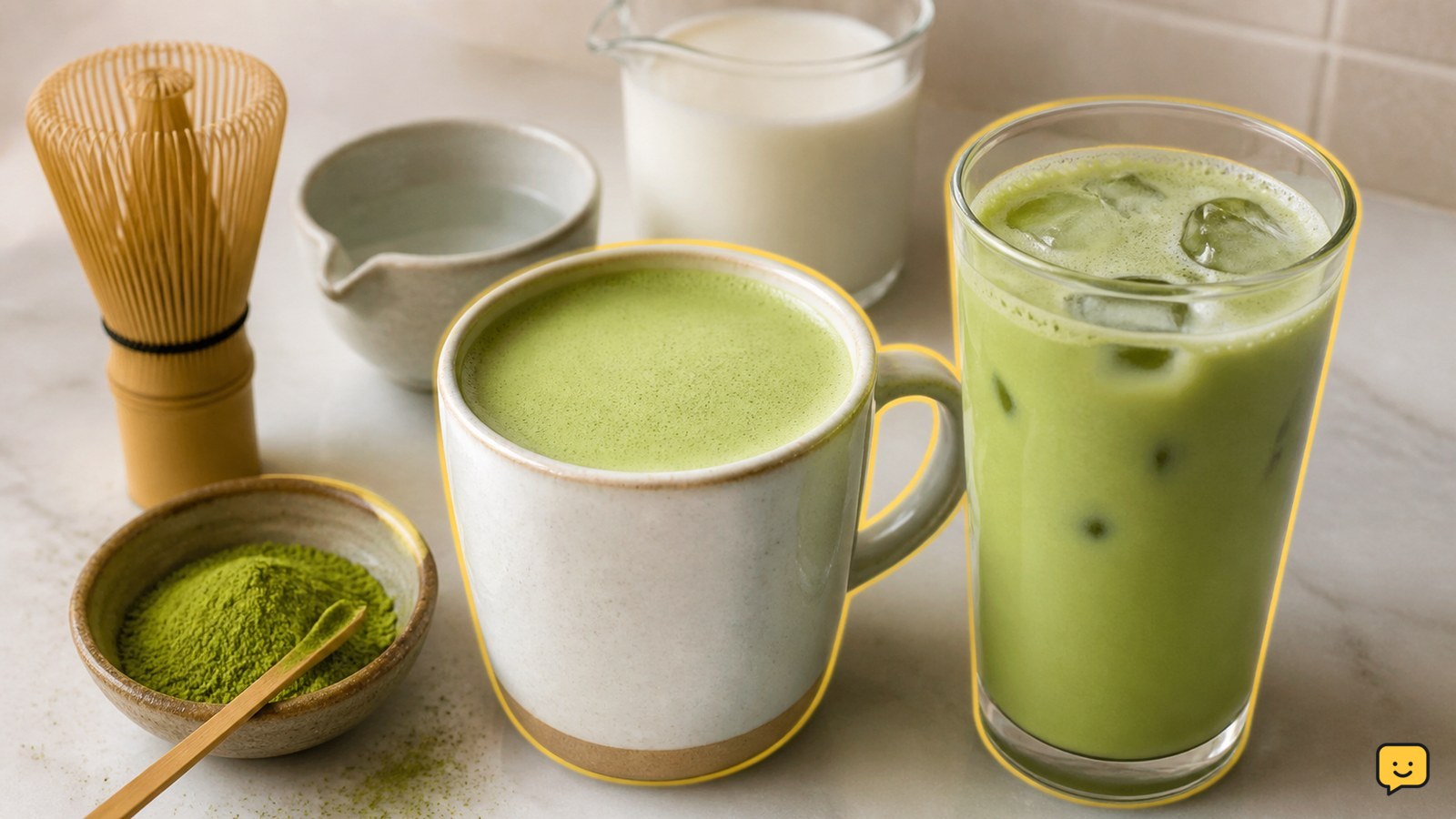
To make one matcha latte, sift 1 teaspoon matcha into a cup, add 2 tablespoons warm water, and whisk until smooth and lightly foamy. Stir in 1 to 2 teaspoons sweetener, add 1 cup warm or cold milk, and whisk again. For an iced latte, pour the milk over ice before adding the matcha mixture.
Gather the matcha latte ingredients and tools
A matcha latte needs matcha powder, a small amount of warm water, milk, and optional sweetener. For one serving, use 1 teaspoon matcha, 2 tablespoons warm water, 1 cup milk, and 1 to 2 teaspoons honey, sugar, maple syrup, or another sweetener.
Sifting is the simplest way to reduce clumps. Pass the matcha through a fine-mesh strainer into a cup or bowl before adding water. The Canal Coffee Company recipe also recommends sifting before whisking and supports either a warm or iced preparation.
Whisk the matcha into a smooth concentrate
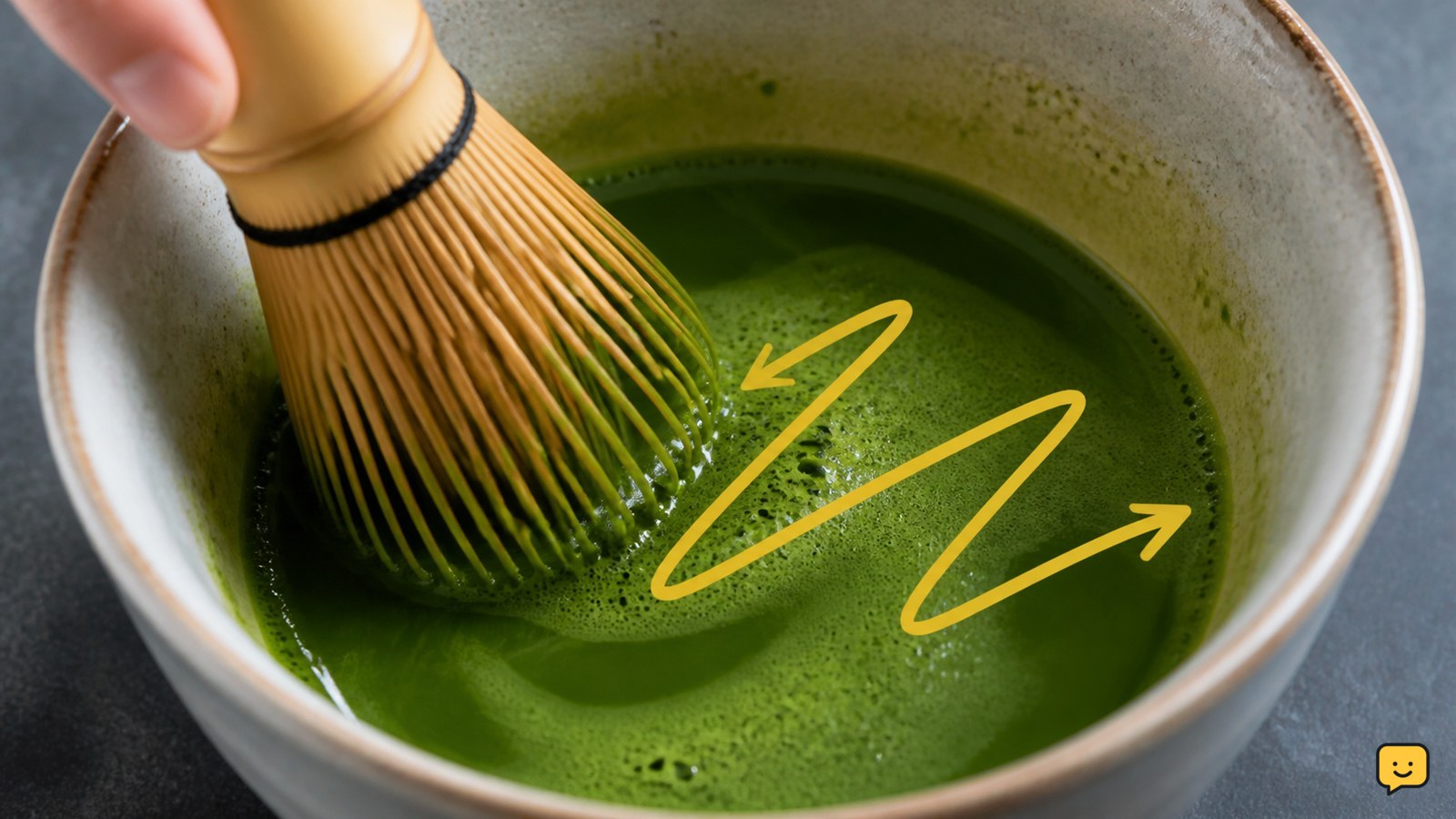
The matcha concentrate should be smooth before any milk is added. Pour the warm water over the sifted powder and whisk briskly in a zigzag or back-and-forth motion until no dry pockets remain and a thin layer of foam appears.
- Add the sifted matcha to a cup or small bowl.
- Pour in 2 tablespoons warm water.
- Whisk for about 15 to 30 seconds, working across the bottom and sides.
- Stir in the sweetener while the concentrate is still thin.
A bamboo whisk gives the most traditional texture, but a handheld frother or small whisk works when that tool is unavailable. The expected result is a pourable, deep-green liquid rather than a thick paste.
Add warm milk without overheating it
For a warm matcha latte, heat 1 cup milk until steaming but not boiling, then pour it gradually into the matcha concentrate. Whisk or stir as you pour so the green mixture disperses evenly instead of settling at the bottom.
Check the finished drink before serving: it should look evenly green, feel creamy, and have a balanced grassy, lightly sweet flavor. If the matcha collects at the bottom, stir from the base of the cup once more. Dairy milk, oat milk, soy milk, almond milk, and other milk alternatives can be used; thicker options usually produce a fuller mouthfeel.
Build an iced matcha latte over ice
An iced matcha latte is made by chilling the milk with ice before adding the whisked matcha. Fill a tall glass with ice, pour in 1 cup cold milk, and slowly add the sweetened matcha concentrate.
Stir from the bottom or use a frother briefly after combining. A layered green-and-white appearance is normal at first, but the drink is ready when the color becomes mostly uniform and no visible powder remains on the surface.
Fix clumps, bitterness, or weak flavor
Clumps usually mean the powder was not sifted or the water was added too quickly. Strain the concentrate through a fine-mesh strainer, then whisk it again with a tablespoon of warm water. Do not add dry matcha directly to a full glass of milk; it is harder to disperse.
If the latte is bitter, use less matcha in the next serving, add a little more milk, or increase the sweetener gradually. If it tastes weak, strengthen the concentrate with a small amount of additional sifted matcha mixed separately with warm water. The strong, creamy recipe described in the supplied 2026 tutorial also emphasizes building a concentrated matcha base rather than using excessive powder.
Clean and store the matcha tools safely
Rinse a bamboo whisk immediately after use with clean water and let it air-dry with the bristles spread. Do not leave it soaking or scrub it aggressively, because that can damage the whisk. Rinse a handheld frother or regular whisk according to its material and keep electrical parts away from water.
Seal unused matcha in its original airtight container and store it away from heat, light, and moisture. Refrigerate leftover prepared latte promptly in a covered container and use it soon; shake or stir before drinking because matcha naturally settles.
Frequently asked questions
Can I make a matcha latte without a bamboo whisk?
Yes. A handheld milk frother, small regular whisk, or sealed jar can mix the matcha. First sift the powder, add a small amount of warm water, and mix until smooth before adding milk. A jar should not be filled with very hot liquid, and its lid must be secure before shaking.
What milk tastes best in a matcha latte?
Oat milk gives a naturally creamy, slightly sweet result, while dairy milk has a fuller texture. Soy, almond, and other milk alternatives also work. Choose an unsweetened version if you want to control the sweetness, or reduce the added sweetener when using a sweetened milk.
Why does my matcha latte taste bitter?
A bitter latte usually has too much matcha, overly hot water or milk, or too little dilution and sweetness. Try 3/4 teaspoon matcha for the next serving, use hot rather than boiling water, and add milk before adjusting the sweetener. Do not keep adding powder to correct a weak-looking color.
Can I prepare matcha latte ahead of time?
Yes, but the powder will settle and the texture may become less foamy. Store the covered drink in the refrigerator, then shake or stir it before serving. Discard it if the milk develops a sour smell, curdling, or another unusual change.
For more help with this topic, use the Drinks guides.