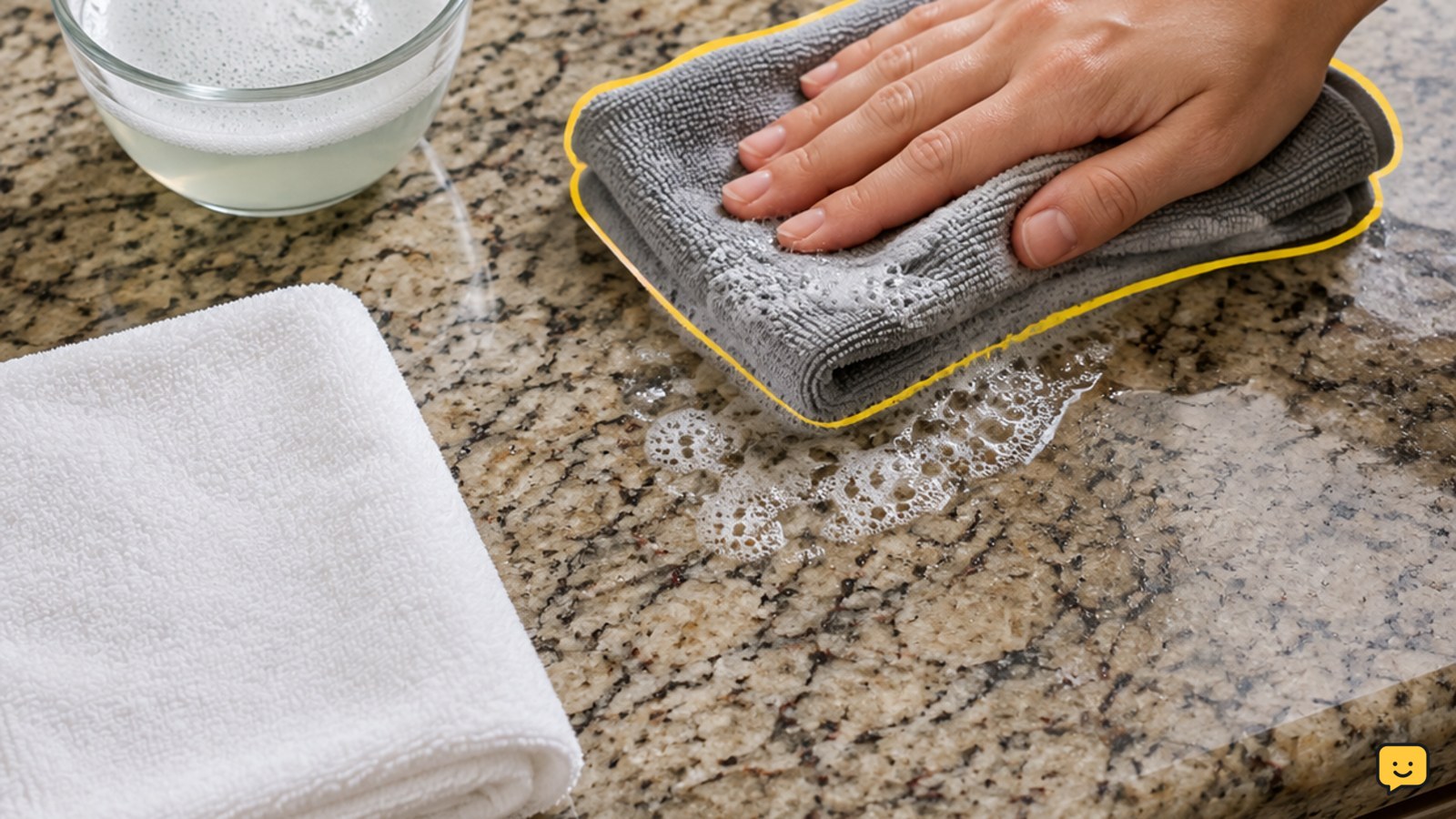
To clean granite countertops, remove loose grit, then wipe the surface with a soft microfiber cloth dipped in warm water and a small amount of mild dish soap. Wring the cloth well, clean in sections, wipe again with clean water, and dry immediately. Avoid vinegar, lemon, abrasive powders, scouring pads, and harsh chemicals that can damage the sealer or dull the finish.
For more help with this topic, use the Cleaning Stain Removal guides.
Remove grit before wiping the granite
Granite countertops should be cleared of loose crumbs, sand, and other grit before wet cleaning because particles trapped under a cloth can leave fine scratches.
- Brush crumbs into your hand or use a clean, soft dry cloth.
- For dried food, place a warm, damp cloth over the spot briefly, then lift the softened residue with a plastic scraper held nearly flat.
- Do not use a knife, razor blade, steel wool, or abrasive scrubber.
The surface is ready for washing when no loose particles remain and dried residue can be lifted without force.
Mix a mild soap solution for daily cleaning
Warm water with a small amount of mild dish soap is suitable for routine granite countertop cleaning. Home Depot specifies no more than half a tablespoon of soap in the cleaning solution, while BC Stone also recommends lukewarm water, mild detergent, and a soft cloth.
- Fill a bowl with warm, not boiling, water.
- Add only a small amount of mild dish soap. More soap can leave a dull or sticky film.
- Stir gently and keep a second bowl or clean cloth available for rinsing.
A properly diluted solution should feel lightly soapy rather than thick or greasy. Avoid vinegar, lemon juice, acidic sprays, bleach, powdered cleaners, and products with abrasive particles. Acidic substances can etch some stone surfaces, and abrasive tools can mark the finish.
Wipe, rinse, and dry the countertop
Clean the granite countertop with a well-wrung soft cloth, then remove soap residue and dry the stone completely.
- Dip the microfiber cloth into the soap solution and wring it until damp, not dripping.
- Wipe one manageable section at a time, using light pressure.
- Rinse or replace the cloth, then wipe the same sections with clean water.
- Dry the surface immediately with a clean towel, including seams and edges.
Successful cleaning leaves the granite free of crumbs, grease, visible soap streaks, and standing water. Run your clean fingertips lightly across the dry surface: it should feel smooth rather than tacky. If streaks remain, use less soap on the next pass and rinse the cloth more often.
Treat a stubborn spot without scratching the stone
Stubborn granite countertop marks need to be identified before stronger treatment because a dark stain, mineral deposit, etch, or sealer failure will not respond the same way as food residue.
- Try the mild soap solution once more with a damp microfiber cloth.
- For hardened residue, soften it with a warm damp cloth and lift it gently with a plastic scraper.
- For a suspected absorbent stain, stop before applying a homemade paste unless the stone-care or fabricator instructions approve that treatment.
Simple Green lists a baking soda paste as a possible method for stained granite, but treatment depends on the stone, finish, and sealer. Test any approved stain treatment on an inconspicuous area first, follow its label directions, and stop if the test area changes color, sheen, or texture.
A pale, dull patch that remains after cleaning may be etching rather than dirt. Do not polish it with household powder or a scouring pad; ask a stone professional for the correct repair.
Check the sealer and prevent repeat marks
Granite countertops stay easier to clean when spills are removed promptly and the surface is kept free of residue.
- Blot wine, oil, coffee, tomato sauce, and other spills rather than spreading them.
- Clean the area with the mild soap solution, rinse, and dry it.
- Use cutting boards, trivets, and coasters to reduce staining and heat exposure.
- Follow the fabricator or sealer manufacturer’s schedule for resealing; cleaning alone cannot restore a worn sealer.
If water darkens the stone quickly or leaves a persistent mark, the countertop may need a sealer assessment. Do not assume that resealing will remove an existing stain, etch, scratch, or crack.
Choose a stone-safe cleaner when soap leaves film
A pH-neutral cleaner labeled for natural stone is an alternative when diluted dish soap repeatedly leaves residue, provided the product label and countertop manufacturer allow it.
Apply only the labeled amount to a cloth or surface, avoid flooding seams, and wipe with clean water if the instructions require rinsing. Never substitute glass cleaner, bathroom descaler, vinegar spray, bleach, or abrasive cream without confirming that it is safe for sealed granite.
Granite-care guidance varies with the sealer and finish. If the label conflicts with the fabricator’s instructions, stop and follow the fabricator’s instructions or request clarification before cleaning the whole surface.
For another natural-stone surface with different care limits, see how to clean quartzite countertops safely.
Frequently asked questions
Can you clean granite countertops with vinegar?
No. Avoid vinegar on granite countertops unless the fabricator specifically approves it for that exact surface and sealer. Vinegar is acidic, and acidic cleaners can etch or dull some stone finishes. Use warm water, a small amount of mild dish soap, and a soft cloth instead.
How do you remove a greasy film from granite?
Use a damp microfiber cloth with warm water and a small amount of mild dish soap, then wipe again with clean water and dry the surface. If the film remains, use less soap and rinse the cloth more often. Stop if the countertop looks cloudy or dull, since repeated scrubbing can worsen a sealer or finish problem.
Can you use baking soda on granite countertops?
A baking soda paste is sometimes suggested for granite stains, but it is not a universal treatment. Simple Green lists it as an option, while the correct approach depends on the stone, finish, and sealer. Check the fabricator’s instructions, test an inconspicuous spot, and stop if the sheen or color changes.
How can you tell whether granite needs resealing?
Cleaning cannot confirm the condition of every sealer. If water quickly darkens the stone, stains absorb easily, or marks persist after gentle cleaning, ask the fabricator or a stone-care professional to assess it. Do not use resealing products as a substitute for repairing etching, scratches, chips, cracks, or deep stains.