To build a campfire, use an approved fire ring, clear the area, and gather dry tinder, kindling, and larger firewood. Place tinder in the center, arrange small sticks around it as a loose teepee or log cabin, light the tinder, then add larger pieces only after the kindling burns steadily. Keep water nearby and extinguish the fire until the ashes are cold.
Check the fire site before collecting wood
Confirm that an outdoor campfire is allowed at the exact site before preparing it. Campground rules, seasonal restrictions, and local fire danger can change, so follow the posted instructions or land manager’s directions rather than relying on a familiar routine.
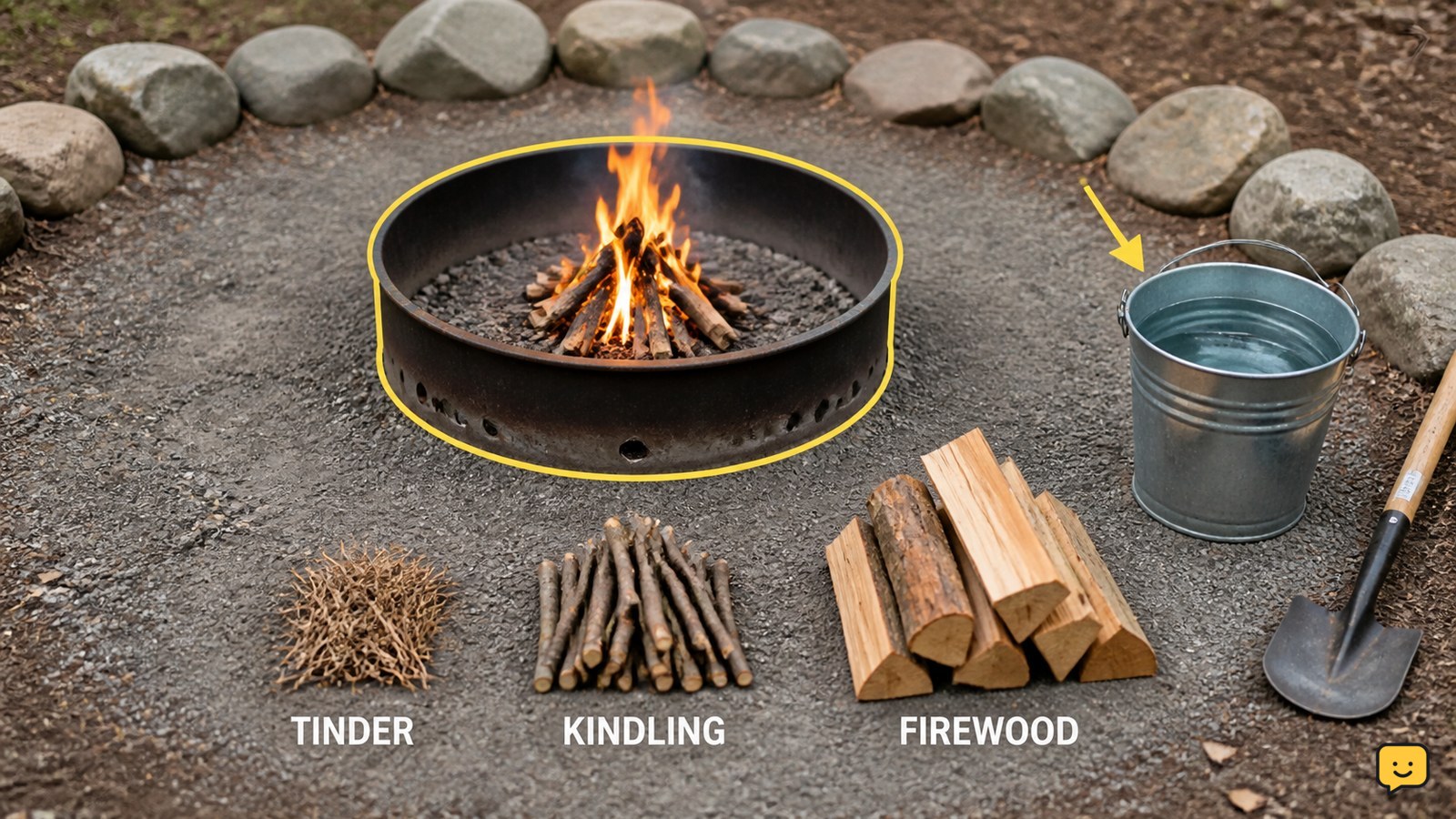
Use an existing metal fire ring or approved fire pan on a stable, nonflammable surface. Keep tents, vehicles, dry grass, low branches, and loose gear well away from the flames. If wind is pushing smoke or sparks toward people or vegetation, do not light the fire.
Success check: the fire ring is clear, water and a shovel are within reach, and there is no nearby material that a spark could ignite. If any of those checks fail, stop and use a stove or another permitted heat source instead.
Sort tinder, kindling, and fuel wood
A campfire needs three fuel sizes: fine tinder to catch the initial flame, thin kindling to build heat, and larger firewood to maintain coals. Mississippi State University Extension describes fallen sticks, pine straw, and similar dry material as starter material; use only what local collection rules permit.
- Tinder: dry grass, pine needles, small shavings, or commercial fire starters.
- Kindling: twigs progressing from very thin pieces to pencil-thick sticks.
- Fuel wood: dry wrist-sized and larger pieces that fit inside the ring.
Break or cut the material before lighting so you do not search for wood while managing flames. Wet, green, moldy, or oversized pieces will make the fire smoke and can smother the starter.
REI’s campfire basics also recommends building with progressively larger material. Keep a separate reserve pile outside the fire ring; never stack unused wood against the ring.
Build a small teepee fire for easy airflow
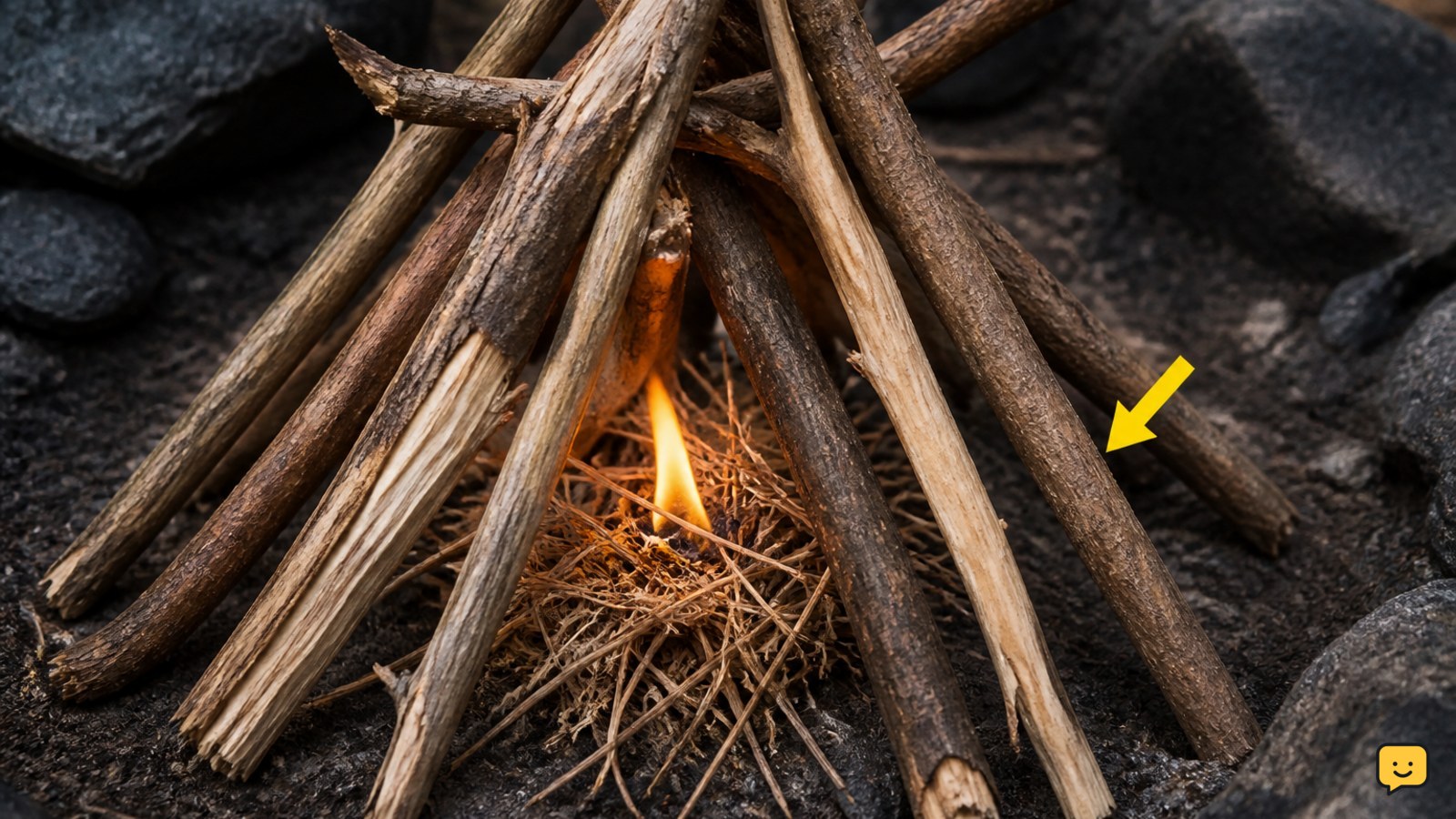
The teepee layout places tinder in the center and kindling around it with openings for air. Make a loose bundle of tinder, then lean the thinnest sticks over it so their upper ends meet while their lower ends rest on the ground or ring.
- Place a small, airy tinder bundle in the center.
- Lean several thin sticks around the bundle, leaving gaps between them.
- Add a second layer of slightly thicker kindling without sealing the structure.
- Keep the whole arrangement low enough that it remains inside the fire ring.
Do not pack the sticks tightly. A flame that cannot draw air will fade even when the wood is dry.
Success check: you can see openings between the sticks, the tinder is protected from light wind, and the first layer contains only small material. If the structure is tall, unstable, or crowded, rebuild it before lighting.
Light the tinder and feed the flame gradually
Light the tinder at more than one accessible point if needed, then watch the flame before adding fuel. The first goal is not a large fire; it is a steady flame that is transferring heat to the surrounding kindling.
- Use a match, lighter, or approved fire starter while keeping your hands and clothing clear of the structure.
- Wait for several pieces of kindling to burn rather than adding a large log immediately.
- Add thin sticks one at a time, placing them across gaps where they will warm without burying the flame.
- Once the kindling burns steadily, add larger pieces with space between them for airflow.
REI and the River Ranch Resort step-by-step guide both describe progressing from starter material and kindling to larger chunks. If the flame weakens, do not pour on fuel. Open a gap, remove a collapsed stick with a tool, and add smaller dry kindling.
Success check: the fire grows without constant blowing, the added wood catches at its edges, and smoke is not the only visible output. If the fire is producing heavy smoke but little flame, the wood is damp, the structure is too tight, or the fire is overloaded.
Choose a log-cabin or pyramid layout when the use changes
A teepee is a useful default, but other campfire layouts suit different goals. A log-cabin layout uses crossed pairs of larger sticks or logs around a smaller tinder center, while a pyramid layout uses stacked layers that gradually narrow toward the top.
Choose a log cabin when you want a broader, more stable structure for cooking or a longer burn. Build it low and leave openings on the sides. Choose a pyramid when you want a compact stack that settles into coals as the upper pieces burn. REI lists teepee, log-cabin, and pyramid fires as common options.
These alternatives still require the same fuel progression: tinder first, then kindling, then larger wood. Do not build a high structure simply to create taller flames; keep the fire contained and manageable.
Manage the fire without letting it spread
Keep the outdoor campfire small enough to control and add only one or two pieces of wood at a time. Use a shovel or fire tool to reposition burning material instead of reaching over the flames. Children and pets should remain outside the working area, and everyone nearby should know where the water is.
If flames or sparks move beyond the ring, stop feeding the fire and pour water onto the edges first. Move back from the fire while smoke clears. If the fire spreads into grass, brush, or nearby material, call emergency services immediately and follow local emergency instructions; do not risk burns trying to contain a growing wildfire alone.
Never burn trash, food packaging, plastic, or treated wood. These materials can create harmful smoke and leave debris that is difficult to remove.
Extinguish every coal before leaving
Put out the campfire before packing up, sleeping, or leaving the site. Let the wood burn down only as far as local rules allow, then use the drown, stir, and check process.
- Pour plenty of water over the flames, coals, and inside edges of the fire ring.
- Stir the ashes and embers with a shovel to expose hot material.
- Pour on more water, then stir again until there is no hissing, glowing coal, or rising steam.
- Feel the ashes and nearby ground with the back of your hand from a safe position. They must be cold, not merely free of visible flame.
Do not cover a warm fire with dirt, because buried embers can remain hot and later surface or spread. If water is unavailable, do not start the fire. Stop only when the site is cold to the touch and no smoke or heat returns after stirring.
Frequently asked questions
What is the easiest campfire structure for beginners?
A small teepee structure is usually the easiest starting layout. Put tinder in the center, lean thin kindling around it with visible air gaps, and add larger wood only after the kindling burns steadily. If the sticks collapse into a tight pile, rebuild the structure instead of adding more fuel.
Why does my campfire keep going out?
A fire usually goes out because the tinder or wood is damp, the kindling is too thick, or the structure is packed too tightly for airflow. Open a gap, remove any collapsed pieces, and add dry twigs in smaller sizes. If the material remains wet, stop rather than using fuel accelerants.
Can I build a campfire without a fire ring?
Only if the land manager specifically permits another approved setup, such as a listed fire pan. An existing fire ring is the safer default because it defines the burn area and helps contain coals. Never place a fire directly on dry grass, roots, leaf litter, or a wooden surface.
How do I know a campfire is completely out?
A fire is out when water has been stirred through the ashes and coals, there is no hissing, glowing, smoke, or returning heat, and the ashes and surrounding ground feel cold with the back of your hand. Visible flames disappearing is not enough; hidden embers can remain hot.
For more help with this topic, use the Camping Outdoors guides.