In The Isle, your dinosaur grows while you survive long enough to advance through its growth stages. Keep food and water available, use cover, avoid fights that do not improve your position, and check your growth or size state before taking greater risks. Exact growth rates, stat changes, and requirements vary by species and version.
Check which Isle growth system applies
The Isle’s growth behavior depends first on the branch and species you are playing. The Steam Community guide cited here labels its growth figures as Legacy, including a roughly six-hour hatchling-to-adult example, so those numbers should not be applied automatically to Evrima.
For an evergreen rule, use the current game’s visible growth state and your dinosaur’s changing capabilities as the authority. A timer from another branch can help explain the idea of growth, but it cannot verify your current finish time.
Verify before planning: identify the branch, species, and server conditions. If any of those differ from the source of a timer, treat the estimate as unconfirmed.
Track growth through size, stage, and capability
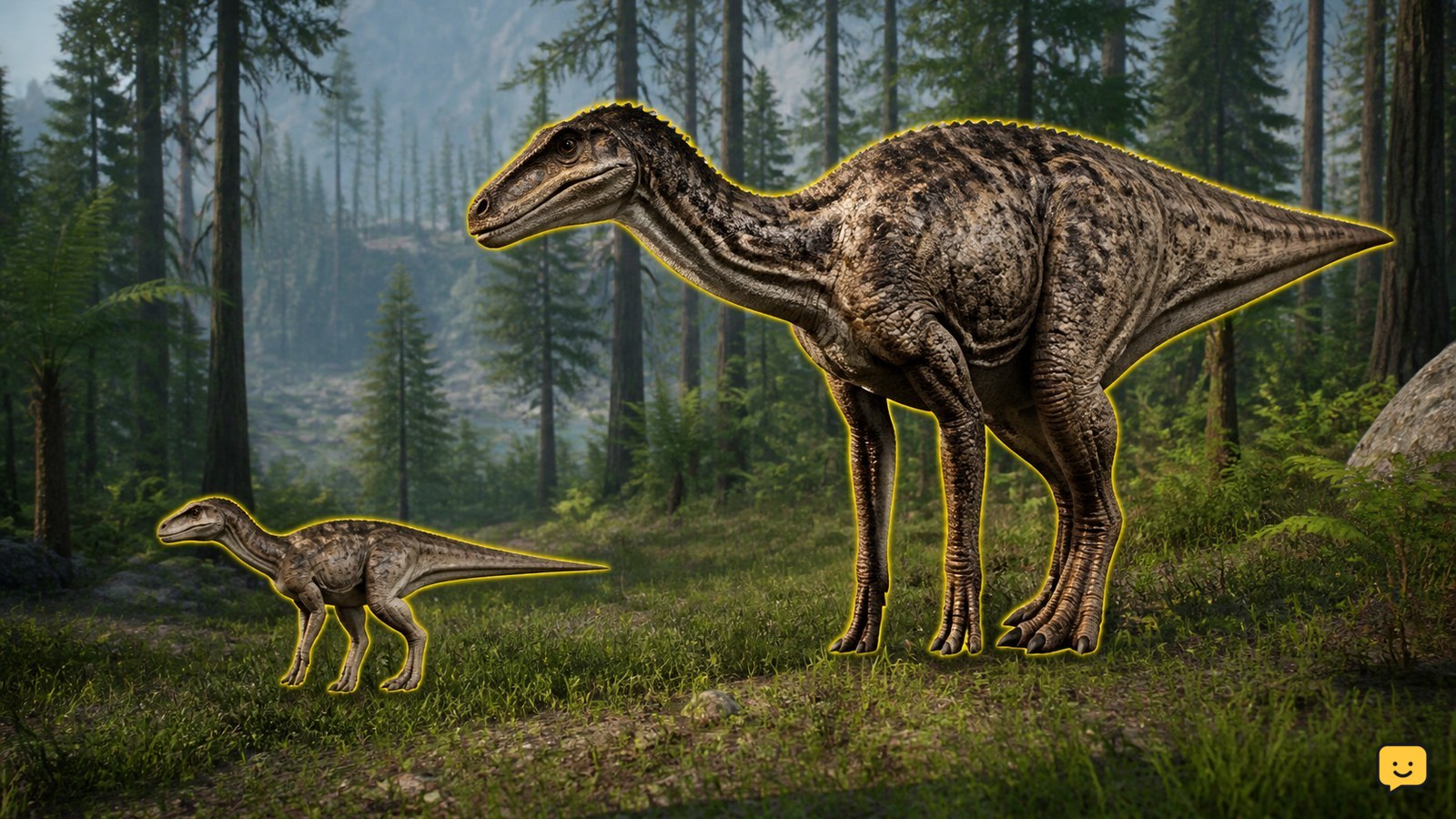
Dinosaur growth in The Isle is best understood as a progression from a vulnerable juvenile form toward a larger, more capable adult form. Growth is not only a cosmetic change: community reference material for Evrima lists carnivore health as weight-based, with 1 kilogram corresponding to 1 health point and 1 ton corresponding to 1,000 health points, so body mass directly matters to survivability.
Use three observable checkpoints rather than guessing from elapsed time:
- Size: compare your body scale with familiar dinosaurs or terrain objects.
- Stage: check whether the game identifies you as a hatchling, juvenile, subadult, or adult where that information is displayed.
- Risk tolerance: reassess whether you can travel, escape, or contest food without exposing yourself to a stronger threat.
The Evrima Quick Guide also distinguishes “Prime” and “Frail” values from the 100% growth numbers. That makes full growth a meaningful gameplay checkpoint, not merely a visual milestone.
Maintain food and water before travelling
Food and water are the immediate survival requirements that protect your time investment while growth advances. Plan each trip around the next reliable resource instead of crossing the map with only a low reserve.
- Secure food before moving away from cover or a familiar area.
- Locate a water route or landmark before your thirst becomes critical.
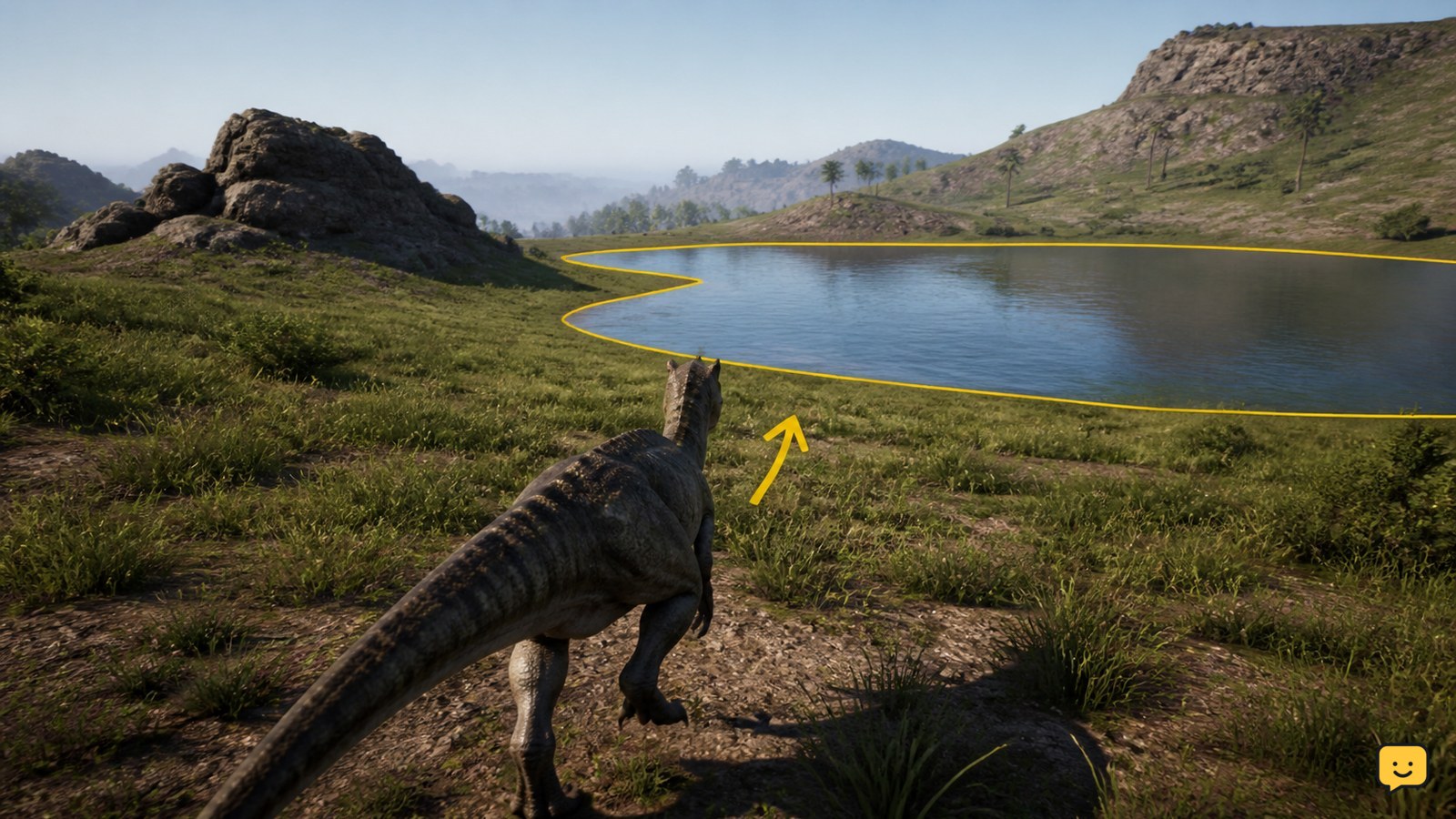
- Approach water cautiously and confirm that the drink prompt appears before committing to the shoreline.
- Leave after replenishing if the area is exposed, contested, or surrounded by tracks and calls.
If the drink prompt does not appear, do not remain stationary in the open. Move along the bank, check the water edge from a different angle, or use a safer approach. A failed interaction is a navigation problem until the game visibly confirms drinking.
Use low-risk survival choices during early growth
Early growth is the most fragile part of the loop because a small dinosaur has fewer options when spotted. The safest strategy is to reduce the number of situations that can end the run rather than maximize every possible meal or encounter.
- Prefer cover: rest and feed where vegetation, terrain, or darkness limits long-distance detection.
- Keep an escape route: avoid narrow dead ends, deep water, and slopes that prevent a quick retreat.
- Read evidence: fresh tracks, repeated calls, carcasses, and missing prey indicate nearby activity.
- Travel only for a reason: move when you need water, food, a safer resting site, or a better position.
- Recheck your reserve: do not begin a long crossing immediately after surviving a fight or chase.
Growth time has value only if the dinosaur remains alive. A safe, imperfect meal is usually better than a dangerous attempt to secure a larger reward.
Choose fights based on growth stage and escape options
Your dinosaur’s growth stage should determine which fights are acceptable. Because weight contributes to carnivore health in the Evrima Quick Guide’s reference figures, a smaller animal should not assume that accurate attacks erase the durability gap against a larger opponent.
Before attacking, verify four conditions:
- You can identify the target and its likely threat level.
- You have enough stamina or space to disengage.
- The fight provides a clear benefit, such as necessary food or removal of an immediate threat.
- You know where you will retreat if another dinosaur arrives.
Cancel the attack if any condition fails. Do not continue simply because the target has already taken damage. An injured player can still inflict the hit that ends a growth run, and a loud fight can attract a stronger competitor.
Verify that your growth plan is still valid
A growth plan is working when your dinosaur’s visible size, stage, or expected capabilities advance without an unexplained reset or mismatch. Do not judge progress from a single timer alone.
When progress seems wrong, check the failure branch that matches the symptom:
- No visible change: compare your current size with a known reference and allow for subtle early-stage differences.
- Stats feel weaker than expected: confirm that you have not confused a juvenile, subadult, Frail, or Prime state with 100% growth.
- The timer disagrees with your run: check whether the source describes Legacy, another species, or a different server rule.
- You cannot safely continue: stop travelling, secure water or food if possible, and relocate only when the immediate route is clear.
The YouTube reference discussing Evrima 3.0 notes that differences can be minor during the first half of growth and more pronounced later. Use that as a reason to avoid overinterpreting small early changes, not as a universal timer or stat table.
Frequently asked questions
Does dinosaur growth continue while I am offline in The Isle?
Do not assume offline growth. The supplied references describe growth as an in-game progression with branch-specific timing, but they do not establish a current offline-growth rule. Verify the behavior in your active branch and server before logging out for progress.
Why does my dinosaur still feel weak after growing?
Your dinosaur may still be in a juvenile or subadult stage, or you may be comparing it with a Prime, Frail, or fully grown reference. Growth benefits also vary by species. Compare visible size and stage first, then reassess health, movement, stamina, and attack risk.
Is there one growth timer for every dinosaur in The Isle?
No. Growth timing should be treated as species- and branch-dependent. The cited Steam guide gives Legacy examples, while Evrima reference material focuses on species values and growth states. Do not reuse a timer unless its branch, species, and server conditions match your run.
What should I prioritize while growing?
Prioritize reliable food, a confirmed water route, cover, and an escape path. Avoid unnecessary fights and long crossings when your reserves are low. The objective is not to take every opportunity; it is to preserve the run until your dinosaur reaches a safer growth stage.