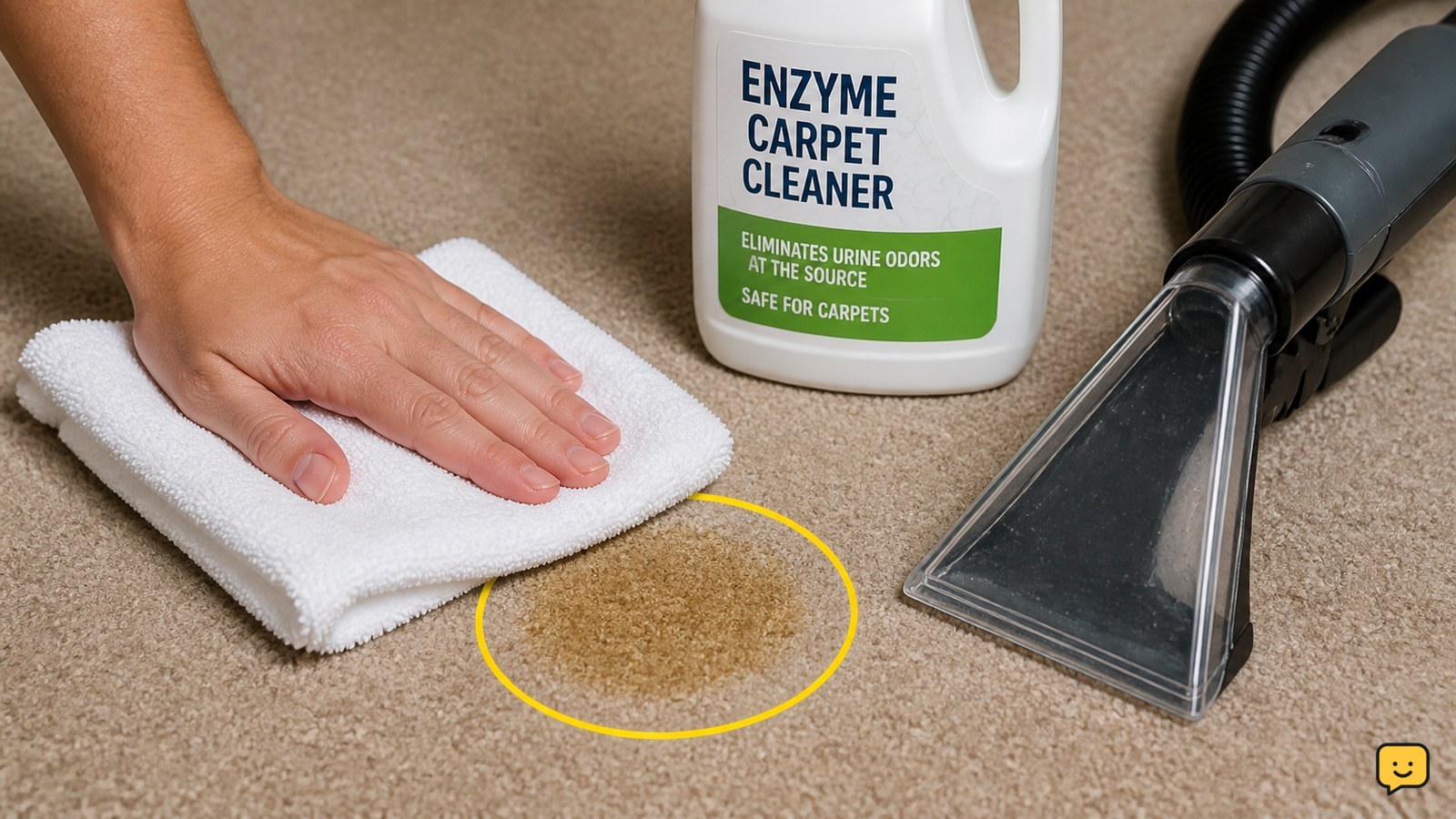
Use an enzyme-based urine cleaner, not fragrance alone. Blot fresh urine, then apply enough cleaner to reach the carpet backing and padding, following the label’s dwell time. Extract or blot without scrubbing and dry completely. Test any product first; if the odor returns after drying, urine may have reached the pad or subfloor and needs professional treatment.
Blot fresh urine before it reaches the carpet pad
Fresh urine should be removed before you treat the odor because rubbing spreads liquid through more fibers and deeper into the backing.
- Press several layers of paper towel or a clean white cloth onto the wet area.
- Apply firm pressure, then replace the towel when it becomes damp. Work from the outside toward the center to avoid enlarging the spot.
- Continue until the towel picks up little or no moisture. Do not scrub, brush or use a hair dryer.
If the accident is already dry, skip the blotting step and locate the full affected area. A larger ring than the visible stain can indicate that liquid spread beneath the surface.
Apply an enzyme cleaner deeply enough to reach the source
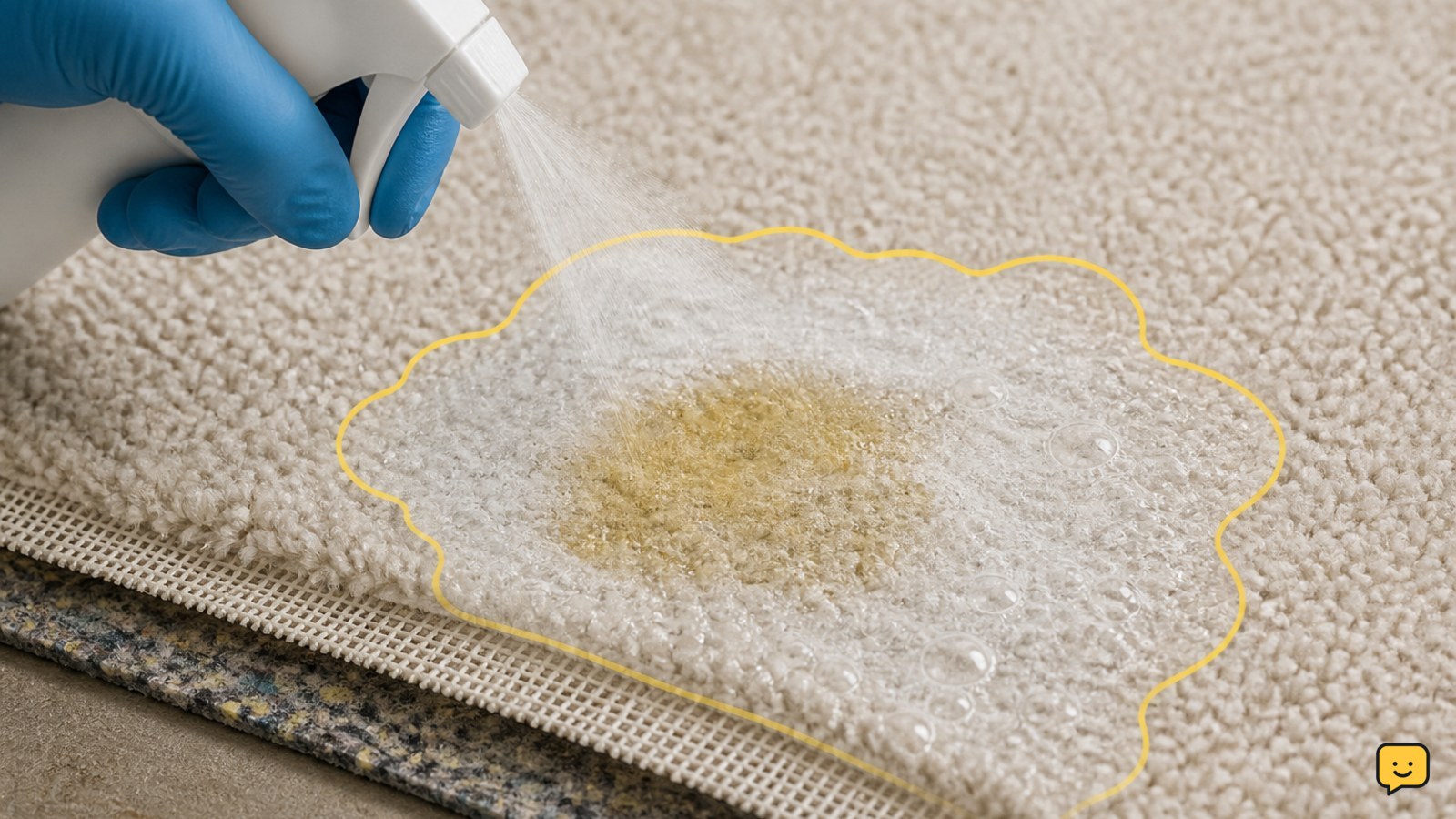
An enzyme-based urine cleaner is the primary treatment for odor that remains in carpet fibers or backing. Bissell describes enzymatic cleaners as products designed to break down urine-related organic compounds rather than simply cover the smell.
- Read the product label for carpet compatibility, application amount and dwell time.
- Apply the cleaner across the stain and slightly beyond its edges. Use enough to reach the depth of the original urine, but do not flood the room or let liquid run under the carpet.
- Leave it undisturbed for the label’s stated time. A quick spray-and-wipe treatment may not reach a soaked backing.
Keep children and pets away until the treated area is dry and the product label says it is safe to re-enter. Use ventilation without forcing wet air into an enclosed space.
Extract the cleaner and dry the carpet completely
Extraction and complete drying remove loosened residue and give you a reliable odor check.
- Use a wet vacuum or carpet extractor if the product instructions allow it. Make slow passes over the area, then make additional passes with the machine unpowered or set for extraction only if that is how the equipment works.
- If you do not have an extractor, press clean towels onto the area to lift moisture. Replace them as they become wet; do not grind the cleaner into the pile.
- Raise airflow with a fan and keep the area uncovered while it dries. Avoid walking on it until the pile is dry.
The first success check is visual and physical: the carpet should have no wet sheen, feel dry rather than cool or clammy, and return to its normal texture. Smell it again only after it is fully dry. If the odor is gone when dry, close the room for several hours and check again; a returning smell points to a deeper source.
Use vinegar or baking soda only as separate alternatives
Vinegar and baking soda can help with light or remaining odor, but they are alternatives to an enzyme treatment, not ingredients to mix into it.
For a non-delicate, colorfast carpet, Rabbit Air describes a one-to-one mixture of distilled white vinegar and water as an odor-treatment option. Apply it lightly, allow a short dwell period, then blot or extract the moisture. Test first because vinegar can affect some dyes, backings and finishes.
Baking soda is best used after the primary cleaning pass has been extracted and the carpet is only slightly damp or dry. Sprinkle a light layer, leave it for several hours, then vacuum thoroughly. Do not use a thick layer on a wet carpet, since damp powder can cake in the pile and make removal harder.
Do not apply vinegar immediately before or after an enzyme product unless the product manufacturer specifically permits it. Rinse or extract and let the carpet dry before changing methods.
Treat discoloration only after the odor work is verified
Hydrogen peroxide may lift some remaining discoloration, but it is a separate stain step and can lighten dark or dyed carpet. Rabbit Air recommends testing a 3% peroxide mixture on an inconspicuous area before broader use.
Do not start with peroxide when your main problem is odor. First complete the enzyme-cleaner treatment, extraction and drying check. If the color remains and the hidden test shows no change, follow a carpet-safe product label rather than improvising a stronger mixture.
Steam cleaning can provide deeper extraction, but use only equipment and solutions approved for your carpet. If repeated wet cleaning does not remove the smell, more liquid is unlikely to solve urine in the padding or subfloor.
What to do if the pee smell comes back
A recurring odor after complete drying usually means the urine reached carpet padding, the subfloor or an area larger than the original visible mark.
- Use your nose and, where available, a UV inspection light to map nearby spots, including edges, corners and areas under furniture. A UV light can help locate possible residue, but it does not prove that every glowing mark is urine.
- Do not keep layering household chemicals over the same area. Mark the affected zone and note whether the smell is strongest at the carpet surface, seam or floor edge.
- Call a professional carpet cleaner for deep extraction and pad treatment. If the carpet must be lifted to inspect the subfloor, stop and use a qualified flooring or restoration professional.
Professional help is the safest next step for widespread contamination, repeated pet accidents, visible mold, damaged flooring or an odor that persists after the carpet is dry and properly treated.
Frequently asked questions
Will baking soda alone remove pee smell from carpet?
Baking soda can absorb some surface odor, but it usually does not remove urine that has reached the carpet backing or pad. Use it as a finishing step after cleaning and extracting the affected area, then vacuum it thoroughly. If the smell returns after drying, switch to an enzyme cleaner or arrange deeper treatment rather than adding more powder.
Can I use vinegar and an enzyme cleaner together?
No, use them in separate cleaning passes unless the enzyme product label specifically says they are compatible. Vinegar can interfere with the conditions some enzyme products need to work. Complete one treatment, extract or blot it, let the area dry, and test a separate method only if the first treatment does not solve the odor.
How can I tell if urine reached the carpet padding?
A smell that returns after the carpet is fully dry is the clearest practical warning. The odor may also be stronger at seams, carpet edges or beneath furniture than in the visible stain. A UV inspection light can help map possible areas, but professional inspection is needed to confirm contamination below the carpet surface.
Can steam cleaning remove urine odor permanently?
Steam or hot-water extraction may help when the machine and solution are approved for the carpet, but it may not reach or remove urine in the pad or subfloor. Treat the source first with a carpet-safe enzyme product and extract thoroughly. Persistent odor after drying is a reason to stop repeated DIY cleaning and call a professional.
For more help with this topic, use the Cleaning Stain Removal guides.