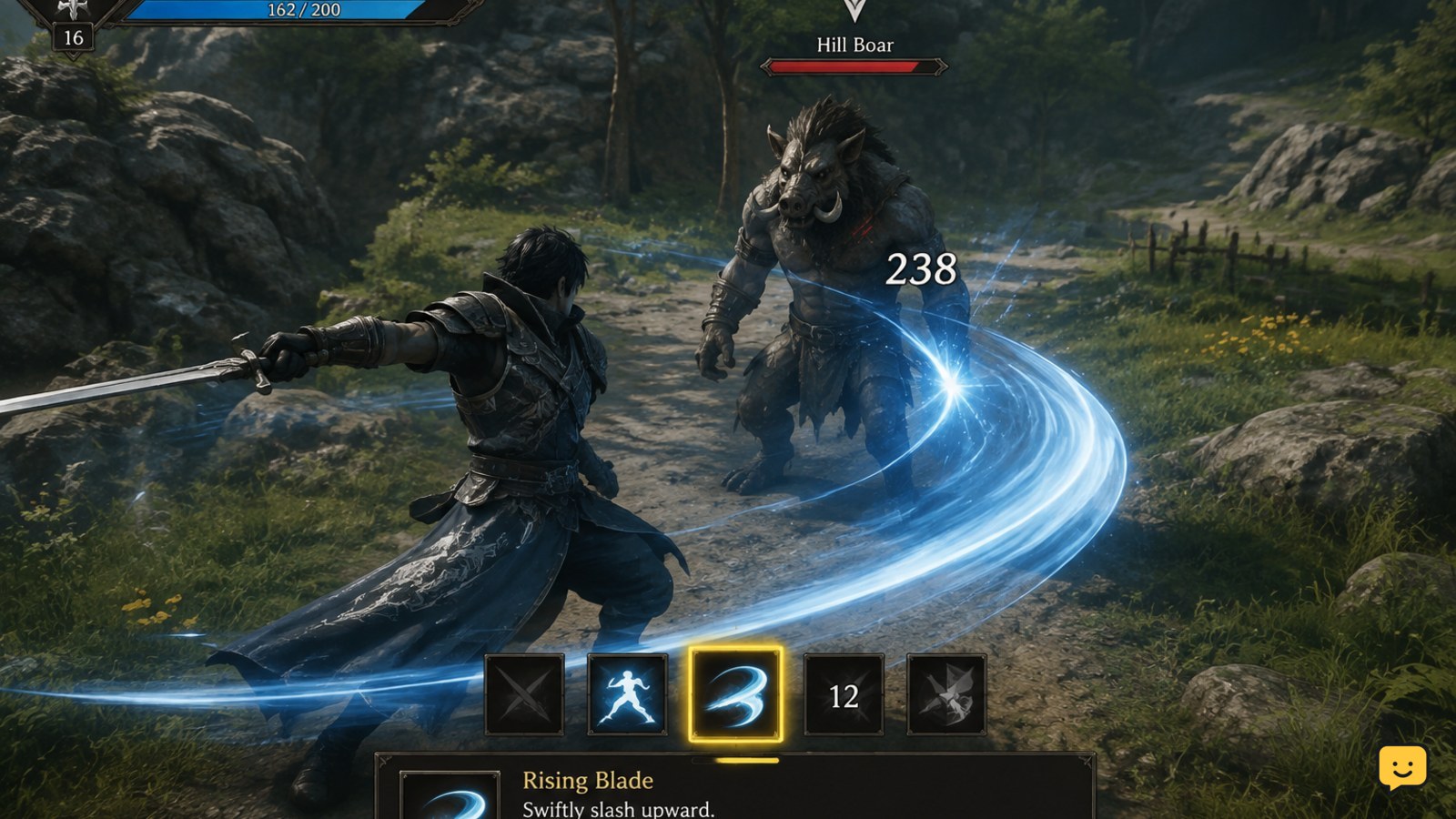
Dragon Sword Awakening class skills define how your selected character contributes during combat, but the exact names, effects, and unlock conditions can vary by character and game version. Open the character’s skill panel, separate class abilities from Signal Skills, read every condition and cooldown, then test one skill at a time against ordinary enemies before changing your team or spending upgrade materials.
Browse more DragonSword: Awakening guides
What class skills do
Class skills are the abilities attached to a character’s combat role. They are the buttons, effects, or modifiers that determine what the character does during an encounter, such as dealing damage, supporting allies, controlling enemies, or setting up a follow-up attack. The exact role depends on the character and the wording shown in your current skill panel.
Do not judge a class only by its headline damage. A skill may be valuable because it starts a combo, protects the team, applies a useful effect, or creates the condition needed for another attack. Gameplay guides for DragonSword: Awakening also emphasize class choice, combat tactics, and combo mechanics, so read the full description instead of comparing one number.
Class skills and Signal Skills are different
Keep two systems separate while learning your kit. Class skills describe the character’s normal combat abilities. Signal Skills are linked to the game’s chain or combo system and may require a particular sequence, character, or combat state. A class skill can help prepare a Signal Skill, but the two labels should not be treated as interchangeable.
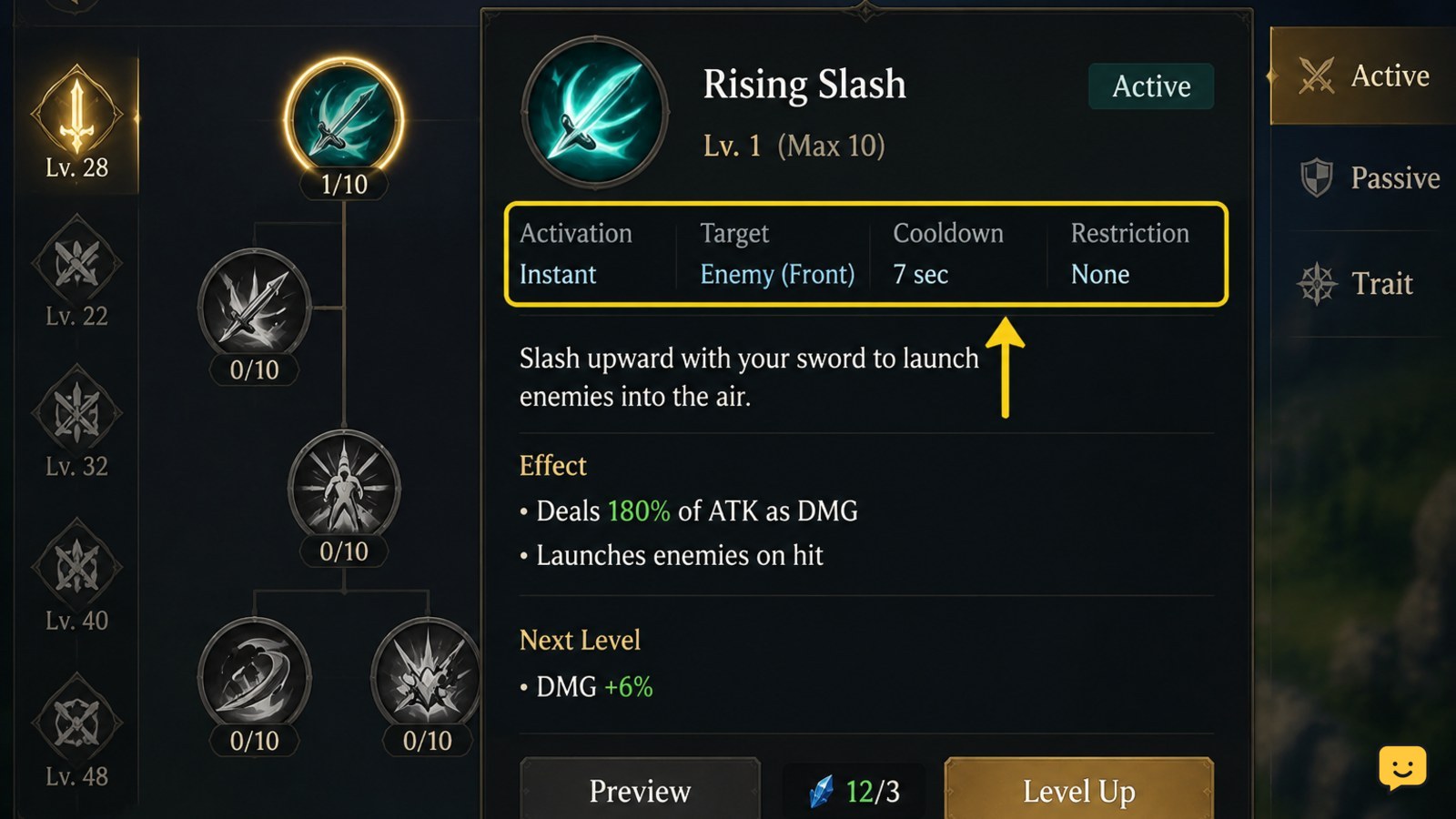
Open the skill or character screen and identify the label used for each ability. Record four details: what activates it, what it targets, what it changes, and what prevents another use. If the game shows a chain prompt during combat, follow that prompt rather than assuming every class skill belongs to the same chain.
How to read a class skill description
Use this quick check for every ability:
- Activation: Check whether the skill is used directly, follows another action, or requires a visible combat condition.
- Targeting: Confirm whether it affects one enemy, an area, the active character, or the whole team.
- Timing: Look for a cooldown, duration, charge, resource cost, or once-per-condition limit.
- Effect: Read the status, damage, protection, healing, or positioning result instead of relying on the icon.
- Restrictions: Note locked levels, character requirements, weapon requirements, team requirements, or unavailable modes.
Screenshot or write down the wording before looking for a build recommendation. This prevents an old guide from sending you toward an ability that was renamed, rebalanced, or unlocked differently.
Use class abilities during regular combat
Start with a simple three-part sequence rather than a long rotation:
- Open: Begin with the skill that starts the encounter, applies a useful effect, or creates the condition shown in the description.
- Convert: Use the ability that benefits from the opening effect or advances the visible combo prompt.
- Finish or reset: Spend the strongest available attack when its condition is met, then return to basic attacks or reposition while the skill recovers.
Watch the combat result after each action. Check whether the expected status icon, damage event, shield, recovery, or chain prompt appears. If nothing changes, do not immediately repeat the entire sequence; test the suspected prerequisite by itself.
Against ordinary enemies, practice using one class skill when the target is stable, then repeat against a moving or grouped target. This reveals whether the ability is reliable in the situations where you normally fight.
Build a practical class skill setup
Choose skills by function first. A balanced starting setup usually needs a dependable action for damage, a way to survive or recover, and an ability that supports the character’s stated role. If the panel offers several upgrades, favor the option whose condition you can activate consistently in story and routine combat.
Do not copy a high-level rotation before checking your own unlocks. The beginner evidence for DragonSword: Awakening highlights building a team, triggering Signal Skills, and spending upgrade resources carefully. That makes early testing more important than chasing a final build immediately.
Upgrade one clearly useful skill, run the same type of encounter, and compare the result. Keep the change only if it improves damage, survival, control, or the frequency of the effect you actually need.
Verify that a class skill works
Use a repeatable test so you can tell a mechanic from a random result:
- Enter the same low-risk combat type with the same character and team.
- Use the class skill once without other abilities, if the game permits it.
- Check for the stated result, target response, status icon, cooldown, or resource change.
- Repeat after meeting the listed condition.
- Compare the result with the exact in-game description, not a video title or thumbnail.
The skill is verified when the stated result appears consistently under the listed condition. If it works only after a particular action, write that action into your rotation. If the result still does not appear, follow the troubleshooting checks below and stop before spending additional materials.
Fix a class skill that will not activate
Check the most likely causes in this order:
- Wrong character: Confirm that the active character owns the ability you selected.
- Locked skill: Reopen the panel and verify the required level, progression point, or character state.
- Cooldown or resource: Check the timer and any charge, energy, or other displayed cost.
- Missing condition: Read the description for a target state, preceding action, team member, range, or combat trigger.
- Target problem: Move closer, select a valid enemy, or test against a single ordinary target.
- Interface mismatch: Reset the skill layout or recheck the current control binding if the ability is available in the panel but the combat input does nothing.
If the ability remains unavailable after the listed condition is clearly met, leave the encounter and reopen the character and skill screens. Record the exact wording and current version before reporting a possible bug. Do not assume a missing effect is caused by poor damage if the activation itself never occurs.
Frequently asked questions
What are class skills in Dragon Sword Awakening?
Class skills are the combat abilities attached to a selected character and help define that character’s role. Their effects, conditions, and upgrade paths must be checked in the current in-game skill panel because names and values can change between characters or versions.
Are class skills the same as Signal Skills?
No. Class skills describe a character’s regular abilities, while Signal Skills belong to the game’s chain or combo system. A class skill may prepare or follow a Signal Skill, but use the labels and activation instructions shown in your current interface.
How should I use class skills in normal combat?
Start with the ability that creates your useful opening condition, follow with the skill that benefits from it, and use the strongest available action when its requirement is met. Keep the sequence short until you confirm each effect, cooldown, target rule, and follow-up.
Why will my class skill not activate?
Check that you selected the correct character, unlocked the skill, have enough resources, and are not waiting on a cooldown. Then check for a required target, range, team member, preceding action, or combat state. If it still fails, reopen the skill panel and compare the exact wording.
Should I upgrade every class skill early?
No. Test the skill first and upgrade the ability that consistently improves the role you need in regular combat. Avoid spending rare materials until you understand the skill’s activation condition and have confirmed that the effect appears reliably.