To improve flexibility for dancing, warm up first, practise active mobility, strengthen the end ranges you use, then hold gentle static stretches when your muscles are warm. Train consistently rather than forcing splits, and measure progress by smoother, controlled movement. Stop for sharp pain, joint pinching, numbness or a new injury symptom.
For more help with this topic, use the Sports Recreation guides.
Warm up before stretching for dance
A dance flexibility session should begin with general movement that raises your temperature and specific movements that prepare the joints you will use. March, walk briskly or perform easy dance steps for five to 10 minutes. Add controlled ankle circles, knee bends, hip hinges, arm swings and gentle torso rotations.
The correct result is a warmer feeling and smoother movement, not fatigue. If your muscles still feel cold or stiff, continue easy movement for a few minutes rather than moving straight into deep stretches. Dance Magazine also places stretching work after warming up, which supports using static flexibility exercises later in the session.
Use dynamic mobility to prepare your dance range
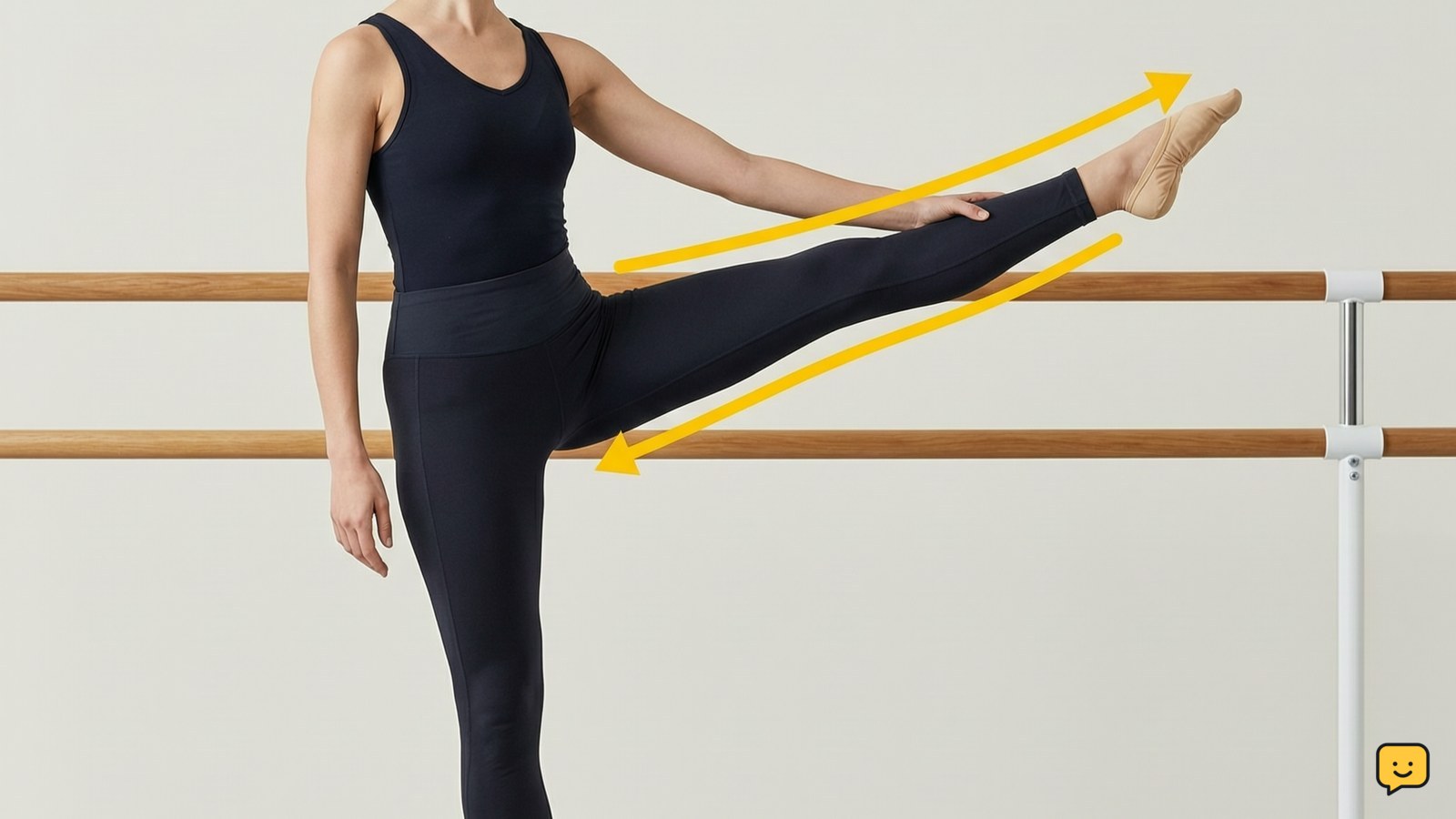
Dynamic mobility improves usable range by moving slowly through positions similar to dance actions. Try 8-10 controlled leg swings in each direction while holding a wall or barre, 8-10 shallow squats, 8-10 alternating lunges and 6-8 slow hip hinges. Keep the movement within a range you can control.
For a high kick, begin with small front and side leg lifts rather than swinging as high as possible. For turnout-related work, move from the hips without forcing the knees or feet outward. A successful set feels controlled from start to finish; reduce the range if your pelvis shifts, your standing knee collapses or you need momentum.
Strengthen the end range you want to control
Dance flexibility is more useful when you can actively lift, hold and return from the position. After mobility work, practise slow exercises such as supported leg lifts, split-stance lunges, calf raises and single-leg balances. Perform 2-3 sets of 6-10 controlled repetitions, using a smaller range when your form changes.
For an arabesque-style leg lift, keep your ribs and pelvis steady while lifting only as high as you can without arching your lower back. For a side leg lift, hold a wall and avoid hiking the hip. The observable success check is control: you can pause briefly, breathe normally and lower the limb without dropping it or twisting your trunk.
Hold gentle static stretches after movement
Static stretching is best placed after you are warm or at the end of dance practice. Choose the muscles that limit your movement, such as the calves, hamstrings, hip flexors, inner thighs and glutes. Move gradually into a mild-to-moderate stretch and hold for about 20-30 seconds while breathing normally. Repeat once or twice without forcing a deeper position.
Keep the sensation in the muscle rather than the joint. A hamstring stretch should not create sharp pain behind the knee, and an inner-thigh stretch should not pinch at the groin. Dance Magazine discusses using a roller or ball after warming up for tight areas; treat that as optional preparation, not a substitute for controlled movement or medical assessment.
Build a repeatable weekly flexibility routine
Practise short sessions consistently instead of relying on one aggressive stretching workout. A practical routine is dynamic mobility before dance, strength and control work two or three times per week, and gentle static stretching after warm sessions. Leave enough recovery time if a session causes unusual soreness.
Record one simple measure every one or two weeks: how high you can lift a leg while keeping your pelvis steady, how far you can hinge without rounding your back, or how comfortably you approach a split position. Improvement means more range with the same control and comfort. Do not count a deeper position as progress if it depends on bouncing, pain or compensation.
Adjust the plan when flexibility is not improving
If your range feels unchanged, first check the process rather than stretching harder. Confirm that you warm up, practise regularly, use slow repetitions and stop before joint pain. Reduce the intensity if you are sore for more than a day or your dance technique becomes less stable.
If one side is suddenly much tighter, the restriction follows an injury, or pain persists during ordinary walking or dancing, stop the affected exercise and seek assessment from a qualified healthcare professional. Flexibility training does not correct every limitation, and forcing a suspected injury can delay recovery.
Frequently asked questions
How often should dancers stretch to improve flexibility?
Short, consistent practice is usually more useful than occasional intense sessions. Use dynamic mobility before dancing, add controlled strength work two or three times weekly, and use gentle static stretches after you are warm. Reduce frequency or intensity if soreness affects technique or daily movement.
Should I stretch before or after dancing?
Use dynamic mobility before dancing and longer static stretches after dancing or another warm session. Before practice, leg swings, lunges and controlled joint movements prepare range without holding a deep position. Afterward, gentle 20-30-second stretches can target muscles that feel restricted.
Can stretching improve dance splits quickly?
There is no safe shortcut that guarantees fast splits. Progress depends on your starting range, hip structure, control, training consistency and recovery. Work gradually toward the position, keep the hips aligned and stop for sharp pain, joint pinching, numbness or a worsening injury symptom.
Why do I feel flexible but cannot lift my leg high in dance?
Passive range and active range are different. You may reach a position with assistance but lack the strength to hold it independently. Add slow leg lifts, supported holds and controlled lowering work, using a smaller range until your pelvis and standing leg remain stable.