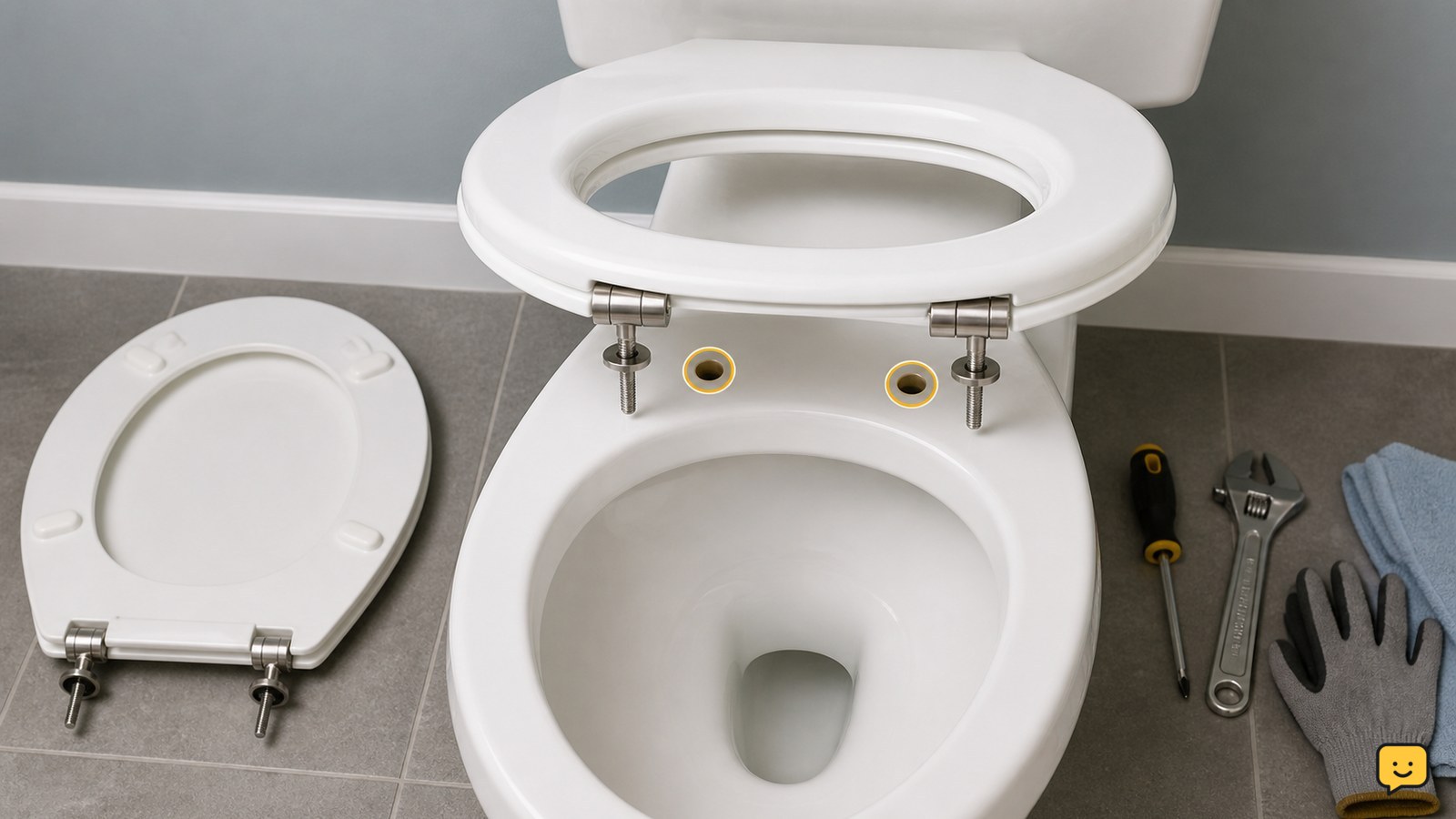
To replace a toilet seat, measure the existing seat, buy a matching replacement, then remove the two hinge bolts at the back of the bowl. Clean the rim, position the new hinges over the mounting holes, and tighten the hardware evenly. The seat should sit centered, open smoothly, and stay still when you shift gently.
For more help with this topic, use the Plumbing Fixtures guides.
Check the New Seat Fits Your Toilet
A replacement toilet seat fits only when its shape, length, width, and hinge spacing match the bowl. Close the old seat and measure from the center of the mounting holes to the front edge; compare that measurement and the bowl shape with the new seat’s packaging or instructions.
Look at the mounting hardware before removing anything. A conventional seat has bolts that pass through the bowl and nuts underneath. Some newer seats use top-mount fittings, which are tightened from above. Choose a seat with the same mounting arrangement unless its instructions clearly provide compatible adapters.
Do not install a mismatched seat and try to force the hinges into place. Return or exchange it if the holes do not line up naturally.
Remove the Old Toilet Seat
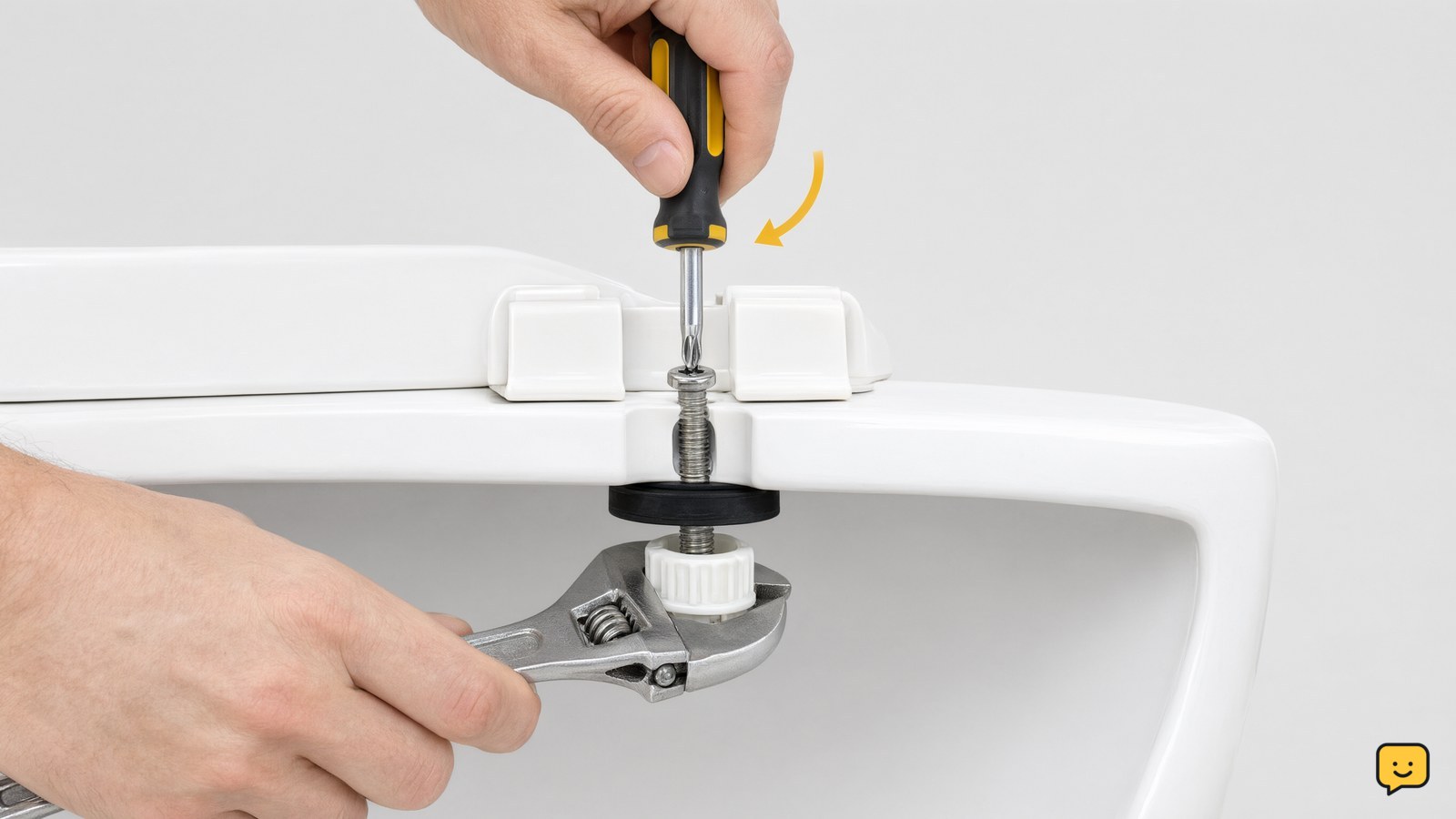
To remove the old toilet seat, find the two hinge covers or bolt heads at the rear of the bowl and expose the fasteners. Lift the covers if present, then hold the nut underneath the bowl with an adjustable wrench or pliers while turning the bolt counterclockwise with a screwdriver.
- Put on gloves and disinfect the seat, hinges, and nearby bowl area.
- Raise the hinge covers and identify whether the nuts are underneath or the fittings are designed for top access.
- Keep the nut from turning while loosening the bolt. Remove the washers and nuts, then lift the old seat away.
- Place the removed seat in a bag or set it aside for disposal without touching clean tools or surfaces.
If the bolt spins without loosening, grip the nut more firmly. If the nut is rusted or the plastic fitting is crumbling, stop before levering against the porcelain.
Clean the Bowl Rim and Mounting Holes
Clean the toilet bowl rim and both mounting holes before fitting the replacement. Use a household disinfectant and cloth to remove residue around the hinges, then wipe the area dry so the new washers and fittings sit flat.
Inspect the porcelain while it is exposed. The mounting shelf should be solid, with no cracks spreading from either hole. Do not continue if you find damage, because tightening a new seat can worsen a cracked bowl.
Keep the old fasteners separate from the new kit. Reusing them can create a poor fit when the replacement seat uses different washers, spacers, or nuts.
Install and Center the Replacement Seat
Install the replacement toilet seat by placing each hinge directly over a bowl mounting hole and inserting the supplied bolts. Start both fasteners by hand so the hinges remain adjustable.
- Set the seat on the bowl with the lid and seat aligned toward the front.
- Insert the bolts through the hinges and mounting holes.
- Fit the supplied washers and nuts underneath, or expand the supplied top-mount fittings from above according to the instructions.
- Leave the hardware slightly loose while you center the seat from side to side and front to back.
The seat should rest evenly on the rim without rocking before final tightening. If one hinge will not sit flat, remove the bolt and check for a misplaced washer or spacer rather than forcing it.
Align and Tighten the Hinges Evenly
To tighten the toilet seat, keep it centered and alternate between the two hinge bolts in small turns. Hold an underside nut with a wrench or pliers while turning the bolt, unless the kit is designed for top mounting.
Tighten until the hinges are firmly held and the seat no longer shifts during a gentle hand check. Do not continue tightening once the hardware is snug: porcelain can crack under excessive force, and plastic nuts or bolts can strip.
Replace the hinge covers after tightening. If the supplied kit includes stabilizing pads or spacers, install them exactly where the instructions show; they can prevent movement when the bowl rim is not perfectly flat.
Verify the Seat Is Secure and Level
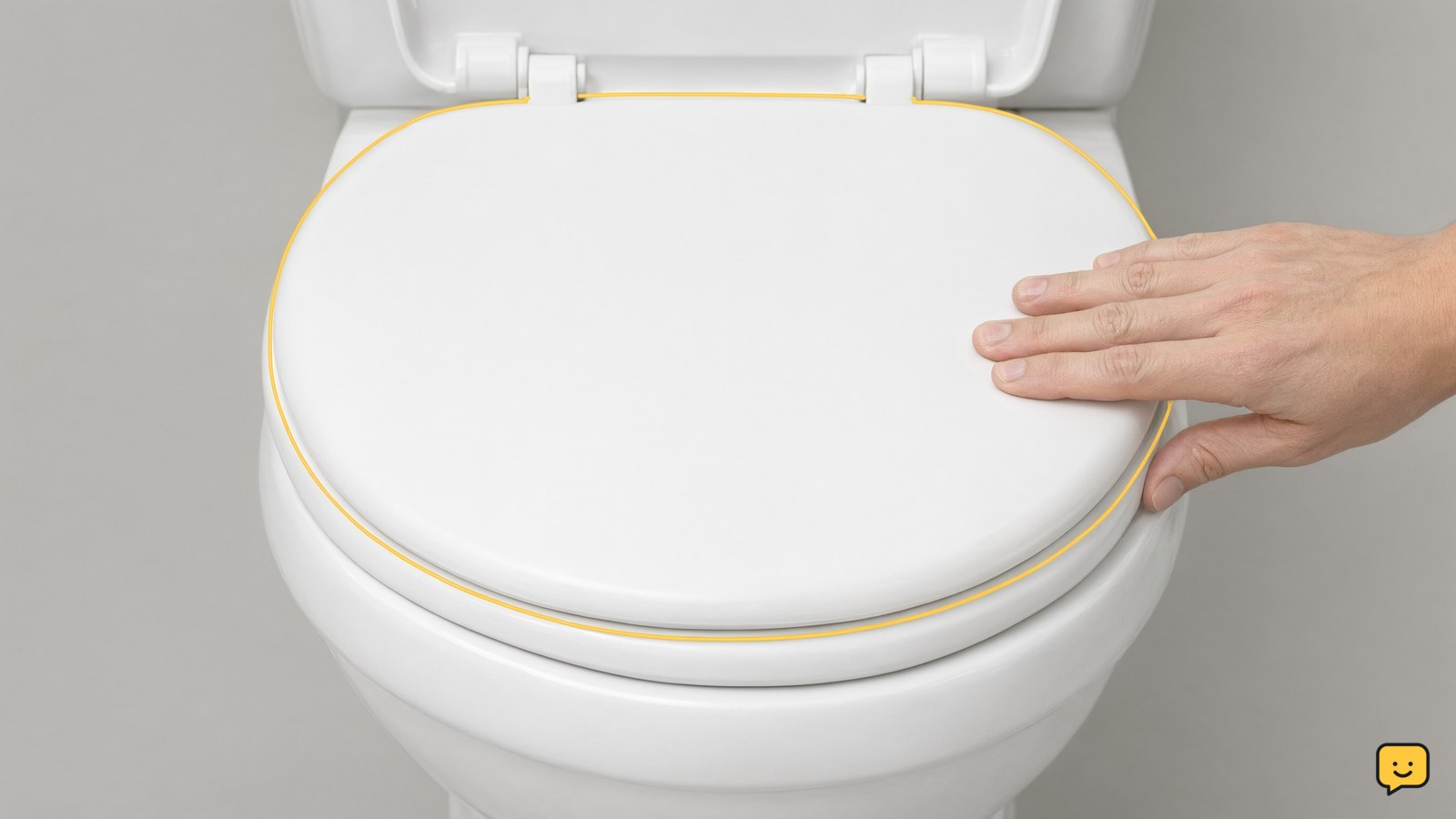
A correctly installed toilet seat is centered over the bowl, level when closed, and stable under gentle movement. Complete these checks before using it:
- Open and close the lid and seat to confirm that both hinges move smoothly.
- Look from the front to verify that the seat is not shifted left or right.
- Press gently on the left and right sides. The seat should not slide, rock, or lift from the rim.
- Check that the bolts and hinge covers remain in place after the movement test.
If the seat moves, loosen both sides slightly, recenter it, and tighten each side evenly. If movement remains, confirm that the correct washers, spacers, and mounting fittings were used. Stop if the hardware cannot hold without excessive force.
What to Do If the Mounting Bolts Are Stuck
Stuck toilet-seat bolts usually need better access to the nut or replacement hardware, not more force against the bowl. Try a longer screwdriver with a correctly sized tip while holding the underside nut securely.
For a corroded metal fastener, use a small amount of penetrating lubricant on the exposed thread and wait according to the product label. Keep lubricant away from the bowl surface as much as possible, ventilate the room, and wipe the area clean before continuing.
If the fastener still will not move, or if cutting or drilling appears necessary, stop and call a plumber or experienced repair professional. Do not use a torch, grinder, or aggressive leverage near porcelain or the water supply.
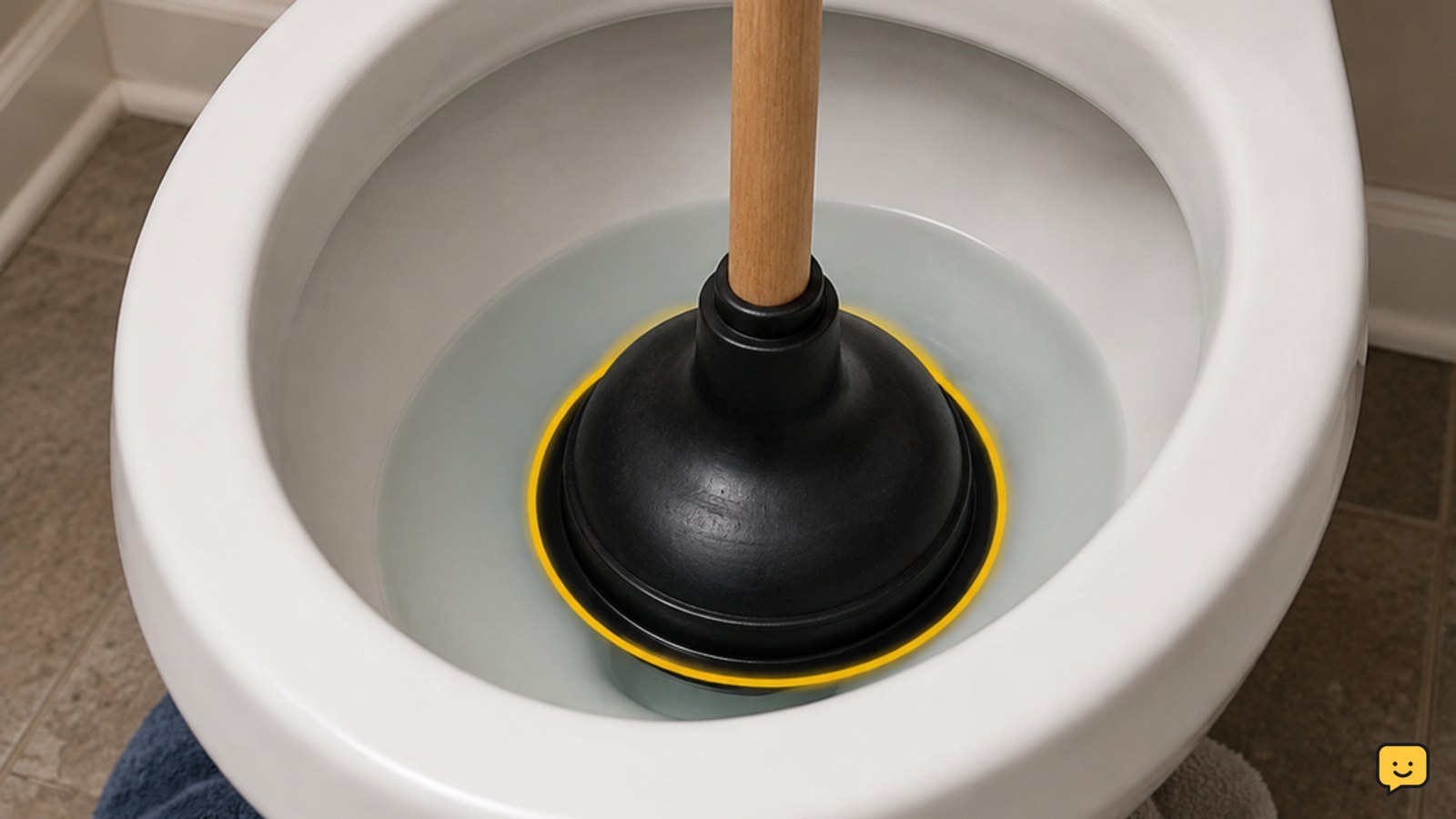
If the toilet also has a weak flush or rising water, stop using it and follow this guide to unclog a toilet safely before working around the bowl.
If the bowl is draining poorly, learn how to unclog a toilet safely before replacing the seat.
Frequently asked questions
Can I replace a toilet seat without removing the toilet?
Yes. A toilet seat is normally replaced while the toilet remains connected to the water supply and floor. You only need access to the two hinge fasteners at the rear of the bowl. If the underside is difficult to reach, use a replacement kit designed for top mounting, provided its dimensions and instructions match your toilet.
How do I know whether my toilet seat is round or elongated?
Measure from the centerline between the mounting holes to the front edge of the bowl. Compare that length and the bowl outline with the seat packaging. A round seat is generally shorter, while an elongated seat extends farther forward, but the manufacturer’s dimensions are the reliable check.
Why does my new toilet seat keep sliding?
A sliding seat usually has loose or unevenly tightened hinges, incorrect washers or spacers, or a seat that does not match the bowl’s mounting-hole spacing. Recenter the seat, check the supplied hardware, and tighten both sides evenly. If it still shifts, stop using it and verify the replacement model.
Should toilet seat bolts be tightened all the way?
No. Tighten the bolts until the hinges are firmly held and the seat passes a gentle movement check. Excessive force can strip plastic hardware or crack the porcelain mounting shelf. If the seat remains loose when the hardware is snug, use the correct stabilizers or replace the mismatched hardware.