Let the candle wax harden completely, then lift off the excess with a dull edge. Place white paper towels above and below the fabric and use low, label-safe heat to transfer the remaining wax into the paper. Treat any dye mark according to the care label, wash, and check the fabric before drying.
For more help with this topic, use the Cleaning Stain Removal guides.
Check the fabric before removing the wax
Washable fabric can usually be treated at home, but the care label decides whether scraping, heat, and washing are appropriate. Cotton and many other washable textiles can follow the method below when the label permits it. Dry-clean-only items, silk, velvet, rayon, acetate, embellished fabrics, and heat-sensitive synthetics need a professional cleaner instead.
Identify whether the spill is plain white wax or colored wax. Plain wax mainly leaves a greasy residue; colored candles can leave a separate dye mark after the solid wax is gone. Photograph or note the original area if the fabric is patterned so you can compare it after treatment.
Harden the wax and scrape away the excess
Hardened candle wax is easier to remove because it can be lifted without spreading it through the fibers. Let fresh wax cool and become firm before touching it; do not rub or wipe the hot spill.
- Place the fabric flat with the wax facing up.
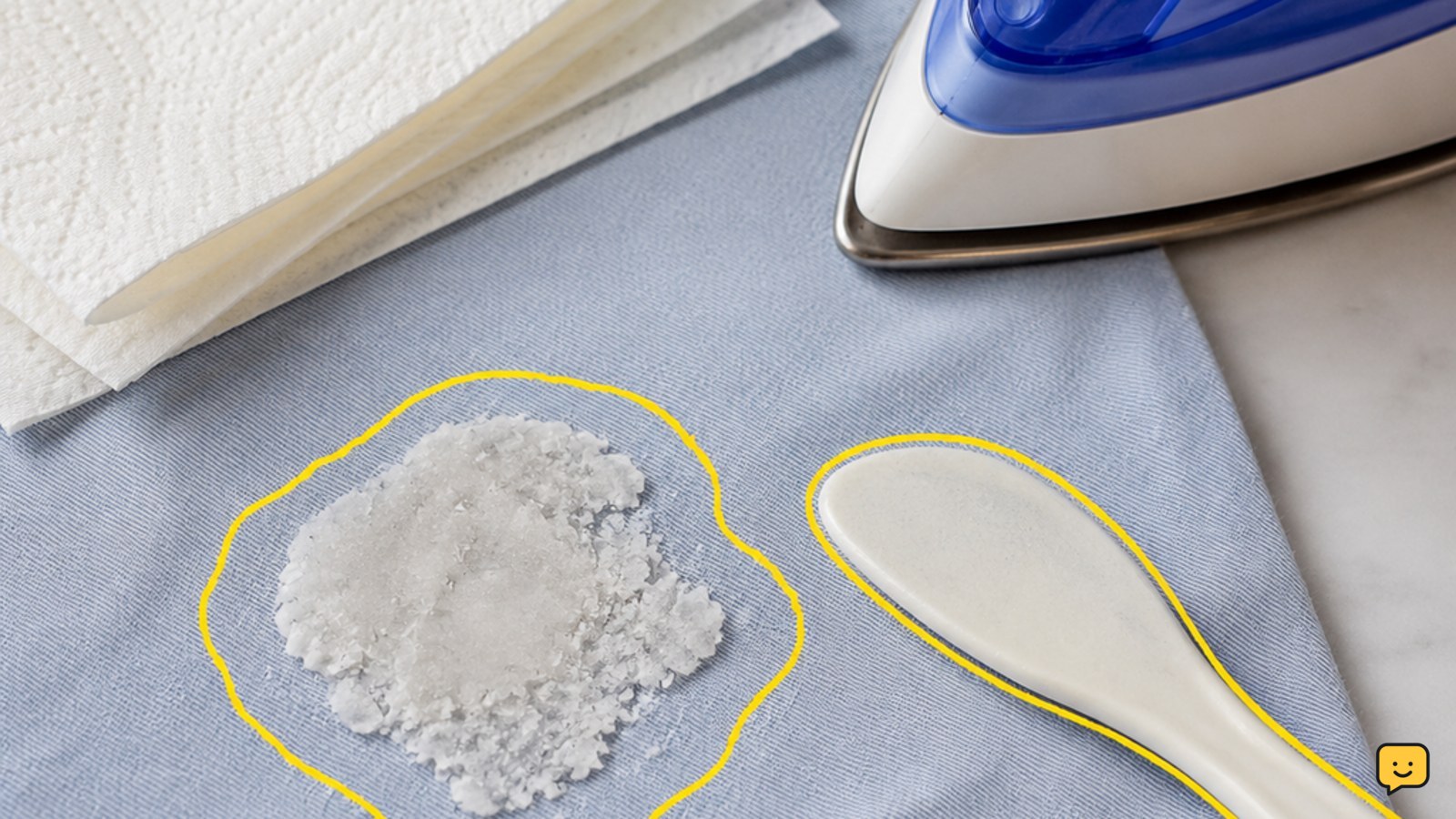
- Use the edge of a spoon, a dull butter knife, or a plastic card to lift the thick wax.
- Work from the outside of the deposit toward the center so flakes do not spread.
- Brush or pick away loose pieces without pulling the threads.
The checkpoint is a thin, dull-looking patch rather than a raised lump. If the wax is still soft or smears under the scraper, stop and let it harden longer.
Transfer the remaining wax into paper
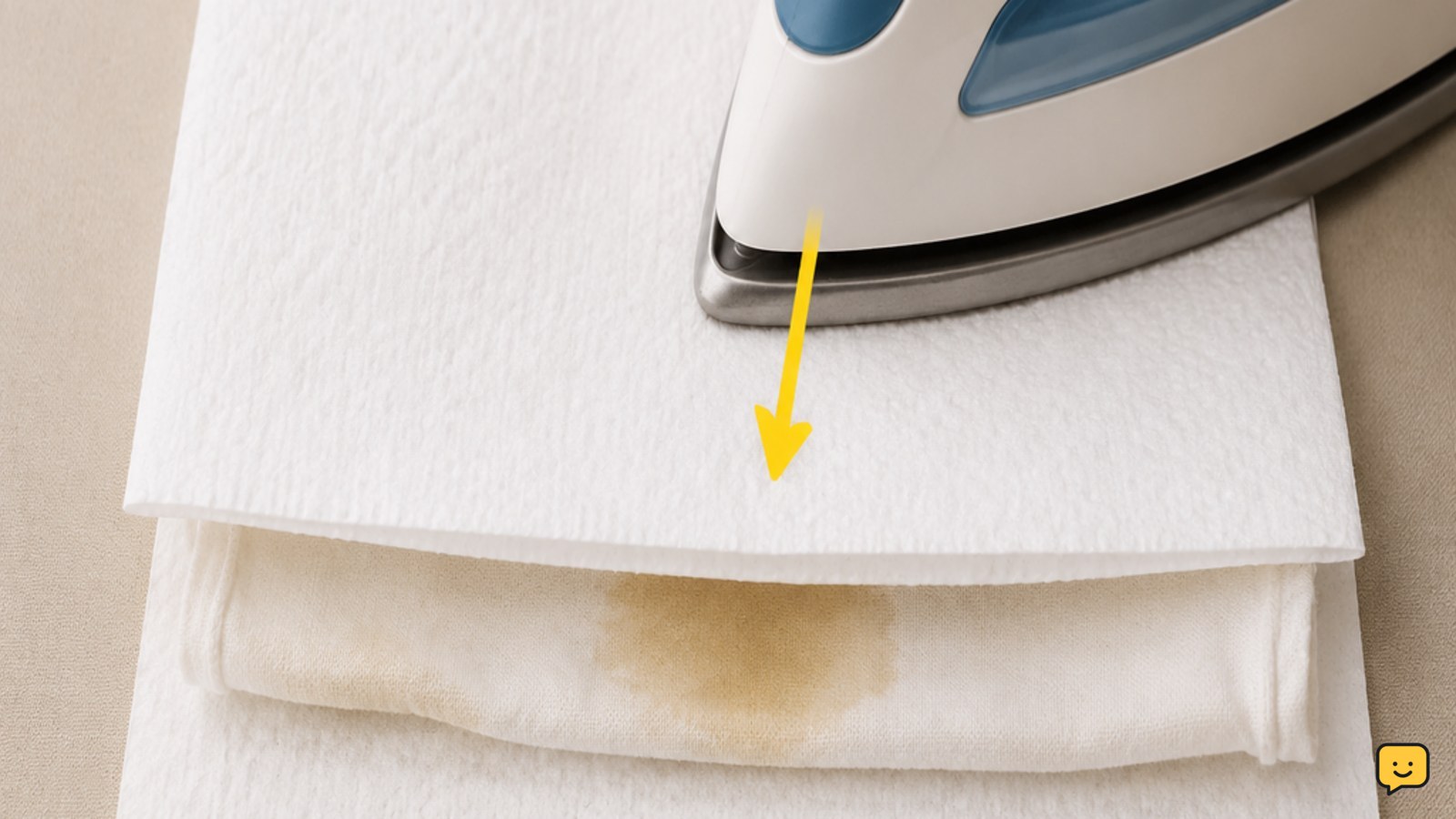
Low, controlled heat can soften the remaining wax so it transfers into absorbent paper instead of staying in the fabric. Rowenta’s clothing guidance uses the same sequence of hardening, scraping, applying heat, and using cleaning agents; Whirlpool also describes a hair dryer and white paper towel as an alternative to an iron.
- Put several layers of plain white paper towel or unprinted paper under the stained area.
- Place another layer over the wax.
- Use an iron at the lowest setting allowed by the care label, with steam off if the label does not specify otherwise. Keep the iron moving and press briefly over the paper, never directly on the fabric.
- Lift the top paper and replace it as soon as it shows transferred wax. Repeat with clean paper until no more wax moves.
A hair dryer on a low setting is an alternative for fabrics that permit gentle heat. Hold it above the paper and blot softened wax with a clean section; do not concentrate heat in one spot. The fabric should feel free of a raised deposit, with no scorched or glossy fibers.
Treat colored residue without setting it
Colored candle wax may leave dye after the solid wax has transferred, so treat the remaining mark as a stain rather than adding more heat. Allow the fabric to cool, then follow the care label and the directions on a suitable laundry stain remover or liquid detergent.
- Test the product on a hidden area and wait for the fabric to dry so you can check for color change.
- Apply a small amount to the mark, working from the outer edge inward.
- Blot or gently work the product as its label directs; do not scrub aggressively, which can spread dye or roughen fibers.
- Rinse or launder only if the fabric label allows it.
Do not use an untested solvent, bleach, or strong chemical simply because the wax was colored. If the dye remains after one label-safe treatment, stop rather than repeatedly saturating the fabric. For comparison, stain-care guidance for colored fabric stains also emphasizes testing, safe treatment, washing, and checking before heat.
For a related stain-treatment sequence, see colored fabric stains and compare the fabric-safe checks before washing.
Wash, inspect, and dry only after the mark is gone
Washable fabric is ready for normal laundering only after the visible wax deposit has been removed and any treatment is compatible with the care label. Wash using the label’s cycle and temperature, with the recommended detergent.
Inspect the area in good light while the fabric is still wet. Success means there is no hard or greasy wax, no spreading ring, and no unacceptable colored shadow. If residue remains, repeat the paper-transfer or stain-treatment stage before drying. Do not use a dryer or other strong heat until the area looks clean, because heat can make remaining residue harder to remove.
Choose a safer recovery path when removal fails
A failed result usually means the wax was spread, the paper became saturated, the heat was too low, or the candle dye remains. Replace paper more often and repeat short, low-heat presses rather than increasing the temperature.
If the fabric has melted, scorched, become shiny, lost color, or developed a permanent outline, further home treatment can worsen the damage. Stop and take the item to a cleaner, especially when the textile is valuable, lined, structured, or dry-clean only. If the wax reached upholstery or carpet instead of removable fabric, use the material-specific method for wax on carpet fibers rather than soaking the area.
If the spill reached carpet rather than removable fabric, use this guide for wax on carpet fibers.
Frequently asked questions
Can I remove candle wax from fabric without an iron?
Yes. After the wax hardens and you scrape off the excess, use a hair dryer on a low setting to soften the residue through white paper. Blot with a clean section of paper as the wax transfers. Use this only when the care label permits gentle heat, and stop if the fabric becomes shiny, scorched, or distorted.
Should I wash fabric with candle wax on it?
Wash it only after removing the solid wax first. A washing machine will not reliably remove a thick wax deposit, and drying can make remaining residue more difficult to lift. Once the area is free of wax, launder it according to the care label and inspect it before using a dryer.
How do I remove colored candle wax from clothing?
First remove the solid wax with scraping and paper-transfer steps. Then test a laundry stain remover or detergent on a hidden area and treat the remaining dye according to its label and the garment-care instructions. Avoid bleach, solvents, and repeated high heat unless the fabric and product directions specifically allow them.
Can candle wax be removed from dry-clean-only fabric?
Do not apply water, detergent, or household solvents to dry-clean-only fabric. You may let the wax harden and carefully lift thick pieces with a dull edge if doing so will not disturb the textile, but take the item to a professional cleaner for the remaining residue.