Yes. Distilled water is safe to drink when it is produced and labeled as drinking water. Because distillation removes many minerals, it can taste flatter than tap or mineral water, but a balanced diet normally supplies the minerals your body needs. Do not drink distilled water labeled for automotive, laboratory, battery, or appliance use.
Check whether the distilled water is made for drinking
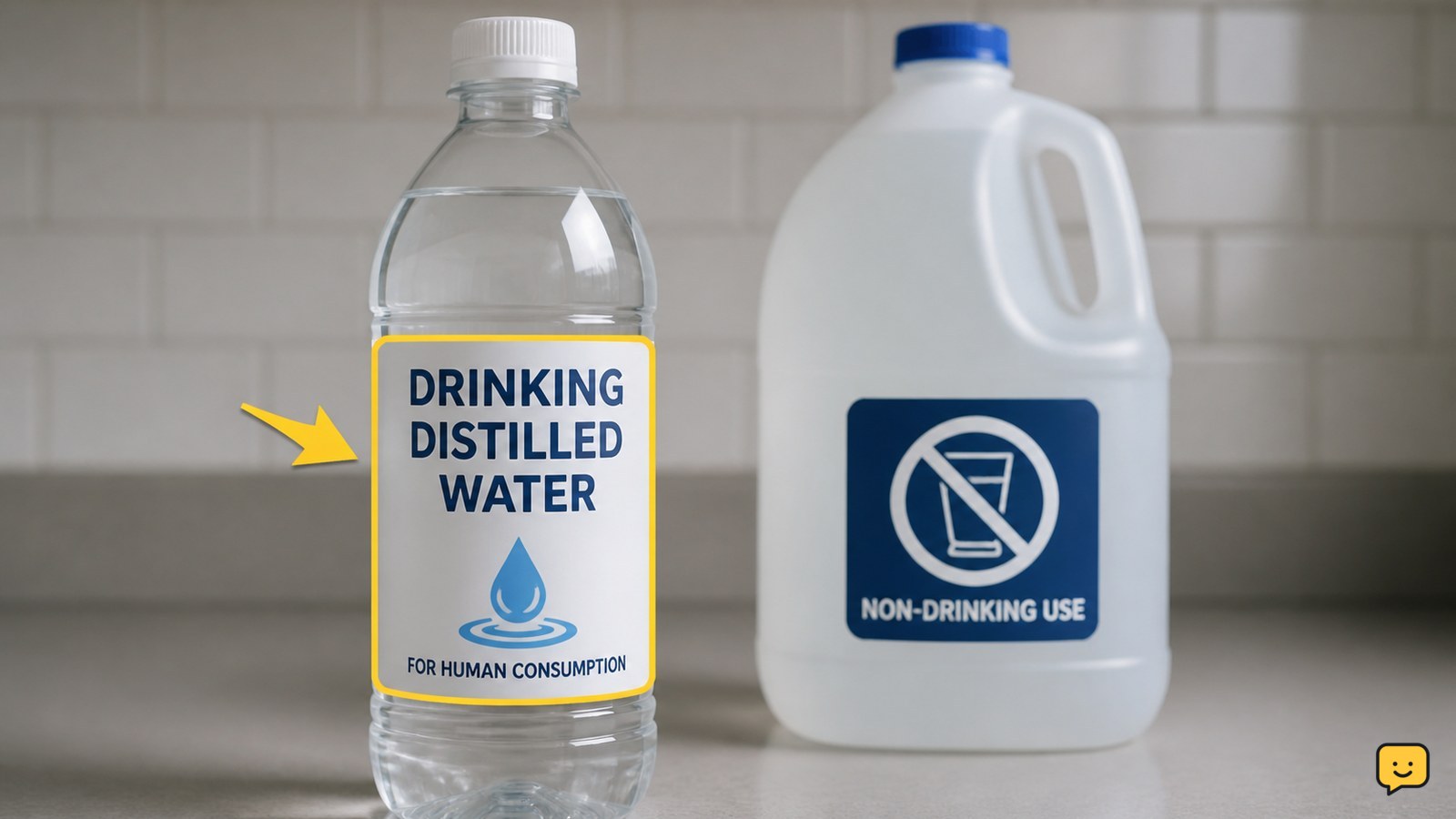
Distilled water is suitable for drinking only when the product is labeled for human consumption. Distillation describes how water was purified; it does not make every container marked “distilled” a beverage.
- Read the front and back labels for “drinking water,” “bottled water,” or “for human consumption.”
- Reject containers labeled for batteries, radiators, steam irons, humidifiers, laboratory work, or industrial use.
- Check the seal and bottle. The water should look clear and have no unusual smell.
Verification: You should be able to identify the product as food-grade drinking water before opening it. If the intended use is unclear, choose ordinary bottled or tap water instead.
Drink it normally and check the taste
Food-grade distilled water can be poured and consumed like other drinking water. You do not need to boil it, add salt, or mix in minerals simply because it has been distilled.
- Pour a small glass first rather than opening a large container for immediate use.
- Check the appearance and smell again after pouring.
- Taste it. A flatter or less flavorful taste is expected because distilled water does not contain the same minerals as many tap waters, according to Healthline.
Expected result: The water is clear, has no off-odor, and tastes neutral or slightly flat. Taste is a preference issue, not by itself a sign that properly labeled distilled water is unsafe.
Failure path: If the water tastes chemical, metallic, stale, or otherwise abnormal, stop drinking it and check the container, storage conditions, and product label. Replace it if the cause is not clear.
Use food and beverages to supply minerals
Distilled water is not a meaningful mineral source, so it should not be chosen as a way to obtain calcium, magnesium, or other minerals. Healthline notes that distilled water lacks the minerals found in many tap waters and is generally suitable when a person gets minerals from a well-balanced diet.
For everyday hydration, keep eating a varied diet rather than trying to “fix” distilled water with homemade mineral additions. Adding salt or supplements can create a different health concern and is unnecessary for ordinary drinking.
Applicability: This general guidance is for routine use by otherwise healthy people. If a clinician has given you fluid or mineral restrictions, follow that plan instead of using this article to change your water intake.
Choose another water when taste or mineral content matters
Tap, filtered, spring, or mineral water may be a better choice when you want a stronger taste or naturally occurring minerals in the water itself.
- Choose tap water when your local supply is safe and you prefer its flavor.
- Choose filtered water when you want to reduce specific substances identified by the filter’s certification or your local water report.
- Choose mineral water when you specifically want a water that contains naturally occurring minerals.
- Use distilled drinking water when low mineral content suits your cooking, beverage, or household preference.
For cooking, distilled water is generally usable when it is labeled for drinking. It may slightly change the flavor of coffee, tea, soup, or other recipes compared with mineral-containing water, so switch if the finished food tastes flatter than expected.
Know when not to keep drinking it
Unsafe packaging, an unclear label, or an unusual sensory change is a reason to stop rather than test the water by drinking more.
- Unclear source: discard or return it if you cannot confirm it is drinking water.
- Damaged container: do not use water from a leaking, punctured, or broken bottle.
- Unexpected appearance or odor: stop and replace it if it is cloudy or smells unusual.
- Special medical needs: ask a healthcare professional before making distilled water your exclusive household water source if you have a condition involving fluid or mineral balance.
For a normal, sealed, clearly labeled drinking-water product, the main practical limitation is its low-mineral, flatter taste—not that distillation makes the water inherently poisonous.
Frequently asked questions
Can you drink distilled water every day?
Yes, many healthy adults can drink food-grade distilled water regularly. It supplies hydration but few minerals, so it should not replace a varied diet. If you have a condition or treatment that affects fluid or mineral balance, ask your clinician before making it your only water source.
Can you cook with distilled water?
Yes, you can use distilled water for cooking when the container is labeled for drinking. It is suitable for recipes, but its low mineral content can slightly change the flavor of coffee, tea, soups, or broths. Use another water if the finished dish tastes unusually flat.
Is distilled water the same as water for a steam iron?
No. Both products may be distilled, but only water labeled for drinking is intended for consumption. Never drink water labeled for an iron, battery, radiator, humidifier, laboratory, or industrial use because the product may not meet food-safety requirements.
Why does distilled water taste flat?
Distilled water can taste flat because distillation removes many dissolved minerals that contribute to the flavor of tap, spring, or mineral water. A neutral taste is expected. A chemical, stale, or unusual taste is different; stop using the water and check the label and container.
For more help with this topic, use the Drinks guides.