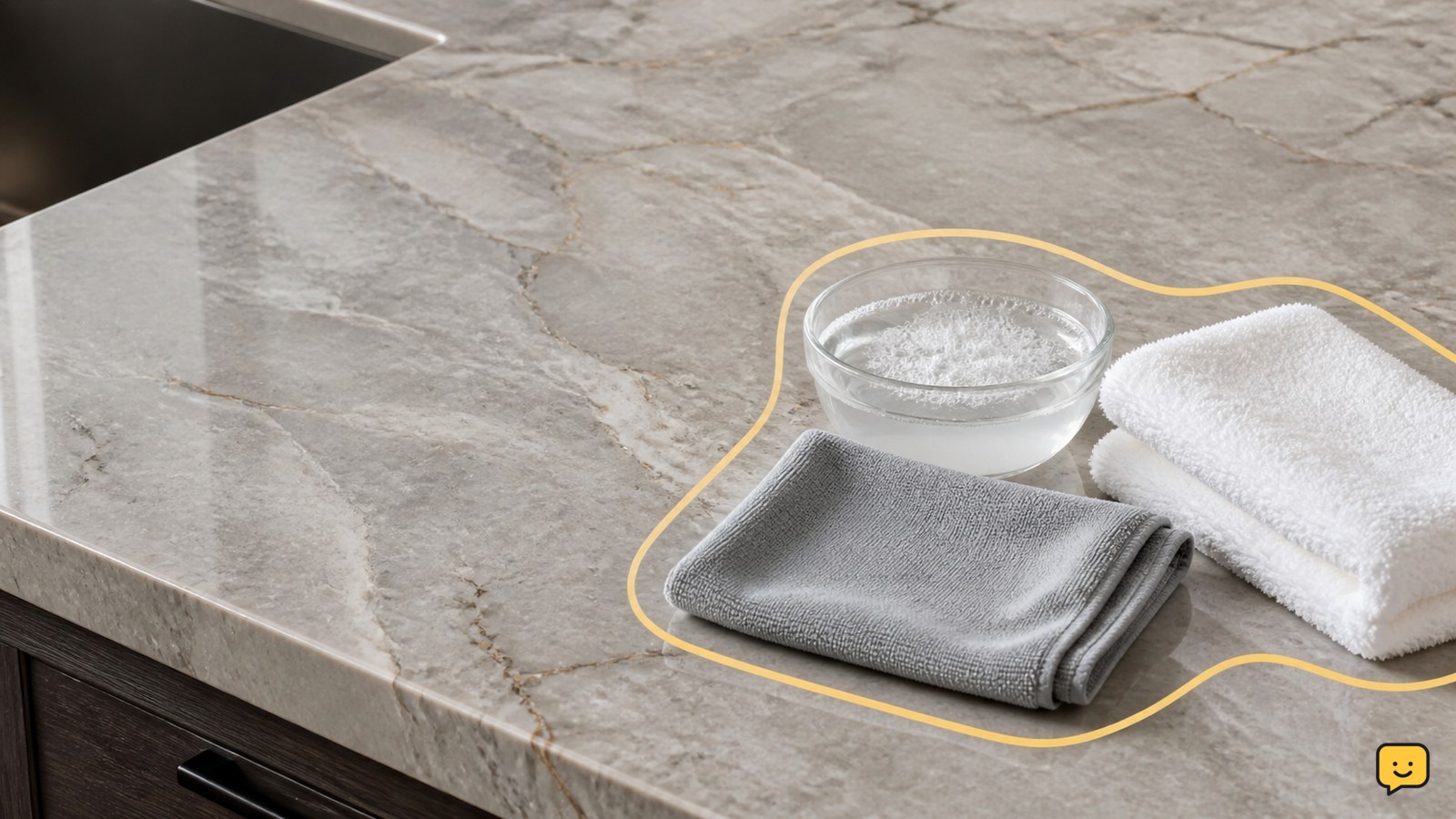
To clean quartzite countertops, remove crumbs, then wipe the surface with warm water and a few drops of mild dish soap or a pH-neutral stone cleaner. Use a soft cloth, rinse away cleaner residue, and dry the countertop completely. Avoid acidic, abrasive or harsh products, and stop if a mark does not improve with gentle cleaning.
Check the quartzite surface and choose a safe cleaner
Natural quartzite countertops should be cleaned with a non-acidic, low-pH product rather than an aggressive household chemical. Daltile recommends mild soap and water or a stone-specific cleaner for this surface.
- Remove loose crumbs, grit and food particles with a dry, soft cloth.
- Read the cleaner label. Choose mild dish soap diluted in warm water or a pH-neutral stone cleaner.
- Apply the cleaner to the cloth instead of flooding the countertop, especially around seams and edges.
- Test the product in a hidden area if it has not been used on this stone before.
The test area should remain the same color and sheen after it dries. If it looks cloudy, lighter, darker or rougher, do not use that product.
Wipe, rinse and dry the countertop
To clean quartzite countertops, wipe the prepared surface with a soft cloth, remove the cleaner with fresh water, and dry it completely.
- Dampen a soft cloth with the soap solution or apply the pH-neutral cleaner according to its label.
- Wipe the counter in small sections, giving dried food or grease a little extra contact time instead of applying heavy pressure.
- Use a separate cloth dampened with clean water to remove soap or cleaner residue.
- Dry the surface with a clean towel, including around the sink, seams and backsplash.
Success looks like an even surface with no visible crumbs, greasy film, soap streaks or standing water. Granite Guy’s fabricator guidance also recommends mild soap, warm water, a soft cloth and drying for daily cleaning.
Lift dried spills without scratching the stone
Dried spills on quartzite should be softened and lifted gradually, not scraped with a sharp or abrasive tool.
- Place a warm, damp cloth over the residue for a short period to soften it.
- Wipe gently with the soft cloth and mild soap solution.
- Repeat the wipe, rinse and dry cycle if a greasy film remains.
- For material that still will not release, stop rather than using a razor, scouring powder, abrasive pad or unapproved solvent.
Check the area after it is dry. If the residue is gone and the finish matches the surrounding stone, the cleaning worked. If a dull outline or color change remains, treat it as a possible stain, etch or sealer issue and ask the fabricator for the appropriate treatment.
Handle stains and sealer concerns conservatively
A persistent mark on quartzite is not always surface dirt, so repeated harsh cleaning can create more damage than the original spill.
First clean the area with the mild routine above, rinse it thoroughly and let it dry. If the mark remains, compare its appearance in natural light with the surrounding countertop:
- A colored or darkened area may indicate material absorbed into the stone or sealer.
- A pale, cloudy or dull area may indicate a change to the finish rather than leftover food.
- A rough line or sharp-feeling mark may be physical damage, not a cleaning problem.
Do not apply a sealer simply because a stain remains. Sealing advice depends on the stone, existing finish and fabricator’s specifications. The Granite Guy guidance specifically includes knowing when to reseal, so use the installer or fabricator’s product and schedule rather than guessing.
Verify the finish and know when to stop
After cleaning, quartzite countertops should feel smooth and dry, show no cleaner film, and retain the same sheen and color across the cleaned area.
- View the surface from several angles once it is fully dry.
- Run a clean, dry hand lightly over the area to check for sticky or gritty residue.
- Check seams and edges for pooled water or cleaner.
- If the counter still looks damaged after one gentle cleaning cycle, stop using household products and contact the fabricator.
For routine care, wipe spills promptly and use the mild soap-and-water or pH-neutral-cleaner method. Daltile’s recommendation is specifically for non-acidic, low-pH cleaning, so do not substitute an acidic product because it is marketed for another countertop material.
Frequently asked questions
Can you use vinegar to clean quartzite countertops?
Avoid vinegar unless the countertop manufacturer or fabricator specifically approves it. Daltile recommends a non-acidic, low-pH cleanser, such as mild soap and water or a stone-specific cleaner. Use that option instead, then rinse and dry the surface.
What is the safest way to remove grease from quartzite?
Use warm water with a few drops of mild dish soap and wipe with a soft cloth. Rinse with clean water and dry the area. If a greasy film remains, repeat the gentle process rather than switching to an abrasive degreaser.
Can you use a magic eraser on quartzite countertops?
It is safer not to use an abrasive cleaning pad unless the stone manufacturer or fabricator approves it. Start with mild soap, warm water and a soft cloth. Stop if a mark remains after gentle cleaning instead of increasing pressure.
How can you tell whether a quartzite countertop needs resealing?
A persistent darkened area, uneven appearance or recurring absorption can indicate a sealer concern, but cleaning alone cannot confirm the cause. Ask the installer or fabricator to assess the surface and recommend a compatible sealer and schedule.
For more help with this topic, use the Cleaning Stain Removal guides.