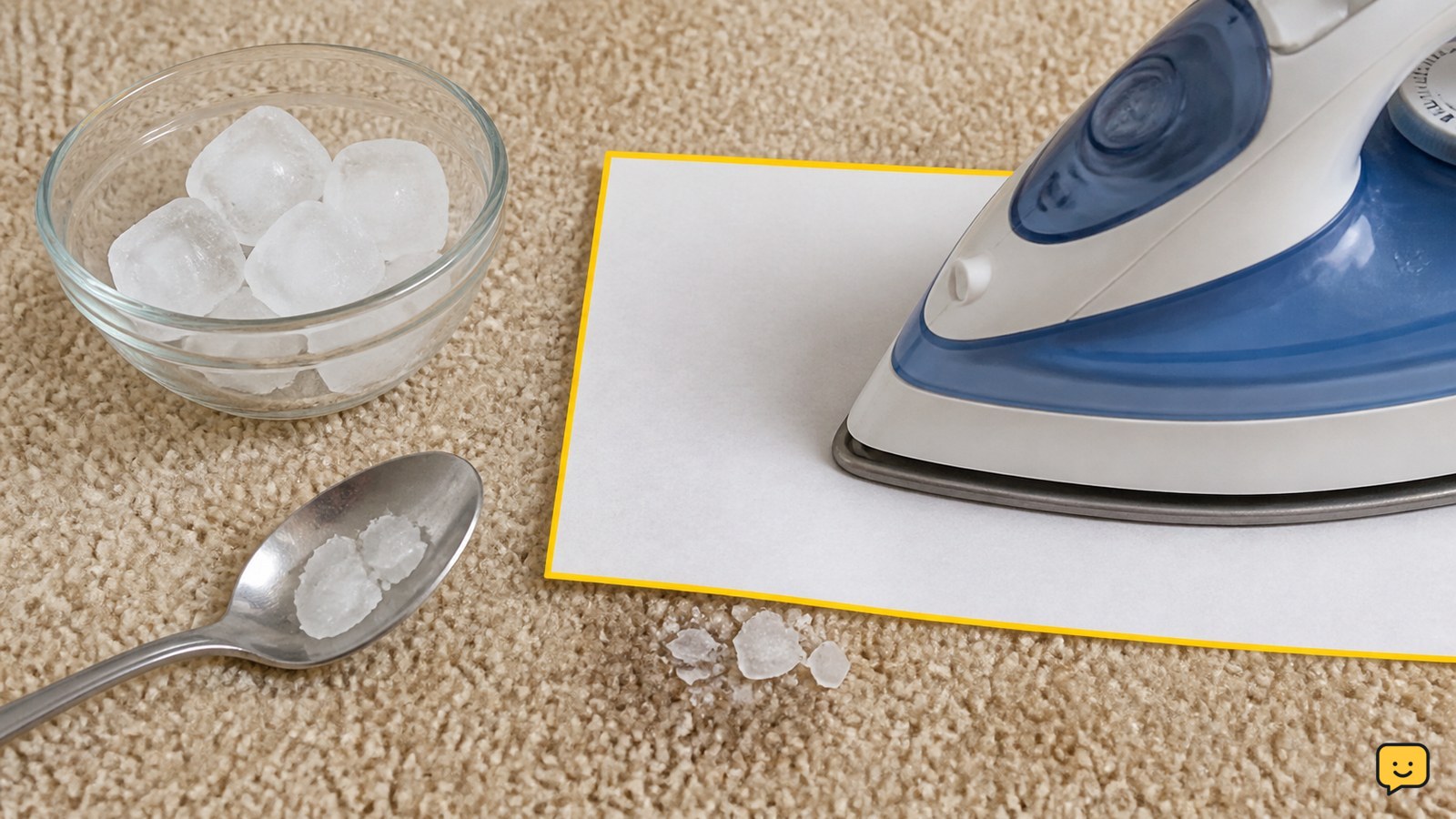
Harden the wax with ice, lift off the brittle pieces, then place plain absorbent paper over the residue and warm it briefly with a low-temperature iron or hair dryer so the paper absorbs the wax. Test an unseen area first, keep heat moving, and stop if the carpet changes color, smells scorched, or the fibers soften.
Check the carpet and wax before applying heat
Identify the carpet fiber, the size of the spill, and whether the wax is still soft before choosing a removal method. Fresh wax should be left alone until it hardens; rubbing it spreads it between the tufts. If the carpet is delicate, heavily textured, or attached to a backing that could be heat-sensitive, use the cold-and-scrape method only and follow the care label.
For a small, ordinary candle-wax spot, the two-stage approach is suitable: freeze and lift the bulk first, then draw out the thin residue with absorbent paper. Carpet One describes the paper-and-warm-iron method, while ECOVACS recommends freezing wax before scraping it away.
Harden and lift the bulk wax
Hardened wax is easier to remove because it breaks away instead of smearing through the carpet.
- Put ice in a sealed plastic bag so water cannot reach the carpet.
- Set the bag on the wax for several minutes, checking until the surface feels firm and brittle.
- Use the edge of a spoon or a dull scraper to lift the wax from the outer edge toward the center.
- Pick up the loosened pieces and vacuum the area using a nozzle held just above the fibers.
Success at this stage means most of the raised wax is gone and only a thin, flat film remains. If the wax bends or smears, cool it again rather than scraping harder. Rug Doctor also recommends vacuuming loose particles after scraping.
Transfer the remaining wax into paper
Absorb the remaining film with plain white paper and controlled heat; do not place a hot iron directly on the carpet.
- Place one or two layers of plain white absorbent paper over the residue. Use a fresh section of paper as soon as wax appears on it.
- Set an iron to its lowest dry-heat setting, with steam turned off. If the carpet label warns against heat, use a hair dryer on low instead.
- Touch the iron to the paper for only a few seconds at a time, then lift it straight up. Keep the iron moving to a clean paper area rather than sliding it across the carpet.
- Repeat with fresh paper until no translucent wax mark transfers.
Carpet One’s published method uses kraft or butcher paper and a warm iron. Plain white paper makes transferred wax easier to see and avoids adding ink or dye to the carpet. If the paper does not pick up wax after a brief low-heat pass, do not increase the temperature; cool the area and switch to professional cleaning.
Treat a colored or oily shadow without saturating the carpet
After the solid wax is gone, inspect the carpet under good light for a colored or greasy-looking mark. Blot the area with a clean, dry white cloth first. If the carpet manufacturer permits spot cleaning, apply a carpet-safe cleaner labelled for that fiber to the cloth—not directly onto the carpet—and dab from the outside toward the center.
Use the smallest amount needed, then blot with a second cloth lightly dampened with clean water. Do not scrub, flood the spot, or mix cleaning products. Stop if the color spreads, transfers, or becomes lighter than the surrounding carpet. A persistent dye or fragrance-oil mark may need a professional cleaner, especially when the product was colored or heavily scented.
Verify the carpet is clean and fully dry
The repair is complete when the carpet has no hard pieces, wax transfer, oily feel, visible ring, or loose tufts.
- Run clean fingertips lightly across the dry fibers to check for a rough or sticky film.
- Blot once with a dry white cloth. The cloth should remain clean and dry.
- Compare the treated area with nearby carpet from several angles.
- Allow the spot to dry completely before replacing furniture or walking on it heavily.
If a faint residue remains but the carpet is unchanged, repeat only the paper-and-low-heat step once with fresh paper. If the mark reaches the pad, returns after drying, or the fibers have changed texture, stop treating it at home.
Frequently asked questions
Can I use an iron directly on carpet to remove wax?
No. Place absorbent paper between the iron and carpet, use the lowest dry-heat setting, and lift the iron after brief contact. Direct heat can discolor, flatten, soften, or melt carpet fibers. Never use steam, and stop if the paper does not absorb wax after a short low-heat pass.
What should I do if the wax is still soft?
Leave it undisturbed until it firms up, or place ice in a sealed plastic bag over the spot. Do not rub or wipe soft wax because that spreads it into surrounding tufts. Once brittle, lift it gently with a spoon or dull scraper and vacuum the fragments.
How do I remove colored candle wax from carpet?
Remove the solid wax first, then inspect for dye. Blot with a clean white cloth and use only a carpet-safe spot cleaner approved for the carpet fiber. Apply it to the cloth, not directly to the carpet, and stop if color spreads or transfers. Persistent dye may require professional treatment.
Can I use a hair dryer instead of an iron?
Yes, if the carpet care instructions allow heat. Use the lowest setting, hold the dryer above the paper rather than the bare carpet, and keep it moving. Work in short passes and replace the paper as it absorbs wax. Stop immediately if the fibers soften, curl, discolor, or smell scorched.
For more help with this topic, use the Cleaning Stain Removal guides.