
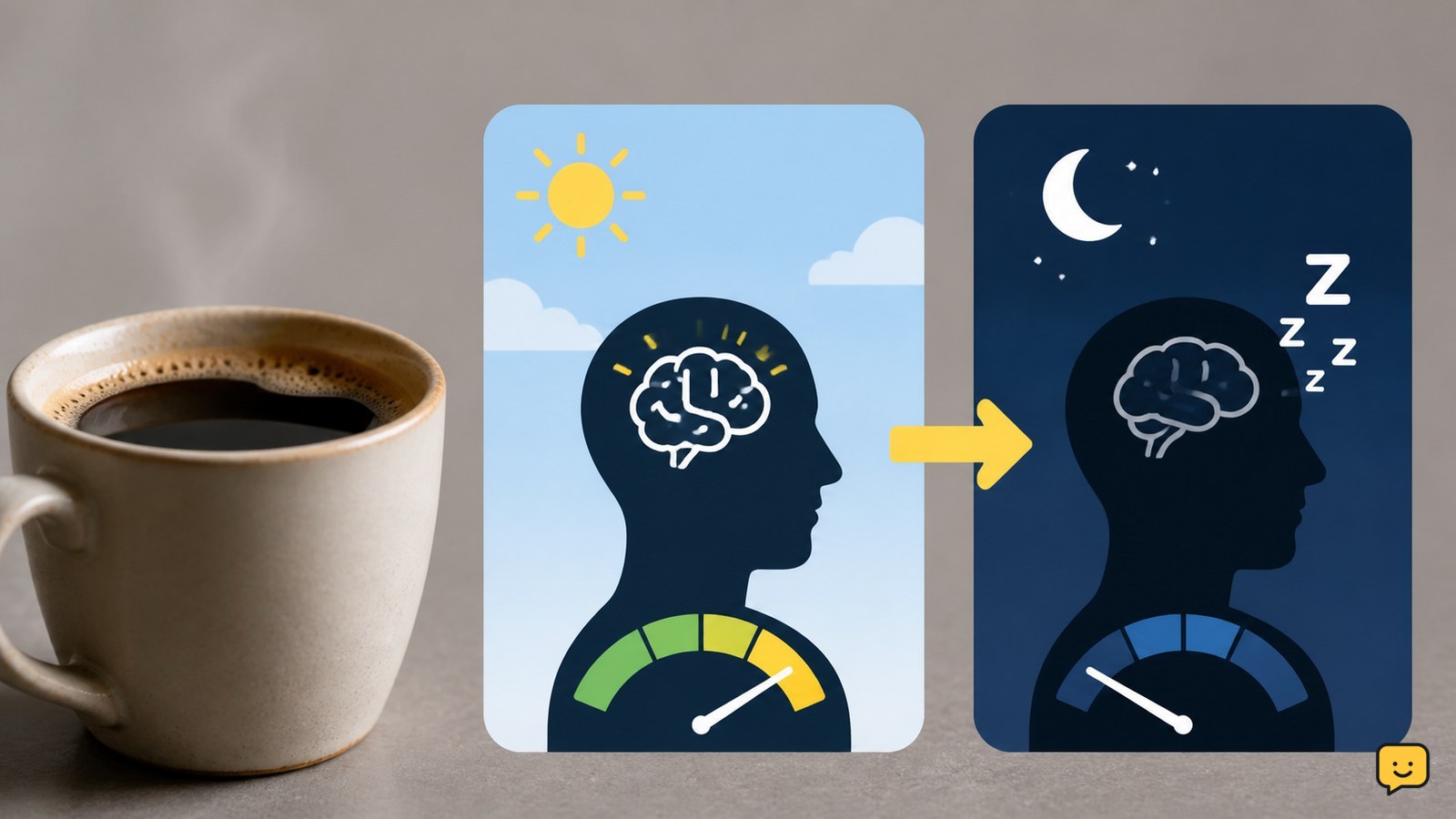
Coffee can make you sleepy when caffeine tolerance, fast caffeine metabolism, poor sleep, dehydration, or a drop in energy after a sugary drink outweigh caffeine’s temporary alerting effect. Caffeine blocks the sleep-promoting chemical adenosine for a while; when its effect fades, accumulated sleep pressure can feel stronger. Track timing and symptoms instead of drinking progressively larger servings.
Why caffeine can be followed by sleepiness
Coffee can make you sleepy because caffeine temporarily blocks adenosine, a chemical that builds sleep pressure while you are awake. The blocked signal does not disappear. As caffeine wears off, the underlying tiredness can become noticeable again. GoodRx describes this as a delayed return of sleep signals, while the Sleep Foundation identifies caffeine tolerance and disrupted sleep as common explanations.
This does not mean coffee always causes sleepiness. It means the drink’s stimulating effect may be smaller than the tiredness already present. A useful check is timing: if you feel more alert briefly and then tired later, a caffeine comedown is more plausible than an immediate reaction to coffee itself.
Check sleep, caffeine tolerance, and timing first
Sleep loss and regular caffeine use are the first factors to check because they can make a normal serving feel ineffective. Caffeine may also reduce sleep quality or make it harder to fall asleep, creating a cycle in which morning coffee is used to compensate for tiredness caused partly by earlier caffeine.
- Compare your sleepiness with the previous night’s sleep, not just with your usual coffee response.
- Record whether you drink coffee daily and whether the amount has gradually increased. A weaker effect after repeated use is consistent with tolerance.
- Note the delay between drinking coffee and feeling tired. Immediate sleepiness suggests that tiredness was already present or that another factor is involved; a later slump fits a fading stimulant effect better.
- Move coffee earlier in the day rather than adding another serving late in the afternoon or evening.
Verification: After several days of earlier, consistent caffeine timing and adequate sleep, sleepiness should be less closely tied to the cup. If it is unchanged, check the drink and health-related possibilities below rather than increasing the dose.
Check the drink for sugar, size, and hidden caffeine
The coffee itself may not be the only variable. Large flavored drinks can contain substantial added sugar, and a later energy dip may be mistaken for a caffeine effect. A very small serving may also contain less caffeine than expected, while espresso-based drinks, cold brews, and oversized brewed coffees can differ considerably in caffeine strength.
- Write down the drink’s size and ingredients, including flavored syrups, sweeteners, creamers, and milk.
- Compare a plain, moderate serving with the usual sweetened drink on a different day. Keep sleep and timing as similar as possible.
- Do not use a second caffeinated drink to correct a slump until you know whether the first drink helped, did nothing, or was followed by a crash.
Observable result: If sleepiness occurs mainly after a highly sweetened or unusually large drink, simplify the recipe and reduce the serving size. If plain coffee produces the same pattern, sugar is less likely to be the main explanation.
Consider metabolism, hydration, and food timing
People process caffeine at different rates, so some feel only a short or mild effect. Verywell Health notes that fast metabolism and high tolerance can contribute to sleepiness after coffee. Dehydration, skipping meals, or eating a large meal at the same time can also make ordinary tiredness more noticeable.
- Drink water with coffee, especially in hot conditions or after exercise, but do not assume water alone explains persistent fatigue.
- Eat a regular, balanced meal or snack if you skipped food. Avoid treating coffee as a replacement for eating.
- Compare your response on a normal day with your response after a large meal, poor sleep, or strenuous activity.
These comparisons are useful clues, not a diagnosis. If sleepiness follows every serving regardless of food, water, and timing, stop self-testing with larger amounts and choose a non-caffeine alternative while you arrange advice if needed.
Choose a safer way to handle an afternoon slump
If coffee repeatedly makes you sleepy, the safer response is to address the tiredness rather than chase alertness with more caffeine. Try water, a short walk, bright daytime light, a regular meal, or a brief rest when your schedule allows. Decaffeinated coffee can preserve the routine and flavor without adding much caffeine, but it will not correct an underlying sleep problem.
If you still choose caffeinated coffee, use a smaller serving earlier in the day and avoid combining it with energy drinks or caffeine supplements. Keep a simple record of the time, amount, and response. Success means you can stay alert without escalating caffeine and without pushing coffee into the part of the day when it disrupts sleep.
Know when persistent sleepiness needs medical advice
Persistent sleepiness is not something to mask indefinitely with coffee. The Sleep Foundation lists disrupted sleep among possible reasons, and other causes can include sleep disorders or health conditions that a food guide cannot identify. Seek medical advice when fatigue lasts, worsens, or affects work, school, driving, or routine activities.
Do not drive or use kitchen equipment when you are struggling to stay awake. Seek urgent help for severe symptoms such as chest pain, fainting, severe palpitations, or confusion. A clinician can review sleep, medicines, caffeine intake, and other symptoms instead of relying on repeated coffee experiments.
Frequently asked questions
Can dehydration make coffee make me sleepy?
Dehydration can add to tiredness, especially after exercise, heat, or too little fluid intake, but it is not the only possible explanation. Drink water with your coffee and compare your response on normally hydrated days. If sleepiness continues regardless of hydration, do not keep adding caffeine; review sleep, serving size, timing, and persistent symptoms instead.
Why does coffee make me sleepy immediately?
Immediate sleepiness often means the underlying tiredness was already stronger than coffee’s alerting effect. A small serving, high caffeine tolerance, individual metabolism, poor sleep, a large meal, or an unrelated health issue may contribute. Record the delay and your sleep from the previous night. Stop driving or doing hazardous tasks if you cannot stay alert.
Does adding sugar to coffee cause a crash?
A heavily sweetened coffee can be followed by an energy dip, but the exact response varies by the drink, portion, and what else you ate. Compare a plain, moderate serving with your usual recipe while keeping timing similar. If only the sweetened drink is followed by sleepiness, reduce added sugar rather than increasing caffeine.
Should I drink more coffee if one cup makes me tired?
No. Drinking more may increase side effects and can further disrupt sleep, creating more daytime tiredness. Try earlier timing, a smaller consistent serving, water, food, movement, or decaf instead. If you need caffeine to function or remain awake, or the sleepiness persists, seek medical advice rather than continually increasing your intake.
Can coffee make you sleep better later?
Coffee does not reliably improve sleep later. Caffeine can stay active for hours and may make falling asleep harder or reduce sleep quality, even when you feel tired after drinking it. Move caffeine earlier and track bedtime and next-day alertness. Stop using it late in the day if your sleep becomes more disrupted.
For more help with this topic, use the Drinks guides.