To clean an ice maker, switch it off and unplug it if the model allows, discard the ice, and remove the bin and other removable parts. Wash them with mild dish soap and warm water, wipe the interior and ice chute with a soft cloth, rinse away residue, and let every part dry fully before restarting.
1. Empty the ice maker and switch it off
The refrigerator or standalone ice maker must be empty and powered down before cleaning begins. Discard every ice cube in the bin or dispenser, then switch off the ice-making function. If the owner manual permits it, unplug the appliance or disconnect its power at the appropriate control.
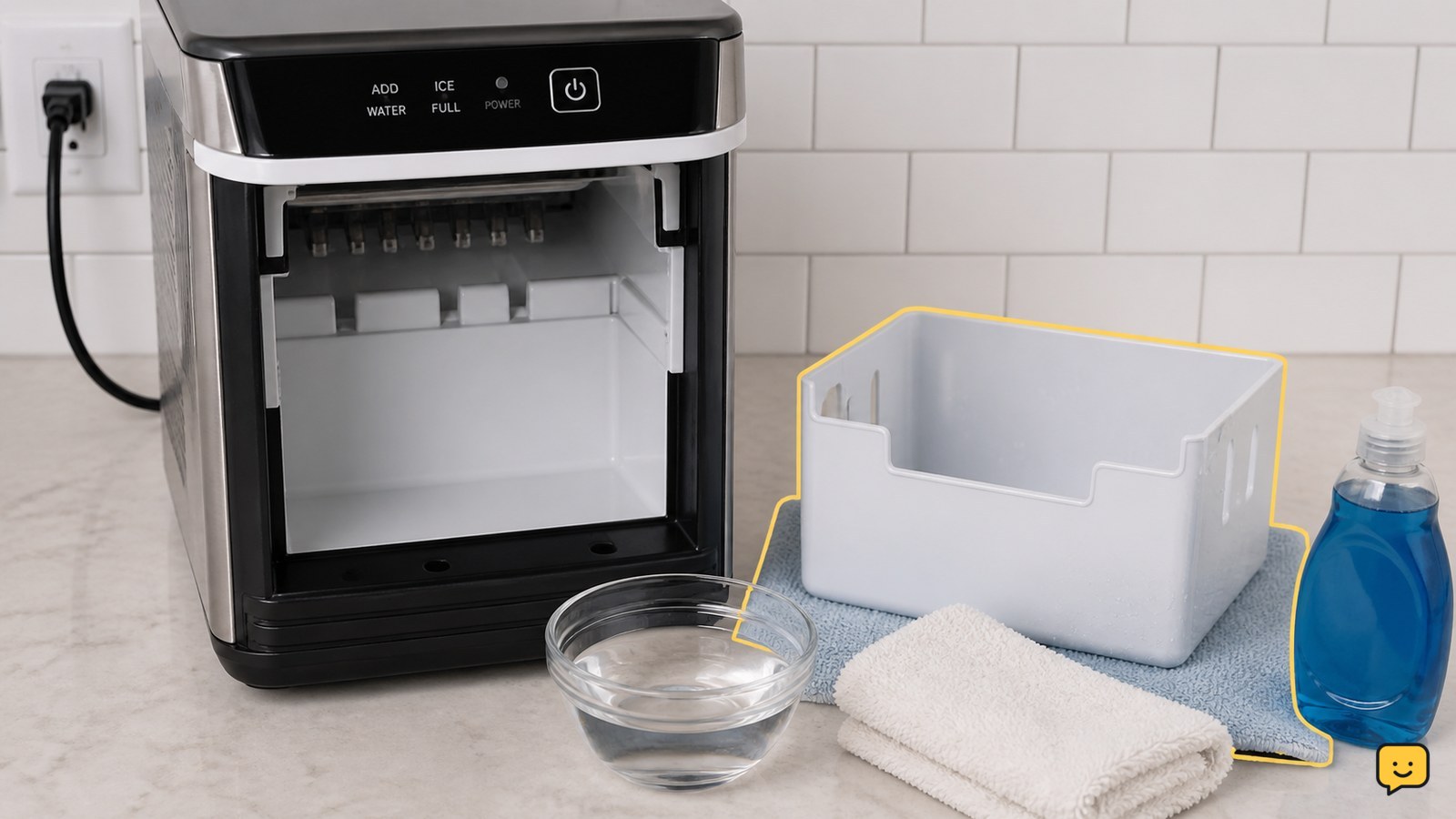
Remove the ice bin and any removable scoop, shelf or tray. Set aside parts that the manual identifies as non-removable; do not force a component that resists removal. Nyco Products begins its ice-machine cleaning procedure by turning off the machine, removing all ice and wiping loose water and dirt from the bin.
2. Wash the bin and removable parts
The ice bin and removable accessories should be washed separately with warm water, mild dish detergent and a soft cloth or nonabrasive sponge. Clean the bottom, corners, handles and underside of each part, where melted ice water and residue can collect.
- Wash each part in the soapy water.
- Use a soft toothbrush for grooves or seams that a cloth cannot reach.
- Rinse thoroughly with clean water so no detergent remains.
- Place the parts on a clean towel to air-dry completely.
Do not return a damp bin to the appliance. Moisture left behind can refreeze and contribute to ice buildup. If the manufacturer approves a dishwasher, follow that model’s instructions rather than assuming every ice bin is dishwasher-safe.
3. Wipe the interior and clean the ice chute
The ice maker interior and dispenser chute should be wiped with a soft cloth dampened with mild soapy water, followed by a clean-water wipe. Clean only surfaces you can reach without moving sealed components or spraying liquid into the appliance.
For a refrigerator dispenser, pay particular attention to the ice chute, flap and surrounding ledge. GE Appliances specifically recommends mild soap and water with a soft cloth for the ice chute. Use a soft toothbrush around accessible seams, then wipe again with clean water to remove soap residue.
Avoid abrasive pads, bleach, solvents, strong sprays and sharp tools unless the owner’s manual explicitly approves a particular product. If you want to use white vinegar or a dedicated ice-maker cleaner, use it only when the manufacturer lists it as compatible and provides directions for dilution and rinsing.
4. Rinse, dry and restart the ice maker
The ice maker is ready to restart only when the bin, chute and reachable interior surfaces are clean, residue-free and fully dry. Inspect each area under a bright light before replacing the bin.
- Wipe all cleaned surfaces with a fresh cloth dampened with clean water.
- Dry the interior and chute with a clean towel.
- Allow removable parts to air-dry completely.
- Reinstall the bin and accessories in their original positions.
- Restore power if it was disconnected and turn the ice-making function back on.
Discard the first batch of ice after cleaning if the manual recommends doing so or if any cleaner odor remains. The success check is simple: there should be no visible soap, cleaner, loose debris or damp pooling, and the first fresh ice should have its normal appearance and smell.
What to do if odor, residue or buildup remains
If the ice maker still smells or shows residue after one gentle cleaning, repeat the approved cleaning cycle rather than using a stronger chemical or scraping harder. Confirm that the bin, chute and nearby surfaces were rinsed and dried, because trapped moisture or detergent can continue to affect new ice.
Persistent scale, slime, discoloration, poor ice quality or water leakage may indicate a water-supply, filter, drain or internal-service issue rather than surface dirt. Stop using the unit if buildup will not loosen gently, if components are damaged, or if the ice has an unusual smell after the approved cleaning and discard cycle. Consult the manufacturer or an appliance technician for model-specific service.
Frequently asked questions
How often should an ice maker be cleaned?
Clean an ice maker whenever the bin, chute or interior shows residue, odor or visible buildup. Follow the appliance manual if it gives a scheduled cleaning interval. Clean it sooner after a long period of disuse, a spill inside the bin or a change in ice quality.
Can I use vinegar to clean an ice maker?
Use vinegar only if the manufacturer says it is compatible with your model. Some ice makers require a dedicated cleaner or a specific cleaning cycle, and cleaner residue must be rinsed away completely. If the manual does not mention vinegar, use mild soap and water for accessible surfaces instead.
Should I throw away the first ice after cleaning?
Discard the first batch when the owner manual instructs you to do so or when any soap, vinegar or cleaner odor remains. Do not use ice that has an unusual smell, visible residue or an unexpected appearance.
How do I clean an ice maker that is not removable?
Switch the unit off, remove the ice and wipe reachable surfaces with a soft cloth dampened with the manufacturer-approved solution. Never spray liquid into a fixed ice maker or force sealed parts apart. Stop if you cannot rinse and dry the area safely, then consult the manual or a technician.
For more help with this topic, use the Cleaning Stain Removal guides.