
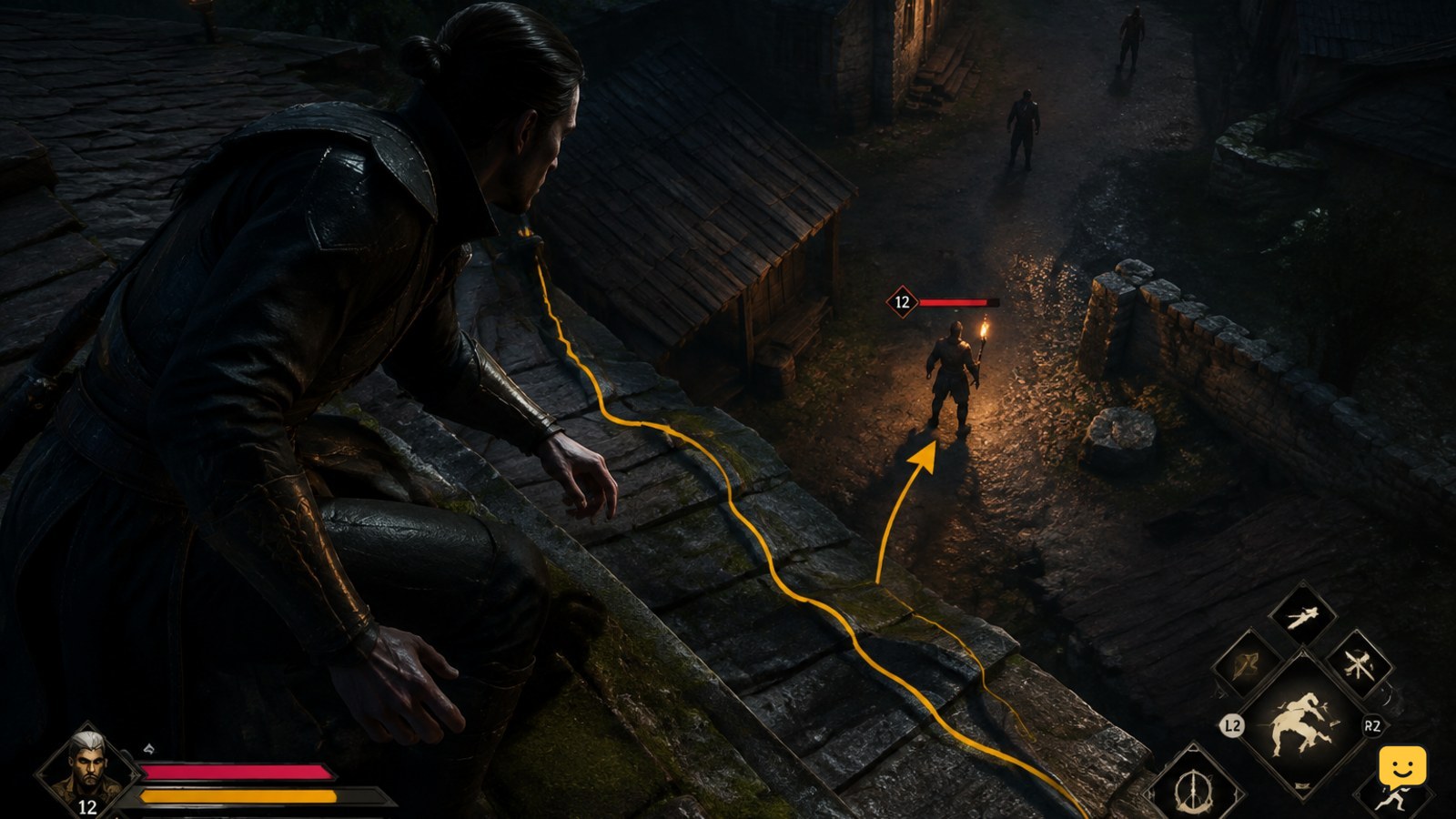
Use Coen’s vampire abilities to control distance, begin fights from advantageous positions, and pressure isolated enemies. Shadowstep is best treated as a mobility and engagement tool, while vampiric claws suit close-range damage. The vampire skill tree is one part of a larger system, so combine it with sword or witchcraft abilities instead of treating vampirism as a complete build.
Browse all the selected game guides
How the vampire ability system works
Coen’s vampirism is presented as one of three major skill trees, alongside Swordmastery and Witchcraft. That structure matters: vampire abilities are a combat identity, but they do not have to define every part of your character.
Current previews and reference material confirm vampire-themed options such as lethal claws, Shadowstep, and attacks that begin from above. Exact costs, cooldowns, damage values, unlock requirements, and daylight restrictions should be checked in the live game rather than copied from preview footage.
Build around a role first. Choose vampirism when you want supernatural mobility, close-range pressure, and ambush options. Add another tree when you need a reliable answer for enemies that are difficult to reach or unsafe to approach directly.
Use Shadowstep to choose the fight
Shadowstep is described as a movement ability that can help Coen cross space or close on opponents. Use it before you need an escape, not after your position has already collapsed.
- Identify the enemy you want to reach and check the space behind or beside that target.
- Shadowstep into a position that gives you an immediate follow-up, such as a flank, elevated approach, or isolated target.
- Attack only after confirming that the arrival point is not surrounded.
- Keep a route open for retreat instead of spending every movement option on the opening attack.
The safest habit is to treat Shadowstep as both an engagement tool and a positioning tool. A short reposition that avoids a group can be more valuable than a dramatic charge into the center of a fight.
Make rooftop attacks your opening move
Preview coverage describes vampire builds as having an ability that lets Coen jump enemies from above, with a lethal opening attack shown from elevated positions. This makes height a resource rather than simple scenery.
- Before approaching, look for a roof, ledge, balcony, or other elevated route.
- Check whether the target is isolated and whether nearby enemies can immediately surround Coen.
- Start the attack from above when the landing area is favorable.
- After the strike, reassess the encounter instead of assuming the first takedown ends the danger.
Use elevated routes to reduce the time spent crossing open ground. Do not force a rooftop attack when the target is under a low ceiling, inside a crowd, or positioned where the landing animation leaves you exposed.
Use vampiric claws at the right range
Vampiric claws are identified as a lethal close-range vampire option. Their value is highest when you have already created a safe opening through stealth, height, or movement.
- Approach from an angle that prevents the target from receiving immediate support.
- Use Shadowstep or an elevated approach to close distance when the route is safe.
- Commit to claws when the target is within the ability’s effective range.
- Disengage or change position if the attack does not produce the expected result.
Do not use claws as a replacement for every other attack. Close-range abilities become less effective when you must cross a defended area, fight several enemies at once, or remain in a predictable position.
Pair vampirism with the other skill trees
The three-tree structure supports mixed builds. A practical vampire-focused setup should answer three questions: how do you begin a fight, how do you finish a resistant target, and how do you survive when the opening fails?
- Spend early points on the vampire options that improve your preferred approach: mobility, ambushes, or close-range pressure.
- Test the result against both isolated enemies and groups before adding more specialized upgrades.
- Use Swordmastery for situations where ordinary weapon pressure is safer or more dependable.
- Use Witchcraft when the current encounter rewards ranged control, area coverage, or a different damage pattern.
This approach avoids a common mistake: choosing every vampire upgrade because it sounds powerful, then discovering that the build has no safe answer when an ambush misses.
Verify each ability in the current version
Several available references describe previews, demonstrations, or wiki information rather than a final balance document. Confirm the details that affect your build directly in the current game.
- Open the vampire skill tree and read the complete ability description.
- Record the unlock requirement, resource cost, cooldown, range, and any time-of-day or target restrictions shown there.
- Test the ability against a low-risk enemy or training encounter.
- Confirm the result after reloading or changing equipment if the ability behaves inconsistently.
- Only then spend additional points or plan a full combat rotation.
If the live description conflicts with an older guide, use the live description and current patch notes as the authority. Preview footage can explain the intended role, but it cannot guarantee final numbers or availability.
Frequently asked questions
What are the confirmed vampire abilities in The Blood of Dawnwalker?
The currently supported references identify Shadowstep, lethal vampiric claws, and an attack that lets Coen strike enemies from above. Exact names, costs, damage, cooldowns, and unlock conditions may change between previews and the final game, so verify each detail in the current in-game skill tree.
How should I use Shadowstep in The Blood of Dawnwalker?
Use Shadowstep to control engagement distance and reach an isolated enemy, flank, or safer position. Check the arrival point before activating it, then keep a retreat route available. Avoid spending it blindly in the middle of a group unless the current ability description confirms that the landing position is safe.
Are vampire abilities only useful at night?
Do not assume that every vampire ability is restricted to night. The available references establish Coen’s nocturnal abilities as a theme, but they do not provide a complete final ruleset for daylight use. Read the current ability descriptions and test any suspected time-of-day restriction before planning a build around it.
Can Coen combine vampirism with Swordmastery or Witchcraft?
Yes, the available skill-tree coverage presents vampirism, Swordmastery, and Witchcraft as three parts of the broader combat system. A vampire-focused character can still benefit from another tree when an encounter makes close-range attacks or ambushes unsafe.
What is the best vampire ability?
There is no reliable final ranking until all costs, cooldowns, upgrades, and enemy interactions are confirmed. Shadowstep is the most flexible option in the available material because it supports both movement and engagement, while claws and attacks from above are more dependent on range, positioning, and target isolation.
Browse more The Blood of Dawnwalker guides for help with this topic.