Start by building a usable 3+2 equipment set, then improve the pieces with the correct main stats before spending heavily on reforging. Craft or replace weak pieces only when the displayed requirements are met, keep valuable Forging Molds for promising gear, and dismantle equipment you no longer need. The exact enhancement labels may vary by current game build.
Browse more DragonSword: Awakening guides
Choose a 3+2 set before investing heavily
Dragon Sword: Awakening gear uses a set structure commonly described as 3+2: three pieces from one set and two from another. Treat that combination as an equipment target rather than immediately upgrading every item that drops.
First, compare the set contribution and the individual item’s displayed main stat. A lower-level piece that completes a useful set combination can provide more durable value than an isolated item with slightly better basic numbers. Keep temporary gear functional, but reserve expensive materials for pieces that fit the setup you intend to keep.
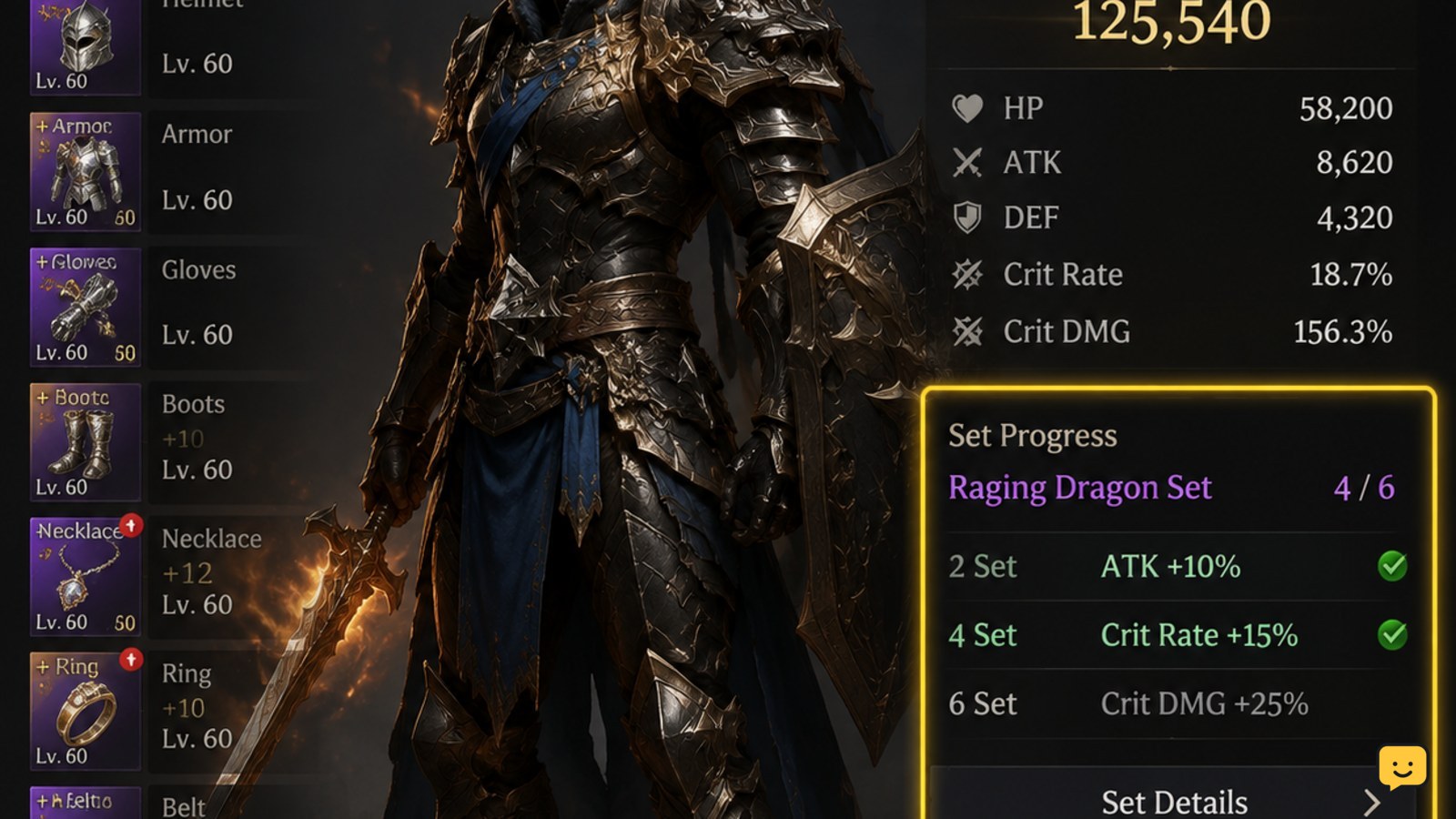
Verify success: after equipping the intended pieces, check the equipment screen for the expected set progress or set effect. If the set effect does not appear, confirm that every selected piece belongs to the required set and that no item was left unequipped.
Check the main stat before upgrading a piece
Do not judge equipment only by rarity, level, or its highest visible number. The referenced gear guides specifically emphasize choosing the intended main stat before refining a long-term build.
Open each candidate item and compare its displayed main stat with the needs of your character and combat role. Upgrade items with a useful main stat first. If the stat is unsuitable, keep the item as a short-term placeholder rather than committing scarce crafting or reforging resources.
This is the safest early filter because later investment increases the cost of being wrong. A successful check leaves you with an item that both improves the current equipment screen and supports your planned set combination.
Craft replacement gear only when the requirements are visible
Use the crafting screen to replace weak or mismatched equipment when the selected recipe shows all required materials. The available evidence confirms crafting as part of gear progression, but it does not establish one permanent menu path or a universal material list.
- Select the equipment recipe or item you want to make.
- Read every displayed material and currency requirement.
- Confirm that the result fits your intended set and has an acceptable main stat.
- Craft only after checking which currently equipped or stored item it will replace.
Verify success: locate the crafted item in your equipment or inventory, compare its displayed stats with the old piece, and equip it only after confirming the replacement is actually an improvement.
If the recipe is unavailable, do not assume the feature is broken. The item may require additional progression, a different source, or materials that are not currently available. Check the displayed requirement and return after meeting that specific condition.
Reforge promising equipment after the stat check
Reforging is a separate decision from simply obtaining gear. Use it on an item that already has a worthwhile set position and main stat, not on every temporary drop.
The supplied gear reference identifies a 50,000 Gold reforge cost. Treat that figure as version-sensitive: confirm the price on the live reforge screen before spending. Reforging can consume a large amount of Gold, so define the result you need before opening the confirmation step.
- Select the item whose set and main stat are worth preserving.
- Review the current and proposed result shown by the reforge screen.
- Confirm only when the new result improves the role you are building.
- Recheck the item after the transaction and make sure it remains equipped if that was your intention.
If the displayed cost or outcome differs from the reference, follow the live screen rather than an old guide. Stop if the reforge would leave the item weaker or consume Gold needed for a confirmed upgrade elsewhere.
Protect Forging Molds, Gold, and useful duplicates
Durable enhancement is mostly resource control. The referenced gear material identifies Forging Molds, Gold, crafting resources, Karma, and dismantling as connected parts of progression.
Keep Forging Molds for equipment with a useful main stat or a clear place in your 3+2 plan. Spend Gold on a piece that is likely to remain equipped instead of repeatedly rerolling temporary gear. When an item no longer has a role, compare it with your active set before dismantling it.
Dismantling can help convert unwanted equipment into progression resources, but the supplied evidence does not establish identical returns for every item. Read the result preview if the game provides one. If no preview is shown, dismantle only clearly obsolete pieces and keep rare, set-relevant, or stat-compatible duplicates until your build decision is settled.
Karma is related to broader character progression rather than a substitute for selecting good equipment. Keep gear improvement and Karma spending as separate checks so that a strong Karma upgrade does not hide a poorly matched equipment set.
Verify the finished equipment pass in combat
After crafting, replacing, or reforging, verify the result in the equipment screen first. Check that the intended item is equipped, the set combination is still active, the main stat is correct, and the character’s displayed combat values changed as expected.
Then use a regular combat activity or another low-risk encounter to confirm the practical result. If damage, survivability, or skill performance does not improve, compare the new item with the previous one and check whether the change affected a set effect, main stat, or only a minor secondary value.
Failure path: if the item is missing, check inventory filters, equipment slots, and whether the transaction completed. If the set effect disappeared, inspect every equipped piece. If the result is weaker, stop further spending and restore the previous item if it remains available.
Frequently asked questions
What should I upgrade first in Dragon Sword: Awakening?
Upgrade the equipment pieces that combine a useful main stat with your planned 3+2 set. Avoid heavy spending on temporary items, then use crafting or reforging only after confirming the item will remain part of your build.
Is the 3+2 equipment setup required for every character?
No fixed setup should be treated as universal. The available gear evidence describes 3+2 as a practical set structure, but your character, role, and current set effects determine whether that combination is worthwhile. Verify the active effect in your equipment screen.
How much Gold does reforging cost?
The supplied gear reference identifies a 50,000 Gold reforge cost, but costs can be version-sensitive. Check the live reforge screen before confirming because the current game build takes priority over an older guide.
Should I dismantle duplicate equipment?
Dismantle only duplicates that are clearly outside your planned set and do not have a useful main stat. Keep rare, compatible, or potentially needed pieces until you have checked your active equipment and the dismantling result preview.
Why did my equipment upgrade not improve my character?
Check whether the new item changed the set effect, main stat, or only a minor value. Also confirm that it is equipped and that the transaction completed. If the displayed result is weaker, stop spending and compare it with the previous item.