Your car air conditioner may be blowing warm air because the A/C setting is wrong, airflow is restricted by a plugged cabin filter, refrigerant is low, the compressor is not working, or the expansion valve is clogged. Confirm the controls and airflow first. If airflow is strong but remains warm, stop before adding refrigerant and arrange an A/C diagnosis.
Check the A/C controls before inspecting parts
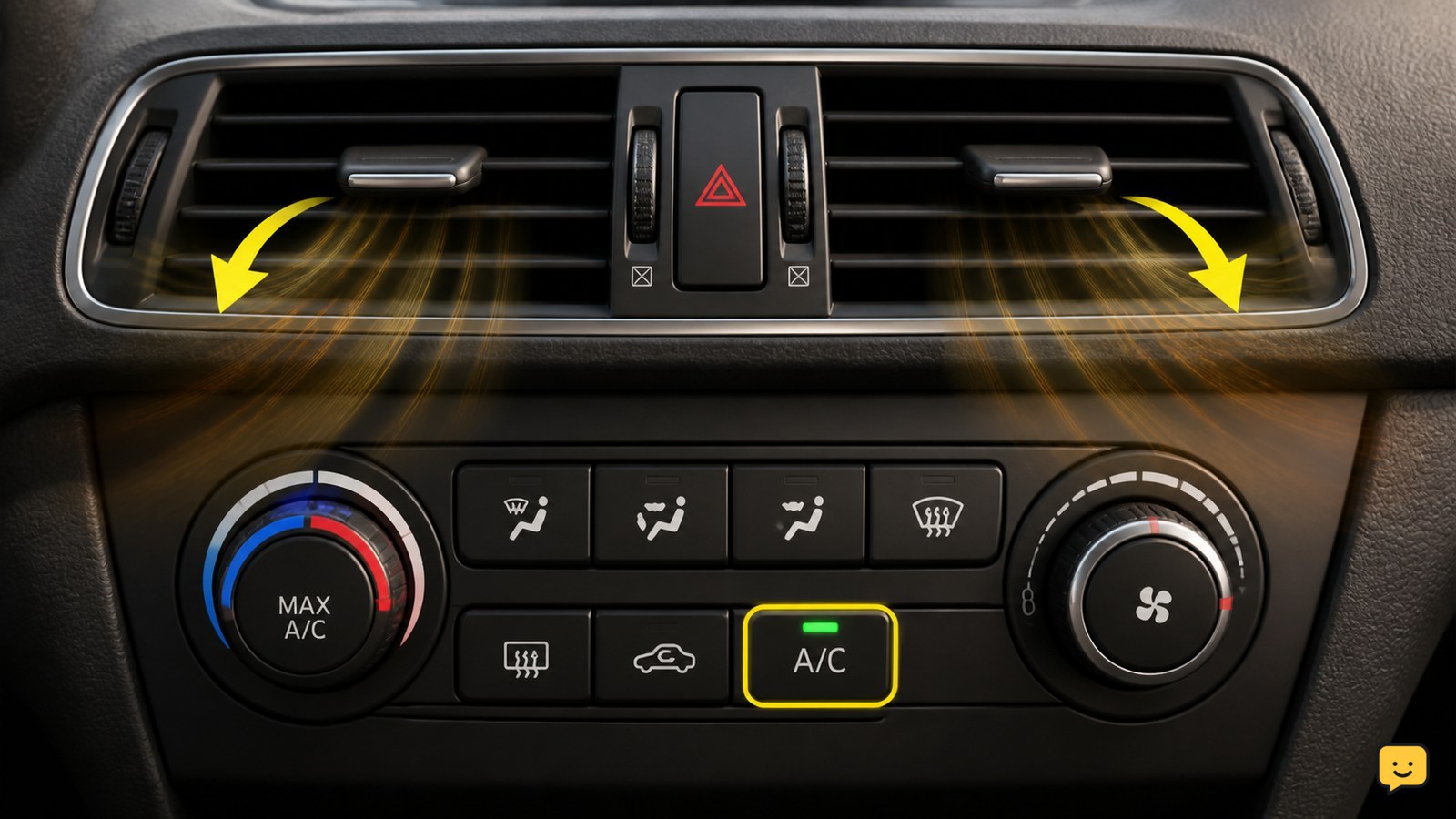
Start with the simplest failure: confirm the climate system is actually requesting cooling. Set the temperature to its coldest setting, select A/C, choose outside-air or recirculation according to the owner’s manual, and set the blower to a medium or high speed. Make sure the vents are directed toward the cabin and that a separate heat or defrost setting is not overriding the selected temperature.
After a short check, the air should feel cooler than the cabin air. If the fan is not moving air at all, this is an airflow or blower-circuit problem rather than a temperature problem. Check only the fuse or control guidance listed for your vehicle; do not replace a fuse with a higher-rated one. If the fan works but the air stays warm, continue to the airflow check.
Use airflow strength to narrow the fault
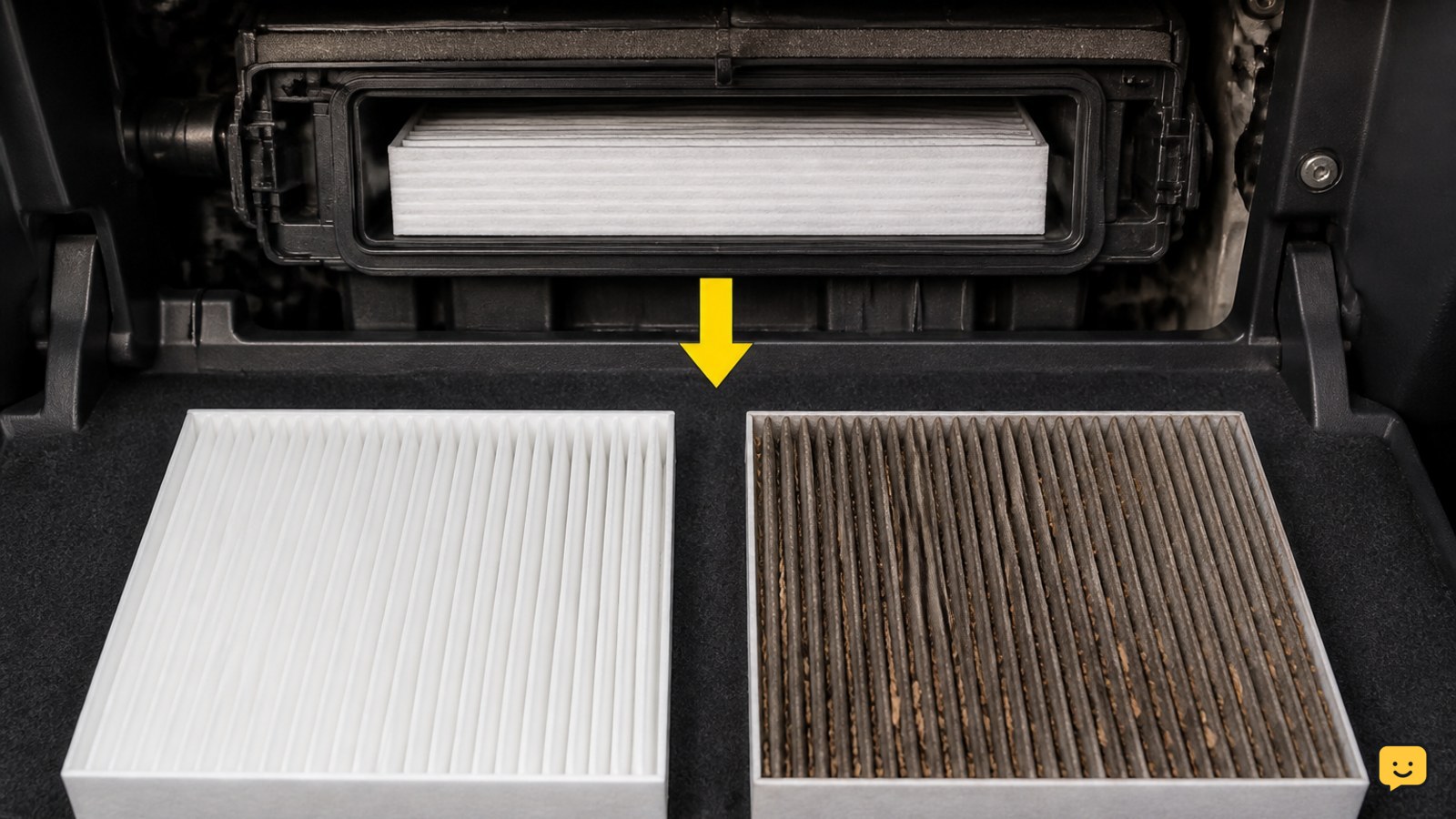
Compare the amount of air coming from the vents with what you normally feel. Weak airflow can point to a plugged cabin air filter, which is among the possible causes listed for warm-air complaints. A restricted filter can make the system seem ineffective even when the cooling components are operating.
Find the cabin-filter location in the owner’s manual, often behind the glove box or within the passenger-side HVAC housing. Inspect the filter only if access is clearly described for your model. Replace it with the specified type if it is visibly loaded with dust or debris, then retest the A/C.
If airflow remains weak after the filter is addressed, or if there is no airflow, stop treating the issue as a simple cooling fault. A blower, electrical, door, or HVAC control problem may require model-specific testing. If airflow is strong but the temperature does not drop, the likely fault is farther into the A/C system.
Look for signs of low refrigerant or compressor trouble
Strong airflow that stays warm commonly shifts attention to the refrigerant circuit or compressor. Low refrigerant can prevent the system from cooling correctly, while a failing compressor can stop the refrigerant from circulating. A clogged expansion valve is another possible cause identified in repair guidance.
With the engine running and the A/C switched on, listen for changes when the system engages. Do not reach into the engine bay. A complete lack of engagement, unusual grinding, or a belt that appears damaged is a reason to stop. The exact compressor behavior varies by vehicle, including hybrids and electric vehicles, so do not use sound alone as a diagnosis.
Look, without touching, for obvious damage or oily residue around accessible A/C pipes and fittings. These signs do not prove the fault, but they support having the system pressure-tested and leak-checked. Do not simply add refrigerant to an unknown system: the charge may be low because of a leak, and overcharging can also create problems.
Choose the safe repair path when checks fail
If the controls are correct, airflow is normal, and the vents still deliver warm air, arrange service with a shop equipped for automotive A/C diagnosis. Ask for the system to be checked for refrigerant level, leaks, compressor operation, and expansion-valve restrictions rather than requesting a blind recharge.
A cabin-filter replacement is the main maintenance task that may resolve restricted airflow when the filter is clearly dirty and the vehicle’s manual provides access instructions. Refrigerant recovery, evacuation, charging, leak repair, compressor replacement, and expansion-valve work are not good next steps without the required equipment and model-specific instructions.
If the A/C works briefly and then returns to warm air, or if cooling changes with engine speed, record the conditions for the technician. Note whether airflow is weak or strong, whether the compressor appears to engage, and whether any unusual noise or visible residue is present. These observations help separate an airflow restriction from a refrigerant or compressor fault.
Verify the result after service or filter replacement
Retest with the same control settings that exposed the problem: coldest temperature, A/C on, a steady blower speed, and the same vent position. Successful service should restore noticeably cooler air and normal airflow without unusual noises, warning lights, burning smells, or visible leaks.
If the air is still warm, do not keep cycling the system or adding products. Return to the shop and report exactly what changed, including whether airflow improved but temperature did not. If the filter was replaced and airflow stayed weak, the filter was not the complete fault. If cooling returned only temporarily, request a leak and pressure diagnosis rather than another unverified recharge.
Frequently asked questions
Can a dirty cabin air filter make car A/C blow warm air?
Yes, a plugged cabin air filter can restrict airflow and make the A/C feel ineffective. It is more likely to cause weak airflow than strong airflow that remains completely warm. Check the replacement procedure and filter specification in the owner’s manual. If airflow is normal after replacement but the temperature is still warm, the problem likely needs A/C-system diagnosis.
Should I add refrigerant when my car A/C blows warm air?
Do not add refrigerant without confirming the correct refrigerant type, charge level, and reason for the loss. Low refrigerant can indicate a leak, and an incorrect charge can damage performance or components. Have the system leak-checked and serviced with proper recovery and charging equipment.
Why is my A/C airflow strong but not cold?
Strong airflow with warm output points away from a simple cabin-filter restriction and toward the cooling side of the system. Possible causes include low refrigerant, a compressor problem, or a clogged expansion valve. Confirm the controls first, then arrange professional testing if the air does not cool.
Why does my car A/C get warm again after briefly cooling?
Temporary cooling can mean the system has an intermittent fault or a refrigerant leak, but the symptom alone cannot identify the failed part. Record when the change occurs, whether airflow also weakens, and whether unusual noises appear. Ask for leak, pressure, and compressor checks rather than repeatedly recharging the system.
Browse more Maintenance & Repair guides for help with this topic.